






















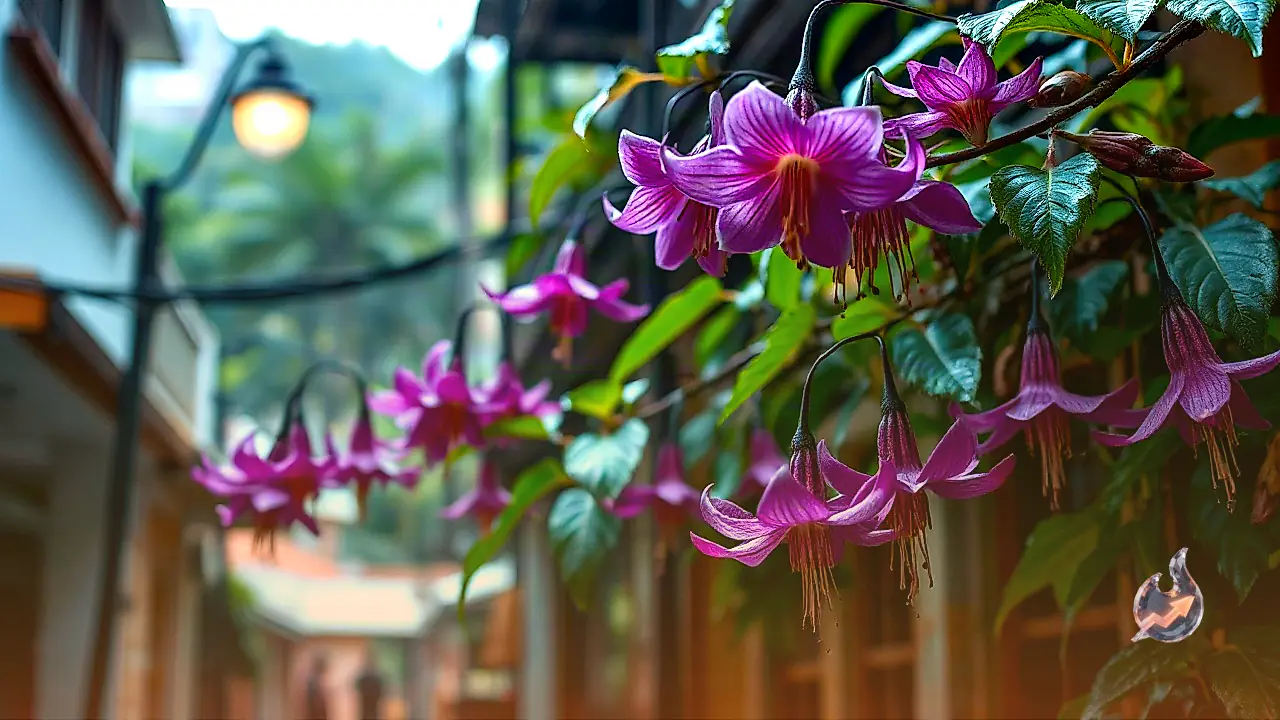

Blooming near the onset of the monsoon season, a striking purple flower frequently captures the attention of plant enthusiasts and cultural observers alike. Recognized for its distinct circular layout and delicate thread-like structures, the flower closely resembles a traditional Rakhi. Beyond its natural beauty, this plant holds a deeply revered place in Indian folk traditions as a symbol of positive energy, peace, and spiritual harmony. Biologically classified under the genus Passiflora, this climbing vine is affectionately known by several traditional titles, including Krishna Kamal, Rakhi Phool, Mahabharata Phool, and Kaurav-Pandav Phool.
Botanical Structure and the Role of Corona in Pollination
From an anatomical standpoint, the flower exhibits a remarkably complex arrangement. Its most prominent features are the numerous fine purple filaments radiating outward in a perfect ring. Botanists designate this unique fringed section as the corona, an intricate structure that plays a vital role in attracting pollinators during the plant's reproduction cycle. Nestled within this vibrant purple ring is an intricate centerpiece featuring pale white and yellow tones. When viewed from above, the entire blossom presents a captivating geometric pattern.
Cultural Symbolism and Links to the Mahabharata Epic
In Indian folklore and cultural writings, the various anatomical components of the Krishna Kamal are creatively linked to major figures from the ancient epic Mahabharata. The vast collection of fine purple outer filaments is widely interpreted by regional storytellers as representing the 100 Kaurava brothers. Although botanists and scholars note that this connection lacks formal scriptural documentation, it remains an enduring folk legend across many communities.
Furthermore, the three primary central structures rising above the corona are traditionally associated with the Hindu Trinity of Brahma, Vishnu, and Mahesh. A small green accent structure at the very core is interpreted as representing Draupadi. At the flower's absolute center, the innermost circular configuration is revered as a representation of Lord Krishna and his celestial weapon, the Sudarshan Chakra.
Seasonal Blooming and Festival Associations
The blossom earned its popular alias Rakhi Phool primarily because its peak blooming phase aligns with the arrival of the rainy season and the festival of Raksha Bandhan. While plant scientists confirm there is no direct biological relationship between the species and the festival itself, the visual similarity to a decorated Rakhi thread has solidified this name in everyday language. Devotees often gather these freshly plucked blooms into brass trays for religious rituals, creating a visually rich aesthetic for home ceremonies.
Growing Habits and Space-Saving Advantages
One of the key practical advantages of cultivating the Passiflora vine is its highly versatile growth habit. As a climbing vine equipped with slender, curling tendrils, the plant easily grips trellises, walls, or balcony railings to expand upward. This vertical growth pattern allows it to flourish even in compact living environments where ground space is extremely limited.
Whether planted in small garden plots, courtyard containers, or rooftop pots, the lush green leaves contrasting with the dramatic purple blooms provide immense aesthetic value. According to widespread folk belief, keeping this auspicious plant inside the household helps clear negative vibes and brings a continuous flow of encouraging, uplifting energy to the living space.