




















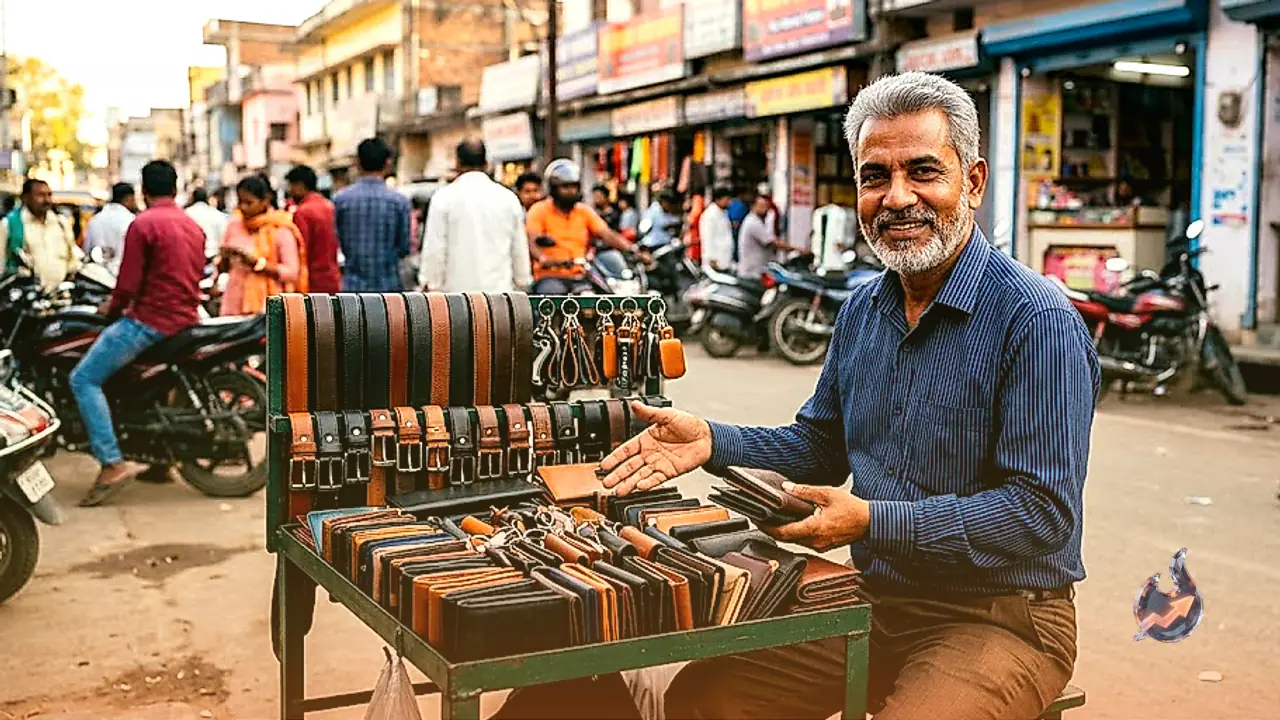

Rising living costs and limited private job avenues often push job seekers to look for practical, low-investment self-employment ideas. Setting up a conventional business usually requires substantial capital, high shop deposits, and ongoing rent, which remains out of reach for many. However, a small belt and wallet setup running on a circular iron stand in Jehanabad demonstrates how an entrepreneur can build a steady income with modest resources, needing neither an office nor a rented shop floor.
Continuing a Family Livelihood Beside the District Hospital
Near the Sadar Hospital located at the Jehanabad district headquarters, Pappu Ahmad has been running a roadside belt and wallet stall for the past 35 years. His father previously worked at the exact same spot, selling clothes, belts, and wallets for several years. Faced with a shortage of capital and unable to relocate outside the city for work, remaining in his hometown seemed the only viable route. Choosing his father's existing pitch allowed him to launch his livelihood journey without heavy startup expenses, sustaining his family ever since.
How Inflation Shifted Product Prices and Working Capital
Reflecting on his early days, the vendor recalls that he initially ordered his entire stock using barely 3000 rupees. Back then, that modest amount secured a substantial quantity of goods because a quality belt cost a mere 25 rupees. Over the decades, prices expanded significantly, pushing the cost of a comparable belt to 300 rupees today. Maintaining sufficient stock now demands an active working capital of between 20000 rupees and 25000 rupees. From this inventory, he generates a monthly income ranging from 15000 rupees to 20000 rupees to cover family living costs.
Capital Requirements and Modern Market Competition
For newcomers considering a similar trade today, a minimum starting capital of 20000 rupees is required to purchase inventory. An entrepreneur investing this baseline sum can expect to earn up to 15000 rupees per month, with earnings rising further if more capital is deployed to expand product variety. The landscape is noticeably more challenging now than in previous decades, owing to the rapid spread of online retail platforms and air-conditioned shopping malls that pull customer footfall away. Nevertheless, maintaining consistency, patience, and transparent dealings helps small street sellers retain a dependable local clientele.
Daily Routine and Long-Term Dedication
Sustaining this enterprise demands physical discipline and strict hours. The vendor travels 15 kilometres each day to reach his roadside spot near the hospital. His stall operates consistently from 10:30 AM to 6:00 PM every day. By displaying his products on a compact round iron stand that occupies very little ground space, he has managed to secure an independent living across three and a half decades without taking on commercial rent.