


















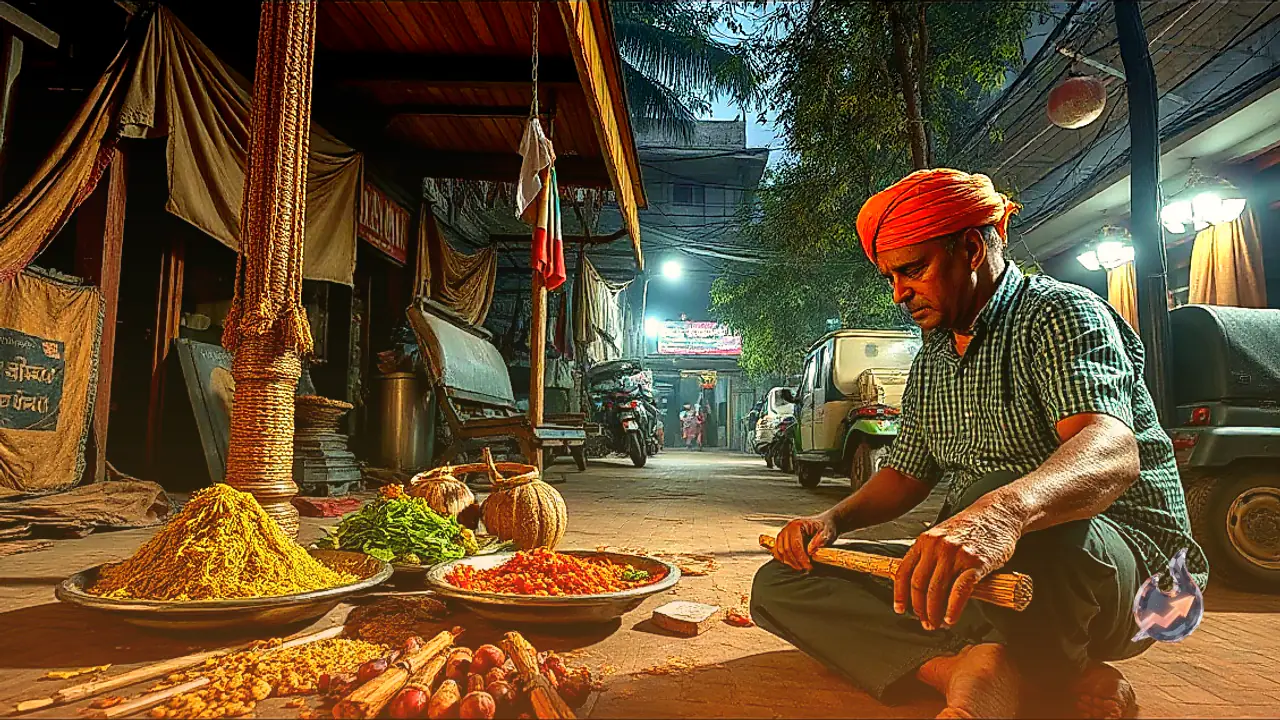

A street vendor in Champaran has transformed the ordinary Indian tradition of serving betel leaves into a thriving craft that blends folk creativity with everyday commerce. Ramakant Mishra, a resident of Sugao village under Sugauli block in East Champaran district, has been operating a small betel shop at Chhapwa Chowk for the past 20 years. Instead of simply folding leaves into the standard triangular packets seen across roadside stalls, he folds them into intricate, distinctive silhouettes. This specialised craftsmanship has earned him regional fame across West Champaran while generating a stable monthly income of Rs 30,000.
The Gujiya Design That Draws Long Queues
Among the various distinctive forms crafted at the stall, the most sought-after creation replicates the shape of gujiya, the traditional festive sweet pastry. Mishra explains that the creative spark came directly from observing how a sweetmaker crimps and seals a gujiya. He decided to experiment with fresh betel leaves to recreate that exact crescent contour. The experiment quickly became his biggest commercial hit. Today, the majority of customers visiting his stall specifically request this gujiya-shaped preparation, frequently creating long queues during peak evening hours.
Tree-Shaped Folds Cater to Farming Communities
Another prominent design emerging from his workspace mirrors the upright structure of an Ashoka tree. The surrounding landscape near Chhapwa Chowk consists largely of productive agricultural farmland, and Mishra notes that local farmers working across these fertile tracts are especially fond of this particular design. Crafting a leaf package to resemble the foliage and symmetry of a tree requires meticulous care and an unconventional wrapping technique, earning consistent admiration from patrons once it is prepared and served.
The Playful Origin of the Wheel-Shaped Paan
The shop also serves a distinctive wheel-like, circular roll that originated from a spontaneous moment of humor. Mishra recalls that he first crafted the circular design on a whim for a local priest who visited his stall. The novelty of the round fold made such a lasting impression that the priest adopted it as his permanent preference. Whenever he arrives at Chhapwa Chowk today, he insists exclusively on receiving the wheel-shaped roll, refusing to settle for any standard fold if the round version is unavailable.
Two Decades of Crafting Economic Independence
By offering creations that customers rarely encounter elsewhere, Mishra has built a strong word-of-mouth reputation that continues to pull visitors from surrounding areas. Two continuous decades behind the counter at Chhapwa Chowk have demonstrated how adding artistic ingenuity to a modest trade can create a resilient livelihood, yielding dependable financial earnings alongside genuine local respect.