
















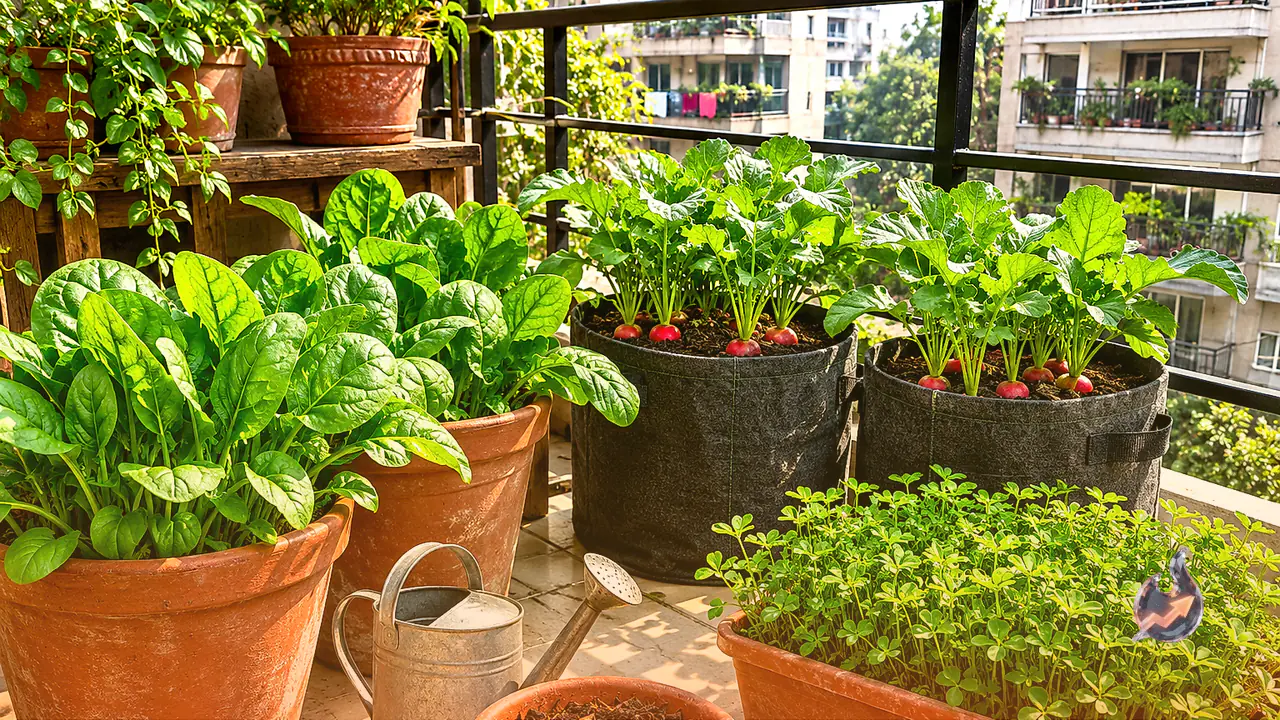

Growing fresh, chemical-free vegetables does not require acres of fertile agricultural land or a sprawling rural backyard. A productive kitchen garden can easily take shape across an urban terrace, a compact apartment balcony, or a small patio using terracotta pots, modern grow bags, or repurposed clean plastic containers. Everyday household staples such as tomatoes, chillies, brinjal, spinach, coriander, fenugreek, radish, and okra thrive remarkably well in these container arrangements.
Why Autumn Serves as the Prime Planting Window
Nursery operator Nek Singh notes that October represents an ideal window for initiating home vegetable gardening. During this period, ambient temperatures begin to decline, creating the cool climate conditions that root crops and leafy greens require for vigorous vegetative development. Depending on the dimensions of their available outdoor space, urban residents can select from a wide variety of cool-season vegetables.
Planting Requirements for Spinach, Radish, and Turnip
Spinach is one of the easiest crops to establish in residential planters or small raised beds. Its seeds can be sown directly into well-prepared potting soil without needing pre-germination. In contrast, root vegetables such as radish demand loose, porous, and deep soil so their taproots can expand downward without physical restriction. Turnips likewise perform best during this cooler phase of the year and require containers with sufficient depth or dedicated ground beds to support root growth.
Maximising Compact Spaces with Fenugreek and Coriander
For residences with minimal balcony space, fenugreek and coriander offer practical and rapid harvesting cycles. Fenugreek flourishes inside shallow rectangular troughs, small pots, or narrow garden strips, with its tender leaves typically ready for initial harvest between 20 and 30 days following sowing. Coriander seeds can be scattered across wide, flat planters or small garden patches. Where additional space allows, residents can also introduce winter crops such as carrots and green peas.
Essential Sunlight and Drainage Requirements
Site selection determines the productivity of any household kitchen garden. Containers must be placed in spots receiving roughly 5 to 6 hours of direct natural sunlight every day. While leafy greens tolerate slightly shaded environments better than fruiting plants, adequate lighting remains critical for sustained growth. Furthermore, every pot, grow bag, or recycled container must have functional drainage holes at the base to discharge excess moisture and shield the root structure from water stagnation and fungal decay.
Crafting the Ideal Porous Potting Mix
Bountiful vegetable yields depend fundamentally on well-aerated, nutrient-dense soil. Gardeners should blend regular garden soil with fully decomposed cow dung manure and coco peat before filling their containers. This combination enhances moisture retention while maintaining a light structure that encourages unimpeded root proliferation. For those planting directly into ground plots, loosening the soil to a depth of 15 to 20 centimetres and working in balanced organic manure provides the necessary foundation for plant health.