


















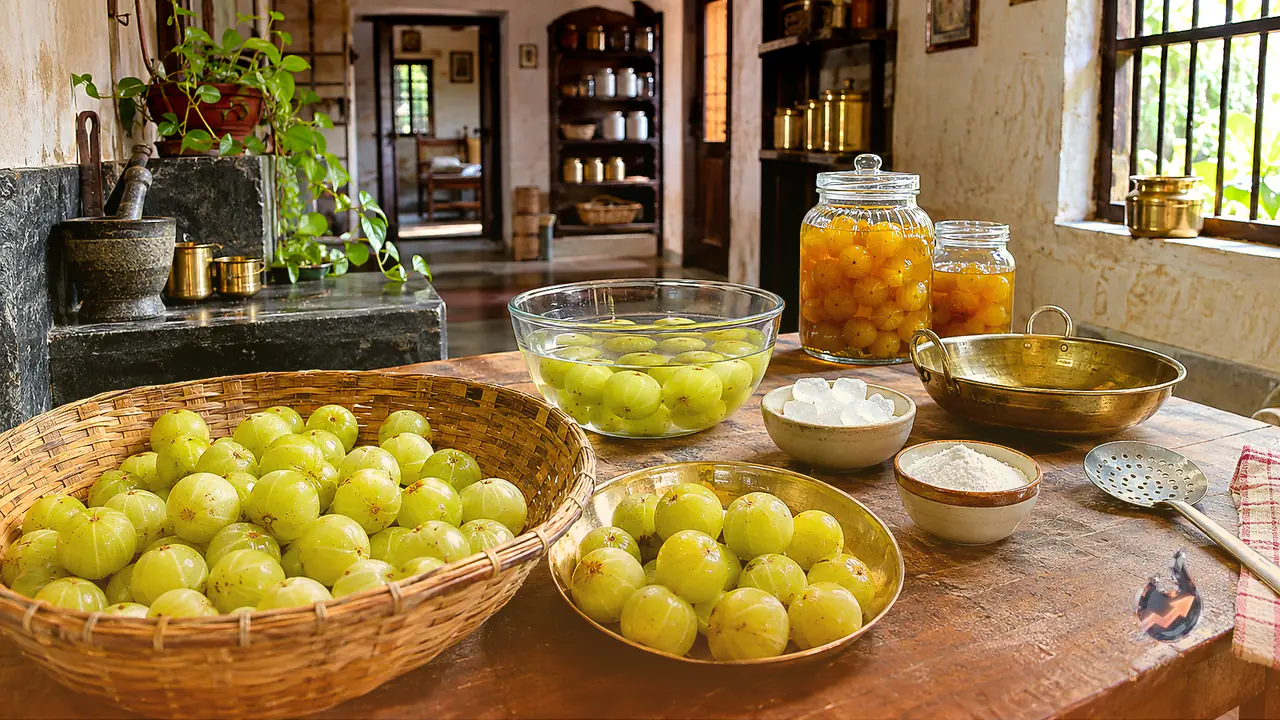

During the cold winter months, incorporating Indian gooseberry, commonly known as amla, into daily meals offers tremendous health benefits, particularly when prepared as a luscious preserve known as murabba. Amla serves as a powerhouse of nutrition, packed with vitamin C, potent antioxidants, and essential trace minerals including chromium, zinc, and copper. Regular consumption bolsters the body's immune defense, providing effective protection against seasonal infections, colds, and respiratory sniffles. While some households traditionalists prepare this delicacy exclusively with refined white sugar, others prefer pure jaggery, or a balanced blend combining both jaggery and unrefined thread rock sugar. Achieving the ideal texture, extending shelf life without spoilage, preserving color, and entirely removing the fruit's harsh raw astringency requires adhering to a precise, time-tested multi-step kitchen process.
Selecting the Fruit and Initial De-Bitterness Treatment
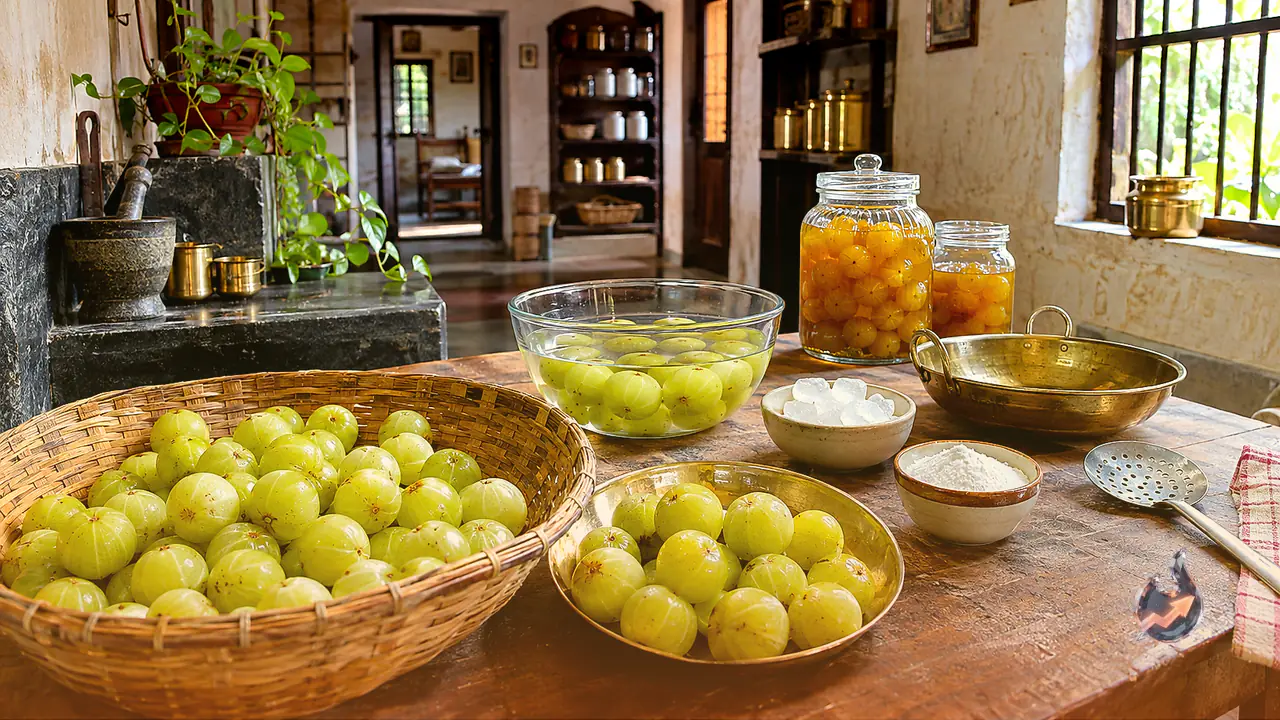
Creating a high-quality, long-lasting batch begins with sourcing firm, fresh, premium amla. A standard home preparation uses around 500 to 600 grams, though quantities can easily scale depending on family needs. Wash the fruit thoroughly, then take a deep bowl filled with plain water and stir in one teaspoon of alum powder. Submerge the gooseberries entirely in this solution, allowing them to soak for approximately 10 to 12 hours. The alum bath plays a vital role: it helps retain the structural firmness of the berries while enhancing and brightening their overall color tone.
After the 12-hour resting window concludes, extract the amla from the liquid and dry each fruit carefully using a clean cotton kitchen towel. Next, to allow the sweet syrup to penetrate deep into the pulp, prick the entire surface of each berry with a fork. If a kitchen fork is not immediately at hand, an ordinary wooden toothpick works just as well. Once pricked, prepare a fresh bowl filled with water mixed with an appropriate portion of slaked lime. Submerge the perforated gooseberries into this lime water, cover the container, and allow them to rest undisturbed for 4 to 5 hours. This slaked lime treatment effectively neutralizes and draws out the natural astringent, bitter bite of raw amla, guaranteeing a smooth and palate-friendly sweetness in the final product.
Boiling and Thorough Drying Stages
Once the 4 to 5 hours in lime water have passed, remove the amla and wash them thoroughly under running fresh water at least two times to ensure all traces of lime wash away completely. Next, set a stainless steel wok or a deep cooking pot on the stove, pouring in roughly two liters of water. Allow the water to heat up thoroughly before adding the washed amla into the pot. Cook the gooseberries over a steady medium-to-high flame.
Determining the exact doneness of the fruit requires no complicated tools. As the gooseberries cook through and become tender inside, they naturally become buoyant, floating up to the surface of the boiling water. This floating action signals that the boiling phase is finished. Promptly remove the cooked amla with a slotted spoon and transfer them briefly into clean water. Following this rinse, spread the fruit out and let them dry completely. Ensuring the exterior moisture evaporates fully is crucial to preventing mold and keeping the preserves safe from spoiling once jarred.
Building the Jaggery and Rock Sugar Syrup
Transfer the completely dried, boiled amla into a heavy-bottomed cooking pan. Take unrefined thread rock sugar, grind it into a fine powder, and gather organic jaggery alongside it. The golden rule for sweetness balance is a strict one-to-one weight ratio: if you begin with 500 grams of fresh amla, you will need 500 grams of total sweetening agent, split between powdered rock sugar and jaggery. Alternatively, for those desiring an entirely unrefined rustic flavor, use only jaggery, matching half a kilogram of fruit with half a kilogram of pure jaggery.
Scatter the jaggery pieces and powdered rock sugar directly over the dried amla in the pan, tossing gently to coat. Cover the vessel with a tight lid and place it over low heat. As the temperature rises gently, the jaggery and sugar slowly melt, drawing out remaining fruit juices to form a rich, aromatic liquid syrup without adding external water.
Simmering to Perfection and Maturation
Choosing jaggery over refined sugar dramatically elevates the nutritional profile of the preserve, turning an everyday treat into a wellness remedy. Continue simmering the gooseberries gently in the bubbling syrup. Gradually, large bubbles will surface and the syrup will start developing a distinct string-like consistency. As the fruit absorbs the bubbling brew, the pale amla transforms into a deep, glossy caramel shade, resembling plump gulab jamuns.
While white sugar murabba maintains a paler translucent hue that often appeals visually on commercial retail shelves, jaggery-based murabba boasts vastly superior therapeutic values despite its darker appearance. Once the syrup achieves the proper one-string thickness and the berries look plump and glossy, switch off the flame. Keep the pan covered overnight at room temperature. This resting duration allows the amla to draw the thick syrup deep to its core. By the next morning, a batch of nutrient-rich, juicy amla murabba is ready to be stored and savored as part of a nourishing daily morning breakfast.