





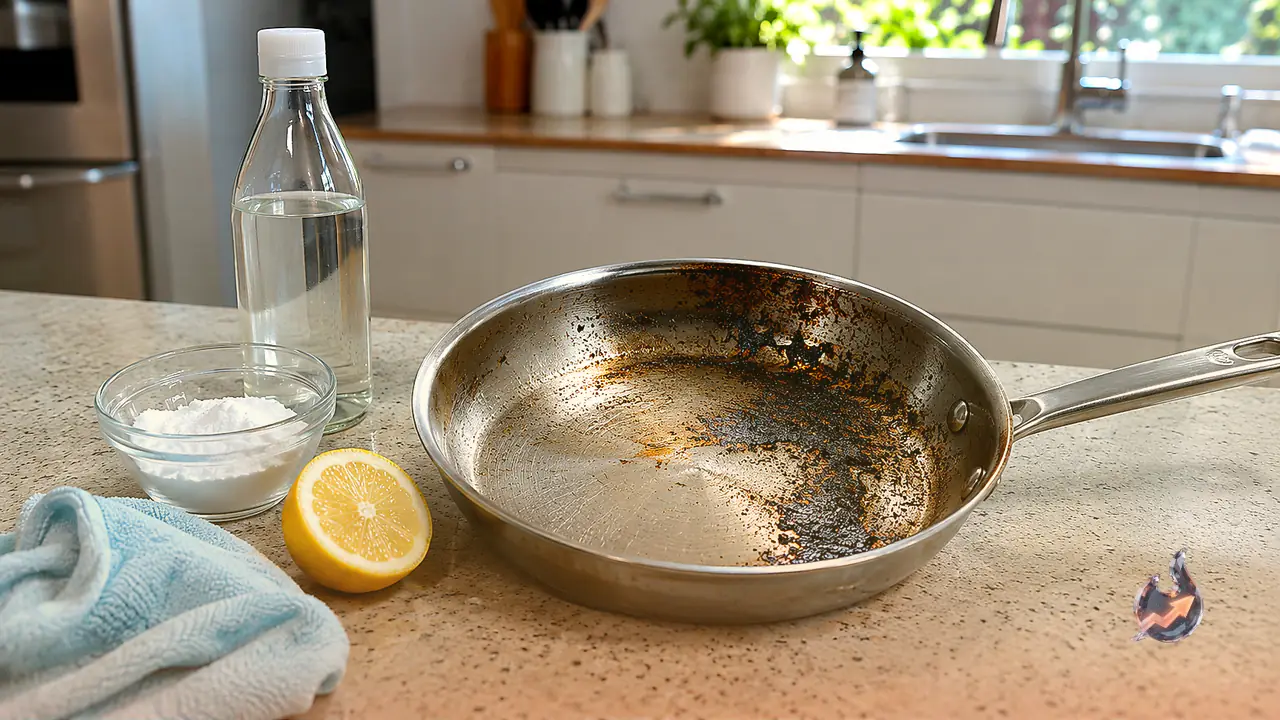
















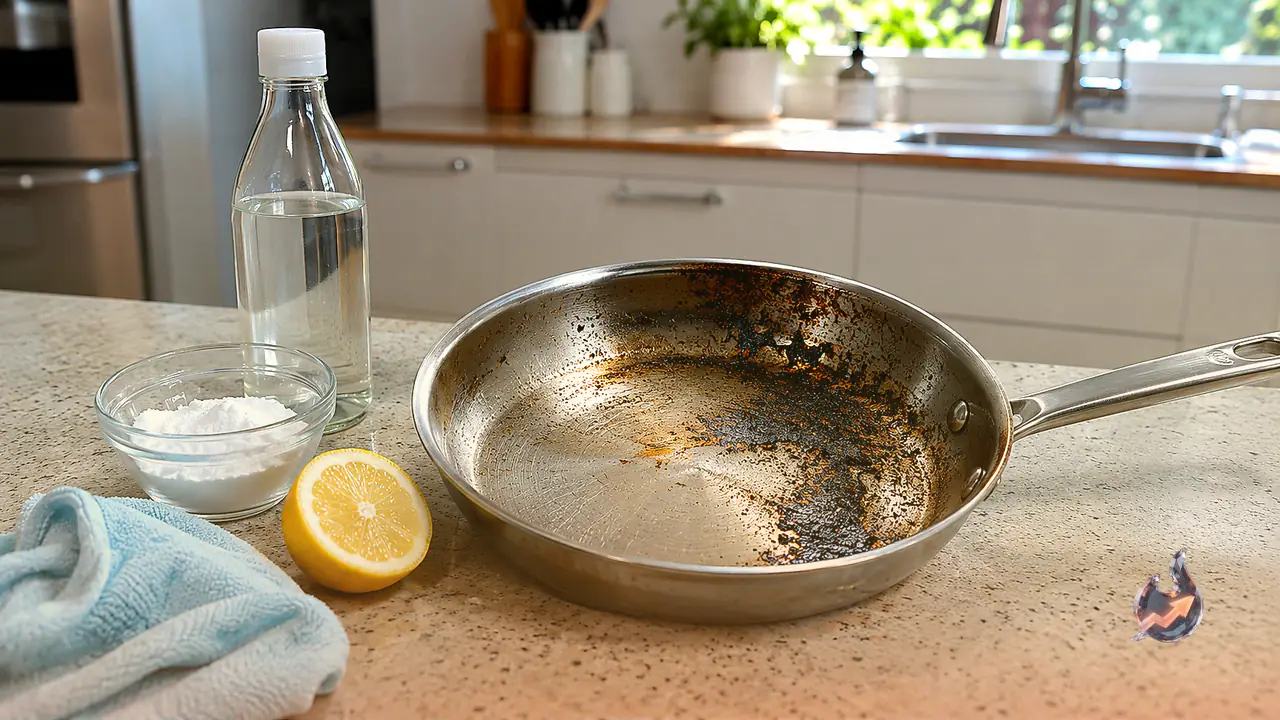

Festive preparations in the kitchen often lead to extensive cooking sessions involving deep frying, from crispy snacks to traditional sweets. With pots and pans subjected to continuous high flames, the cooking vessel frequently ends up heavily scorched both inside and out. Over time, thick coats of burnt carbon and grease weld themselves onto the base and outer rim, creating stains that refuse to budge with routine dishwashing soap and ordinary scrub pads. Instead of spending hours scrubbing in vain or prematurely replacing damaged cookware, a reliable cleaning method using basic household supplies can effectively dissolve the stubborn buildup.
Heating the Pan with a Baking Soda Solution
The process begins by placing the dry, scorched pan onto the stove and letting it heat up thoroughly. Once the metal becomes hot, lower the gas flame to minimum heat. Carefully pour a small quantity of water directly into the hot vessel. Next, add roughly two spoonfuls of baking soda into the water. Maintaining a low flame during this step is crucial because combining baking soda with water inside a searing hot pan triggers rapid foaming and sizzling splatters, requiring careful handling to prevent scalding. Gently stir the mixture to ensure the powder dissolves into the liquid base.
Simmering with Soap to Loosen Burnt Residue
Once the baking soda is blended, introduce any standard dishwashing liquid or cleaning powder into the simmering liquid. Alternatively, a small piece cut from a solid dishwashing soap bar can be dropped directly into the pan. Allow this combined solution to boil steadily over medium heat for about 5 to 10 minutes. During this boiling phase, the heat paired with the alkaline cleaning solution penetrates the hardened grime, gradually softening and loosening the crusted layers attached to the base and sidewalls. Keep an eye on the vessel throughout the boiling period to ensure the water does not evaporate completely, which could scorch the pan further.
Scrubbing with a Wire Brush or Sandpaper Once Cool
After simmering for 5 to 10 minutes, turn off the burner and let the cookware cool down entirely. Handling or attempting to scrub a boiling hot metal pan poses a serious burn risk, so cooling is an essential safety pause. Once the pan is safe to touch, scrub the surface using a stiff steel scouring brush. For unusually stubborn patches of burnt grime, ordinary sandpaper serves as an effective abrasive tool. Focus firm scrubbing motions on the heaviest concentrations of black residue, which should now peel away with minimal resistance thanks to the boiling treatment. Rinse the pan thoroughly with clean water once the residue is removed.
Suitable Exclusively for Iron and Plain Stainless Steel Cookware
While heavy scorch marks are an inevitable outcome of extensive festive cooking, this restoration technique is intended strictly for heavy-duty iron pans or uncoated stainless steel cookware. It must never be attempted on modern non-stick, Teflon-coated, or ceramic kitchenware. Applying abrasive materials like steel wire brushes or rough sandpaper onto coated pans will strip away their protective non-stick finish, permanently ruining the cookware. Keeping the technique restricted to bare metal vessels guarantees a safe return of shine without damaging the kitchen equipment.