





















Growing abundantly across the misty and verdant hills of Uttarakhand, the Malu plant stands far apart from ordinary forest vegetation as a massive, woody vine that climbs high by wrapping itself around neighboring trees. Its broad, attractive leaves can stretch anywhere from 10 to 45 centimeters in both length and width, according to botanical records. For generations, local communities have integrated this versatile plant into their daily routines, utilizing its various parts for a wide range of traditional household needs.
The Unique Identity of Singori Sweets
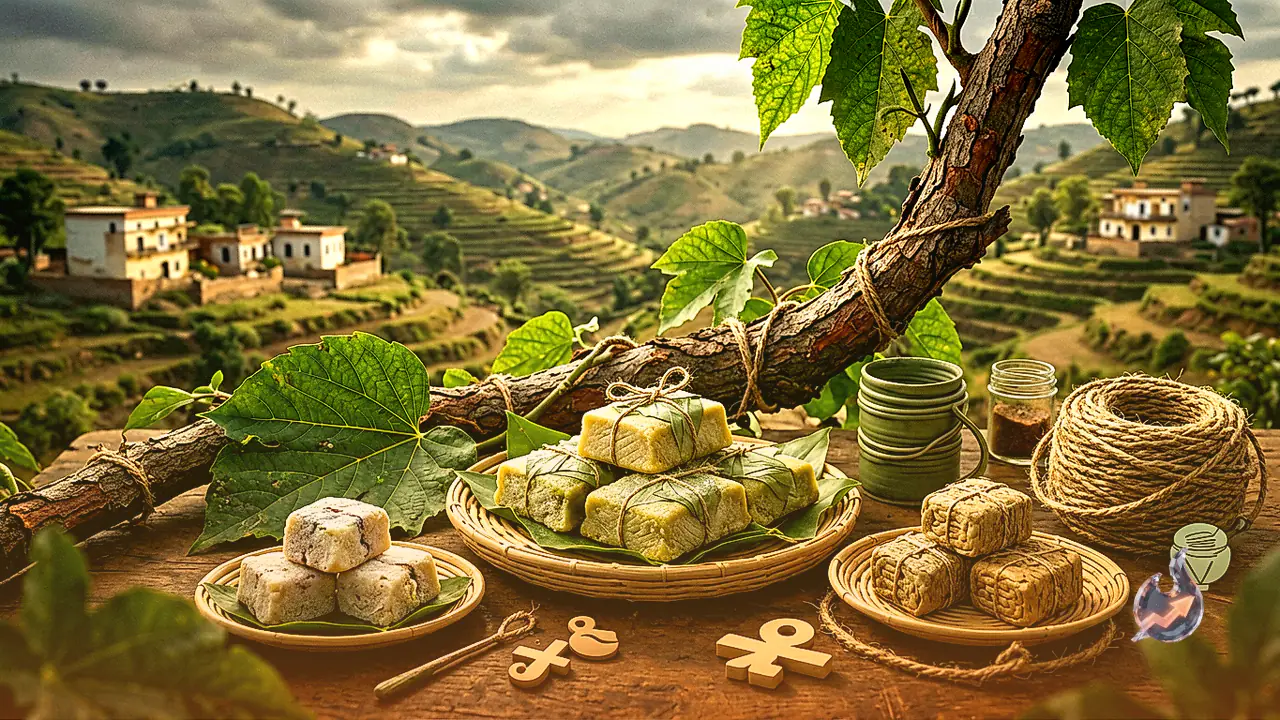
The fame of Malu is perhaps most closely tied to Singori, a celebrated traditional sweet from Uttarakhand. Local merchant and knowledgeable resident Sunita Bhatt told Local 18 that whenever people think of authentic Singori, the Malu leaf immediately comes to mind. Prepared primarily from rich khoya, the sweet is wrapped inside a fresh Malu leaf to give it a distinct form. According to information provided by the Almora district administration, encasing the khoya within this specific leaf infuses the sweet with a unique flavor and aroma, turning the foliage into an iconic symbol of the delicacy.
The Art of Wrapping Traditional Confections
Crafting Singori requires selecting large and pliable Malu leaves. In the traditional method, a mixture of thickened milk solids and sugar is allowed to cool before being placed neatly onto the leaf. The leaf is then carefully folded to wrap the sweet into a conical or triangular shape. The confection is left resting inside its green wrapper for a period, allowing the natural essence of the Malu leaf to permeate the khoya. This botanical infusion is precisely why Singori tastes distinctively different from standard milk-based sweets found elsewhere.
Eco-Friendly Plates and Food Packaging
The utility of these large leaves extends well beyond wrapping sweets. According to forestry study materials from Uttarakhand Open University, Malu leaves have historically served as natural plates, cups, roofing material for covering shelters, and eco-friendly packaging for food items. In rural mountain settlements where disposable or manufactured containers were once scarce, these sturdy leaves fulfilled vital local needs. Malu remains an integral part of this sustainable, nature-reliant heritage.
Extracting Strong Fibers from the Bark
The usefulness of the Malu plant is not restricted to its leaves alone; its woody climber yields valuable fiber from its inner bark. Documentation from Uttarakhand Open University notes that durable fibers can be extracted from the inner bark of Malu and subsequently turned into sturdy ropes and twines. The traditional extraction process involves stripping the bark, soaking it in water, and applying specific local processing techniques. The resulting natural fiber has historically been used to weave items such as mats and baskets.
A Reliable Source of Livestock Fodder
In the rugged terrain of the Himalayan region, where animal husbandry forms a core pillar of the rural economy, Malu leaves also serve as a dependable source of fodder. Forestry and botanical records of the region list the foliage of Malu among the useful plant species utilized for feeding livestock. Mountain communities have long depended on various forest-derived forage options to sustain their animals, and Malu integrates seamlessly into this traditional pastoral system.
Seeds and Overall Botanical Value
Beyond fodder and packaging, Malu possesses additional hidden utilities. Available botanical data indicates that its seeds have edible uses and have been traditionally consumed in certain areas. Furthermore, references point to the extraction of tannin and other useful extracts from its bark. Because nearly every part of the plant serves a practical purpose, locals regard Malu as an exceptionally resourceful wild plant that sustains mountain life in numerous ways.