





















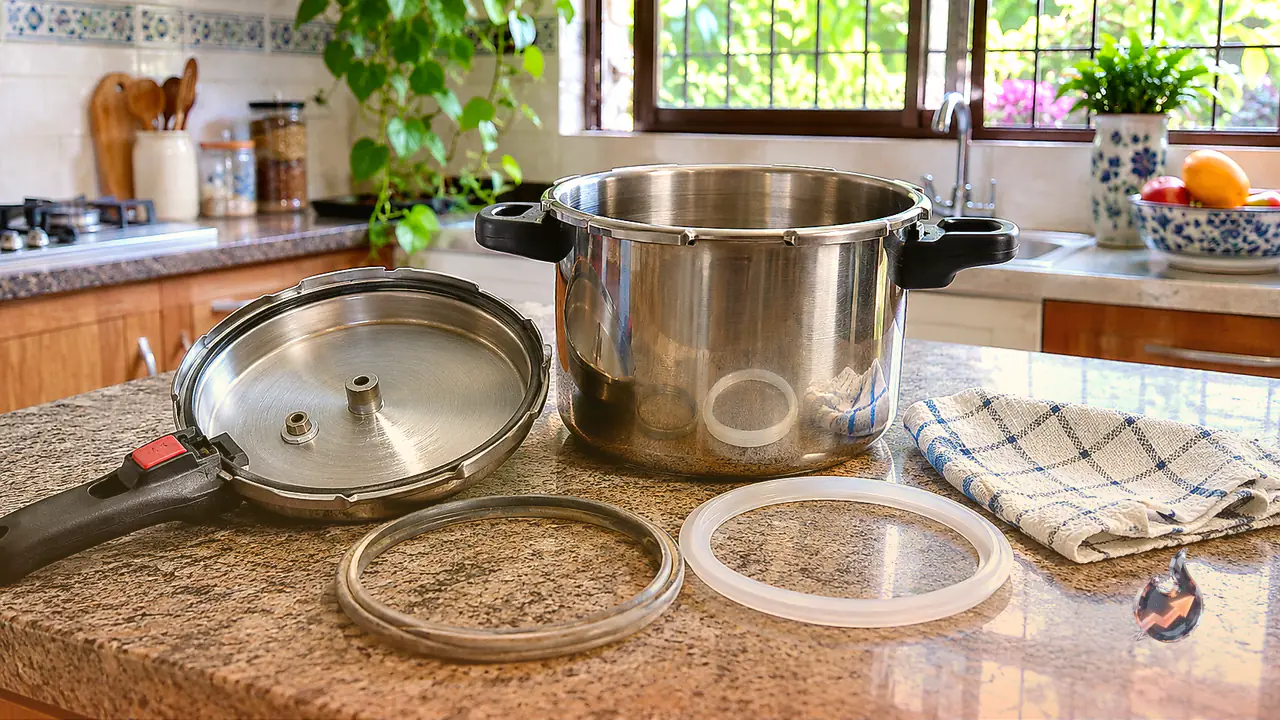

The rubber gasket fitted inside a pressure cooker lid plays a critical role in cooking, as it helps seal the lid tightly and build the necessary internal pressure. With prolonged and regular usage, this rubber can stretch, become loose, or lose its original shape over time. When this happens, the lid fails to close properly, and steam begins escaping from the edges during cooking. If your cooker rubber has also become loose, there is no immediate need to panic, as a few important steps can help resolve the issue.
Remove and clean the rubber carefully
Sometimes the cooker gasket slips slightly out of its designated groove, which stops the lid from closing securely. In such a situation, the first step is to gently remove the rubber from the lid. Wash it thoroughly with clean water and let it dry completely before placing it back into the correct slot on the lid. Never pull, stretch, or try to force the rubber into place aggressively, as this can permanently distort its shape and worsen the fitting problem.
Allow the cooker to cool down completely
Constant exposure to heat and continuous cooking often causes the rubber to expand and temporarily fit improperly. To counter this, always allow the cooker to cool down completely before attempting to remove the gasket. Wash the rubber with clean water, dry it thoroughly, and then reposition it carefully. If the rubber has merely shifted out of alignment due to heat, letting it cool and resetting it can help it fit snugly once again.
Inspect the lid and edges before closing
Before putting the cooker on the stove, always check whether the rubber is seated evenly all the way around the rim of the lid. Ensure that no portion of the gasket is bulging or sticking out from the edges. Additionally, check that the lid, the rubber groove, and the top edges of the cooker are entirely free from food particles, grease, or dirt. Even minor debris stuck in these areas can ruin the airtight seal and prevent pressure from building up properly.
Proper maintenance and cleaning habits
Make it a habit to remove, wash, and dry the gasket thoroughly after every single use of the cooker. Never pull it forcefully or use any sharp objects to pry it out of the lid. Avoid cleaning the rubber in a dishwasher, as the high heat can damage the material and reduce its lifespan. Keep in mind that if the cooker rubber is torn, excessively loose, hard, or no longer capable of building pressure, it should be discarded immediately rather than used in an unsafe condition.
When to replace an old gasket
If you have thoroughly cleaned and repositioned the gasket, but the lid still refuses to close tightly, it is likely that the rubber has simply reached the end of its functional life. Continuous use over a long period diminishes its elasticity, causing it to permanently lose its original shape. In such cases, instead of relying on temporary fixes to tighten an old rubber, it is far safer and more practical to purchase and install a brand new gasket.