






















Growing fresh and vibrant coriander at home is surprisingly simple, even if you do not own a spacious garden or a rooftop terrace. You do not need large agricultural fields or extensive lawn space to get started. A small balcony corner, a windowsill, an old container, or a modest pot is more than enough to cultivate your own supply. The entire process is straightforward and requires just a few basic steps to yield great results.
Choosing the Right Container
The first step in growing coriander involves selecting a proper pot or container that is at least six to eight inches deep and features adequate drainage holes at the bottom. Since coriander roots do not grow very deep, a wide tray or a broad pot works best if you want to grow multiple plants together without overcrowding them.
Using Fertile Soil
Plant growth depends heavily on the quality of the soil provided. Coriander thrives best in loose soil that drains water efficiently and does not let it pool around the roots. Mixing a little compost or vermicompost into regular garden soil enhances nutrient levels and improves drainage. Heavy or clayey soils should be avoided completely because they retain too much moisture, which can eventually cause the roots to rot.
Preparing and Sowing Seeds
To achieve a lush and thick harvest, always select good quality whole coriander seeds. Before putting them into the soil, crush the seeds lightly to split them into two halves, taking care not to grind them into a powder. This simple preparation helps the seeds germinate much faster and more easily. Scatter the seeds evenly across the surface of the soil and cover them with a very thin layer of earth. Avoid burying the seeds too deep, and sprinkle water gently right after sowing to maintain adequate moisture without causing muddy waterlogging.
Managing Sunlight and Watering
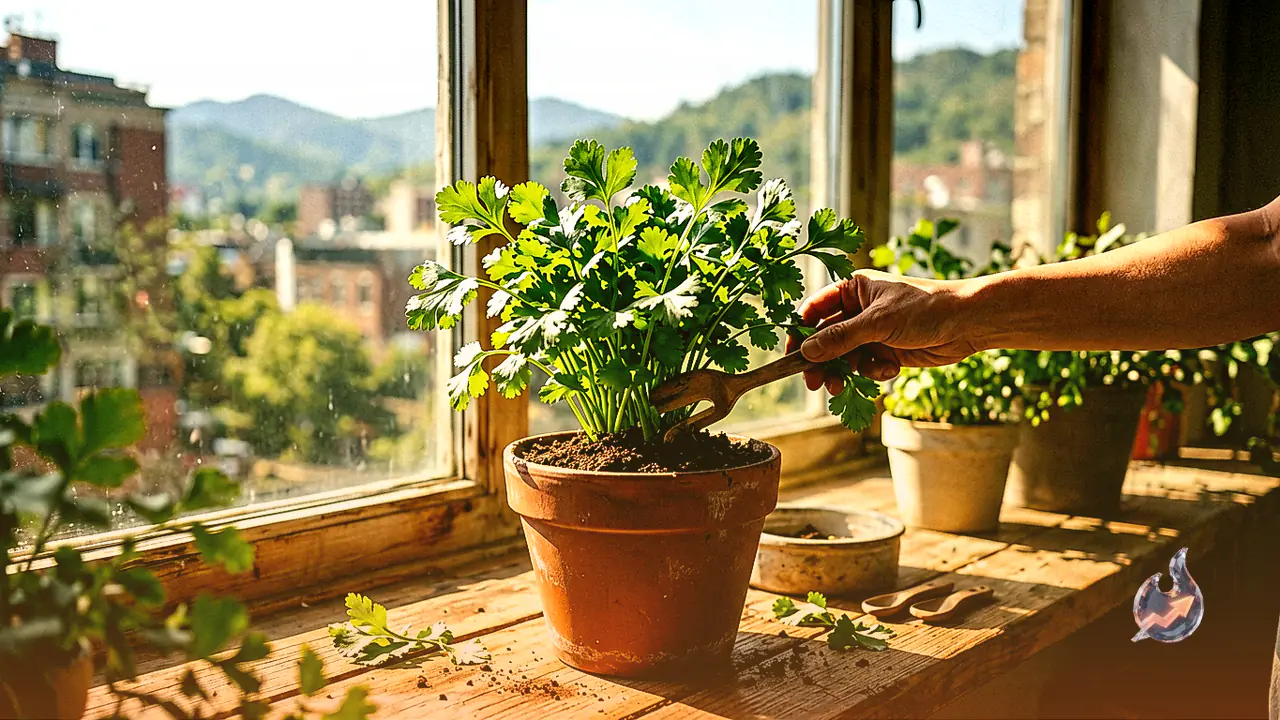
Healthy coriander plants require about four to six hours of sunlight daily. Keeping the pot on a sunny balcony, near a window, or in any well-lit open space ensures proper growth. Watering requires careful attention as well. Water the plants gently only when the top layer of the soil feels dry to the touch. Overwatering can damage the plants and stunt their development entirely.
The Correct Harvesting Method
Once the plant develops sufficient dense foliage, you can begin harvesting the coriander. Instead of pulling the entire plant out by its roots, use scissors or your fingers to snip off the larger leaves and stems from the outer edges. This simple technique allows the inner portion of the plant to grow back even faster, providing a continuous supply of fresh home-grown greens over a long period.