






















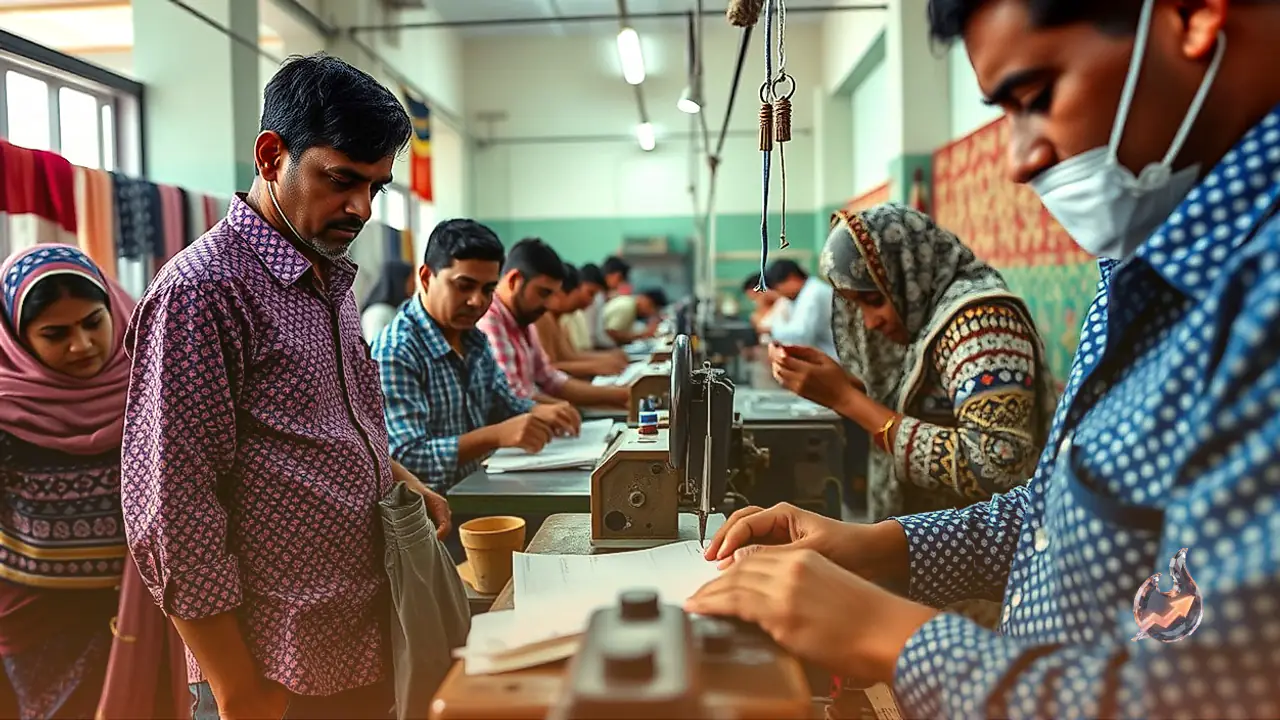

Traditional handcrafted apparel holds a timeless charm, yet distinguishing authentic hand embroidery from modern factory reproductions requires a careful eye. Genuine Chikankari requires dedicated artisans to spend several weeks, and often many months, working patiently with needle and thread to bring intricate motifs to life. Conversely, commercial computerized machinery can replicate similar patterns within a few hours and at a fraction of the manufacturing cost. Before investing in an elegant piece for your wardrobe, knowing how to evaluate the stitching and fabric will protect you from paying premium prices for automated imitations.
The Core Characteristics of Handcrafted Needlework
Authentic Chikankari is an ancient, heritage embroidery tradition that relies entirely on manual needlecraft. Master craftspeople employ distinct traditional stitches, including bakhiya, phanda, jaali, and murri, to craft delicate florals and geometric textures across the fabric. Because each artisan brings an individual touch, no two hand embroidered designs are ever entirely identical. This subtle, organic variation in execution forms the soul of the craft and serves as its primary aesthetic hallmark.
Evaluating Stitch Uniformity and Subtle Irregularities
One of the clearest indicators of authenticity lies in checking the alignment and spacing of the thread work. Manual embroidery naturally displays tiny variations in stitch size, spacing, and thread tension. Rather than being flaws, these minor irregularities offer definitive proof of human workmanship. Machine embroidery, by comparison, produces perfectly identical, uniformly spaced, and rigidly symmetrical stitches that lack any personal character.
Inspecting the Reverse Side of the Fabric
Turning the garment inside out is arguably the fastest and most foolproof diagnostic test you can perform while shopping. The underside of genuine hand embroidery reveals raw structural details, such as small thread knots, overlapping joins, and loose tails running in multiple directions. In contrast, the reverse of a machine embroidered piece looks unnaturally clean, rigidly aligned, and almost indistinguishable from the front side.
Assessing Surface Texture and Thread Feel
Running your fingertips lightly across the embroidered motifs offers immediate sensory clues. True artisanal Chikankari features a distinct, gently raised relief that allows you to feel the dimensional depth and detailed craftsmanship of every stitch. In contrast, factory produced embroidery tends to feel flat, stiff, and abrasive under the hand, primarily due to the heavy reliance on synthetic industrial yarns.
Examining the Intricacy of Jaali Work
Among the most sophisticated techniques in this traditional repertoire is the delicate art of 'jaali' work. To create this openwork lace effect, artisans carefully tease apart the underlying warp and weft threads of the base cloth without cutting them, forming a breathable mesh. This level of microscopic precision is exceptionally difficult for automated machines to duplicate convincingly. The presence of authentic jaali work is one of the strongest proofs that a piece was crafted by hand.
Choosing the Correct Base Fabric
The foundation textile chosen for the garment provides another reliable indicator of its authenticity. Historically, genuine Chikankari is worked on lightweight, breathable, and exceptionally soft materials such as mulmul, fine cotton, georgette, and chanderi. Machine generated counterparts, on the other hand, frequently appear on synthetic, stiff, or thicker base textiles to withstand high speed needle strikes. Always inspect the softness, weight, and overall drape of the cloth before finalizing your purchase.