























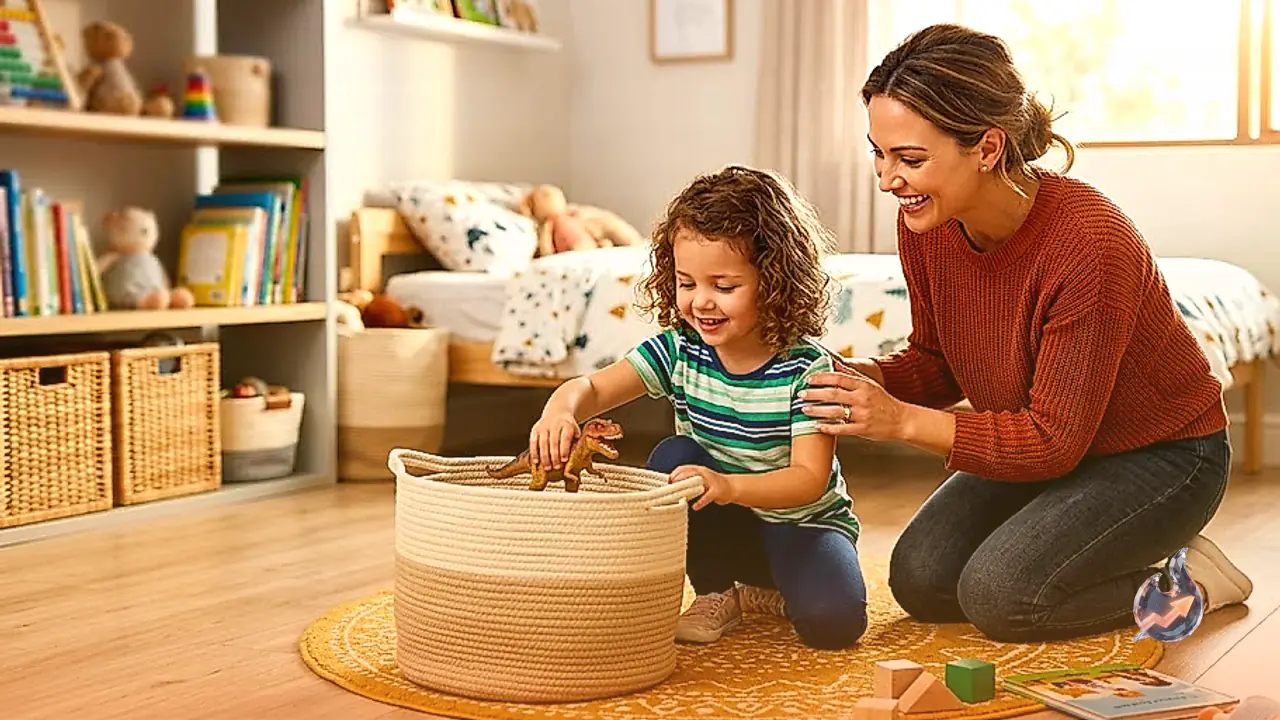

A familiar frustration in many households is watching a freshly tidied children's room descend back into chaos within just a few hours. Toys, scattered picture books, and discarded garments often end up spread across the carpet, leading parents to assume their wardrobes are inadequate or that more storage units are needed. However, the root cause is rarely a lack of physical capacity. Instead, children frequently struggle with the sheer friction of putting things away. When returning a single toy requires opening heavy cupboard doors, organizing multiple bins, or reaching high shelves, procrastination naturally sets in. Rather than overhauling the furniture, establishing a friction-free transition area can resolve the problem permanently.
This practical concept functions as a dedicated return zone. Situated directly inside the child's bedroom, it provides an immediate, easily accessible landing pad where used items can be dropped without delay, leaving the final sorting for a more convenient time.
How an Interim Landing Zone Functions
The core philosophy behind this setup is providing a temporary station rather than permanent storage. Its goal is not to let possessions accumulate indefinitely, but to remove the high barrier of immediate tidying after playtime or schoolwork. Consider a scenario where a child finishes playing on the floor and must immediately get ready for school. Demanding that every single figure or block be returned to its exact designated container during a rush inevitably leads to friction or abandoned messes.
By contrast, offering a designated interim spot allows the child to deposit whatever is in their hands in a matter of seconds. Later in the day, a quick five to ten-minute session is all it takes to shift those belongings back to their permanent homes. This single intervention dramatically prevents widespread floor scatter across the living space.
Why Floor-Level Placement Makes a Difference
To implement this setup effectively, choose an open corner of the bedroom floor along the child's regular walking path. An open basket, a lightweight tray, or a dedicated fabric mat works well. The decisive factor is accessibility: placing the receptacle directly at floor level ensures that a young child can access it effortlessly without assistance.
Children naturally gravitate toward systems that demand minimal effort. If returning an item requires opening closet doors, pulling down heavy organizers, and categorizing pieces into separate drawers, children tend to avoid the chore altogether. A designated floor container strips away every layer of resistance, encouraging immediate tidiness before a habit of carelessness takes hold.
Selecting the Right Items and Setting Boundaries
To prevent this transition point from turning into an overflowing clutter pit, strict guidelines must be drawn regarding what belongs there. It should never serve as a dumping ground for the entire bedroom. Instead, reserve it exclusively for daily essentials that circulate frequently
- Frequently read bedtime stories, picture books, and comics.
- Favorite daily toys, construction pieces, and building blocks.
- Art supplies such as drawing pads, coloring books, and crayons.
- Small play cushions and lightweight items used during leisure hours.
Equally critical is excluding items that disrupt hygiene or safety. Worn clothing should go straight into an independent laundry hamper rather than mixing with play items. Food containers, open snacks, water cups, and any objects requiring adult supervision must be strictly kept out of this area to maintain cleanliness and order.
Breaking Down Cleanup into Manageable Steps
Constantly ordering a child to clean their entire room rarely produces lasting results, as the scale of the task feels overwhelming. Instead, parents can introduce a simple, actionable guideline: whenever playtime ends, drop whatever is in hand into the designated floor basket.
At the end of the evening, or during an agreed afternoon interval, parents and children can spend five minutes clearing out the basket together. By splitting maintenance into small, effortless routines, tidying ceases to be an exhausting household confrontation and transforms into a cooperative, predictable habit.
Test Practical Habits Before Purchasing Upgrades
Before investing in costly modular units or larger cupboards, assess whether the issue is genuinely volume or merely daily management. If the current wardrobe holds the child's possessions when fully arranged, the problem lies in the flow of items rather than cupboard dimensions.
Introducing a designated floor zone offers a gentle, progressive way to teach children personal responsibility and spatial organization. Because every child develops habits at their own pace, younger children will initially need patient guidance and joint participation. Over time, the routine establishes a self-sustaining system that keeps the room calm and manageable.