






















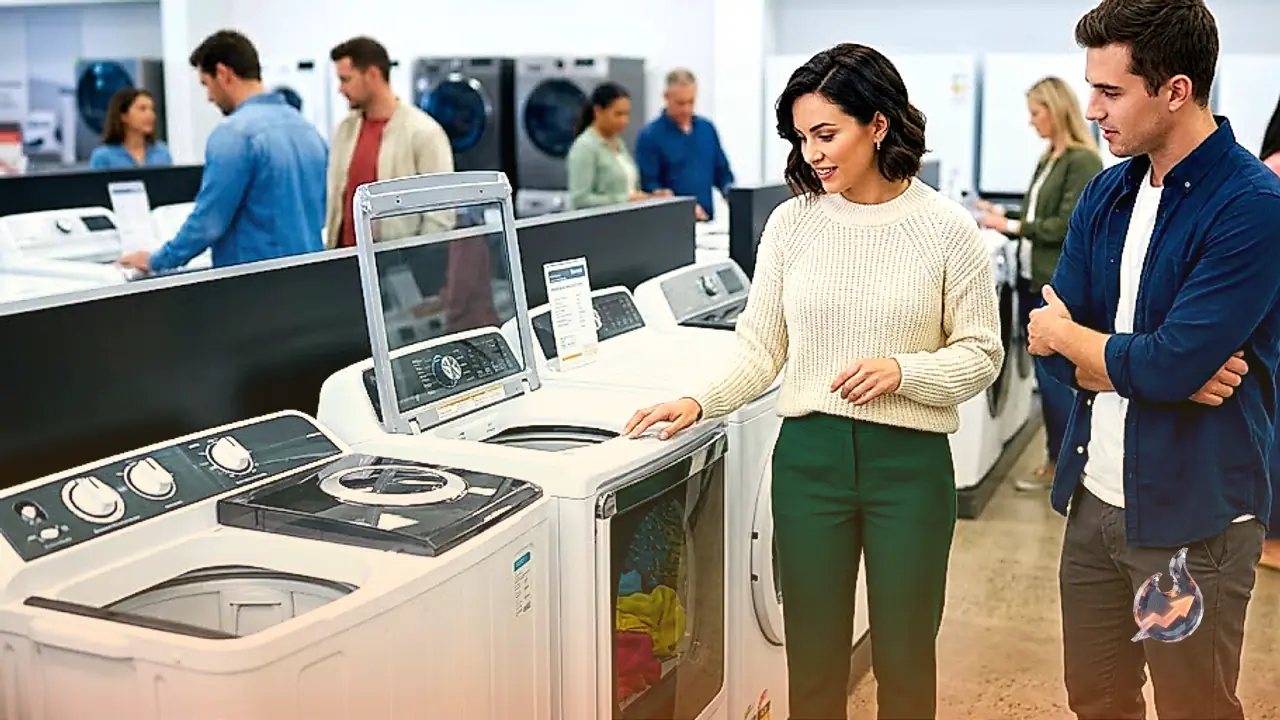

Laundry remains one of the most demanding household chores, making a dependable washing machine an indispensable appliance in modern homes. Consumers exploring the appliance market typically encounter two dominant formats, specifically fully automatic and semi automatic machines. Understanding the practical, structural, and financial differences between these two options is vital for making an informed purchase tailored to household requirements and available financial resources.
Design and Functional Workflow of Semi Automatic Models
A semi automatic washing machine is traditionally designed with two distinct tubs placed side by side. The primary tub is engineered specifically for washing garments, whereas the adjacent secondary tub functions as a dedicated centrifuge for spin drying. Operating this unit requires direct human intervention throughout the wash cycle, as garments must be manually transferred from the washing tub into the drying compartment once the initial agitation ends.
From a cost standpoint, these appliances carry a relatively modest purchase price, making them budget friendly. They also feature economical water consumption, functioning efficiently even in areas with limited water pressure or supply. Because of these low operational overheads and affordable pricing, semi automatic units enjoy enduring popularity among smaller households, regional towns, and cost conscious buyers.
Advanced Automation and Features of Fully Automatic Units
In contrast, fully automatic washing machines handle the complete laundry cycle autonomously from start to finish. The user only needs to place the garments inside the single drum, add the necessary detergent, and ensure continuous water connection. Once activated, the appliance seamlessly manages washing, rinsing, and high speed spin drying without requiring any physical intervention.
Fully automatic washers are widely manufactured in both top load and front load configurations. Their intuitive operation substantially cuts down on daily physical exertion while conserving valuable personal time for busy households.
Comparing Initial Cost, Water, Energy, and Physical Effort
When evaluated strictly on personal convenience, fully automatic models take the lead because they completely eliminate the chore of manually moving sodden laundry between tubs. Semi automatic appliances, on the other hand, demand continuous supervision and manual lifting during the shift between wash and spin stages.
Budget remains a major deciding factor for most families. Semi automatic machines are noticeably cheaper to acquire upfront, presenting an economical alternative for tight budgets. On the resource side, semi automatic washers require significantly less water to operate, whereas fully automatic units generally draw higher volumes of water to carry out their preprogrammed multi step cycles.
Electricity consumption also diverges between the two appliance categories. Semi automatic variants typically draw less power overall, whereas fully automatic machines may consume slightly more electrical energy due to advanced electronics, complex wash programs, and automated mechanical functions. Despite slightly higher utility demands, fully automatic washers offer significant time savings for families managing hectic schedules.
Identifying the Ideal Option for Your Household
Families working within a constrained budget, facing restricted water availability, or comfortable with light manual handling will find that a semi automatic washing machine offers exceptional durability and practical utility.
Conversely, households that prioritize personal ease, modern features, and uninterrupted automated convenience will benefit much more from investing in a fully automatic washing machine. For working couples and individuals managing tight routines, full automation proves to be a worthwhile long term convenience.