






















Whole black peppercorns found in everyday kitchen spice racks can serve a purpose beyond cooking, offering gardening enthusiasts an opportunity to cultivate their own climbing vines right at home. However, coaxing black peppercorns into sprouting is rarely a straightforward task. Because germination can be tricky, an unconventional household gardening technique involving a ripe banana and fresh aloe vera gel frequently circulates among plant hobbyists and social media spaces. This approach suggests placing whole peppercorn seeds inside a slit banana before burying it under the soil.
While the underlying idea relies on the natural moisture and organic breakdown of the fruit to nurture the seed, it should not be treated as a definitive scientific certainty. Successful seedling development continues to depend strictly on standard agricultural conditions, including healthy planting stock, well-aerated soil mixes, controlled moisture, and indirect illumination. Relying solely on garden tricks without fulfilling core environmental needs rarely yields good results.
Selecting Viable and High-Quality Seeds
The foundation of growing a healthy black pepper vine begins with choosing appropriate seeds. Gardeners must seek out unbroken, fully mature, and superior-quality whole peppercorns. It is important to note that regular peppercorns purchased from commercial grocery stores are not always capable of sprouting. Commercial processing, intense dehydration, and mechanical drying methods frequently destroy the delicate seed embryo inside, stripping the peppercorn of its natural ability to germinate.
When available, fresh, ripe peppercorns harvested directly from a mature, living pepper vine serve as the ideal starting material for propagation. Conversely, peppercorns that are excessively aged, shriveled, brittle, or showing signs of surface spoilage have an extremely low probability of germinating. Selecting wholesome, unprocessed seeds remains the most critical prerequisite before planting.
The Mechanics of the Banana and Aloe Vera Method
In this popular gardening workaround, growers take a fully ripe banana and create a gentle, shallow slit along its center. A few whole black peppercorns are tucked directly into the crevice. A modest amount of fresh aloe vera gel is then smeared over the seeds, after which the entire banana is nestled into a prepared planter and covered with potting mix.
It is crucial to recognize that pairing seeds with a banana and aloe vera does not guarantee rapid or certain sprout emergence. The practice functions as a casual home gardening experiment rather than an established horticultural method. Its main utility lies in the consistent moisture and decaying organic mass supplied by the banana pulp, creating a temporary micro-climate around the seed coat. Anyone testing this technique must still maintain standard germination practices alongside it.
Preparing Potting Mix and Drainage Requirements
Black pepper vines demand a potting substrate that permits swift drainage while still retaining uniform dampness throughout the root zone. A balanced planting mix can be crafted by combining standard garden soil with coco peat, coarse sand, or other porous materials to keep the texture loose. Blending in well-decomposed organic manure or rich compost supplies the foundational nutrients required by the young plant.
Equally vital is ensuring that the container features functional drainage holes at its base. Standing water in a waterlogged pot suffocates early seeds and quickly triggers root rot in tender emerging roots. Maintaining a light, porous, and aerated soil structure gives the creeping vine the best environment for root penetration and long-term health.
Planting Depth, Watering, and Preventing Fungal Rot
Once the planter is filled with the prepared loose medium, create a shallow indentation in the center. If incorporating the banana method, avoid burying the fruit deeply into the container; it only requires a thin protective layer of soil over top. Water the planter gently right after covering so that the potting mix is evenly moistened without disturbing the seed placement.
Water application must remain carefully controlled so the mixture stays damp rather than soggy. If the buried fruit begins to decay aggressively, emits a foul odor, or develops visible fungal molds on the surface, it should be promptly removed from the pot. Relying on deteriorating organic waste can introduce fatal pathogens, making clean potting soil and balanced moisture far more dependable for plant growth.
Sunlight Needs, Irrigation Balance, and Trellis Support
Because black pepper is naturally a tropical climbing vine, it thrives in environments that combine bright ambient lighting with comfortable humidity levels. During its vulnerable early stages, the seedling must be shielded from scorching, direct afternoon sunlight, which can easily scorch delicate foliage. Gentle early morning sun or bright, filtered illumination throughout the day provides the ideal light intensity.
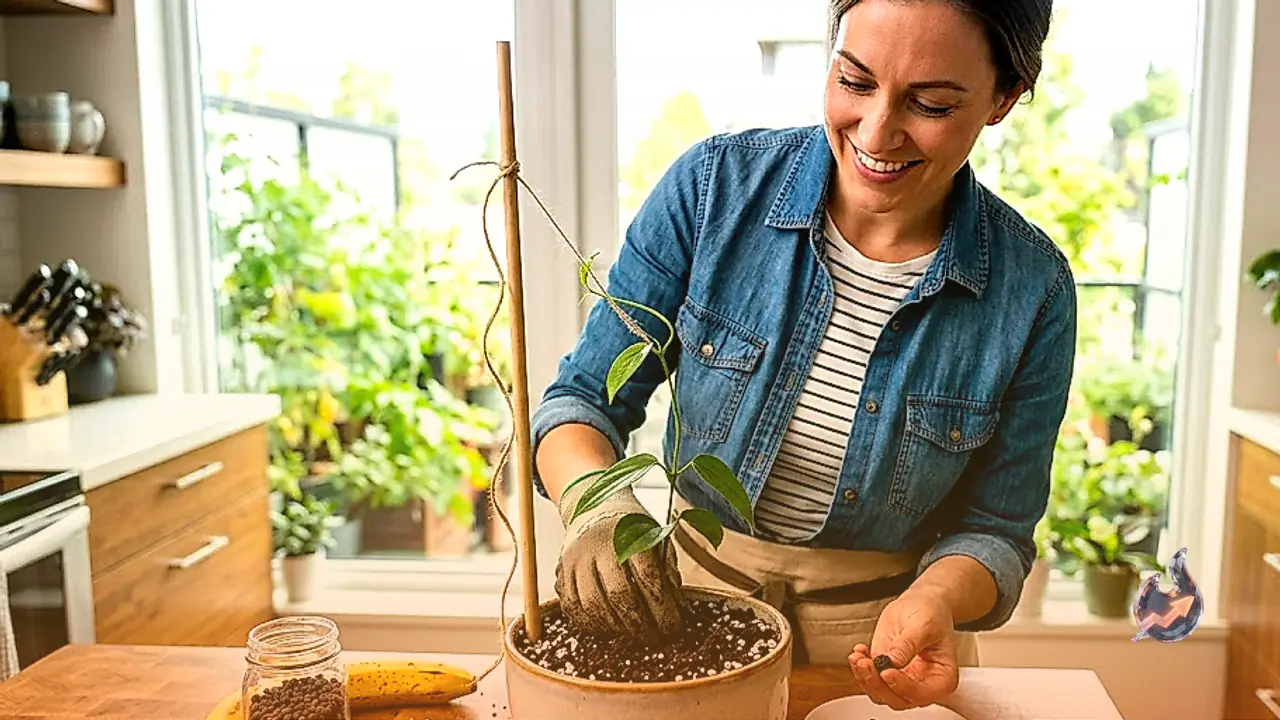
Irrigation schedules should always be guided by the physical feel of the soil surface. Additional water should only be applied when the topmost soil layer feels slightly dry to the touch, avoiding fixed daily soakings that create over-saturation. As the vine gains height and develops rambling tendrils, it requires structural reinforcement to climb upward. Installing a slender wooden stake, bamboo cane, or mesh trellis in the pot allows the gardener to train the creeping stems upward as they expand.