





















Structural stability remains the single most critical factor in residential building projects, where flawed foundations frequently result in costly structural defects later. When planning homes spanning multiple floors, technical precision in foundation casting and deliberate material selection become essential. Lucky Singh Gaharwar, a building materials specialist based in Mirzapur, has outlined practical guidelines covering sub-base preparation, footing casting, and the optimal grades of masonry, cement, and rebar required to preserve structural integrity over decades.
Foundation Groundwork and Trapezoidal Footing Casting
A building depends entirely on its underground base to carry dead and live loads safely down into the soil. According to Gaharwar, site preparation begins directly in the excavated trench, where the sub-base requires thorough compact filling with Ganga river sand. Once the sand compaction is complete, soling work is laid down, followed immediately by plain cement concrete, known as PCC. A reinforced steel mesh mat is then placed directly on top of the cured PCC layer.
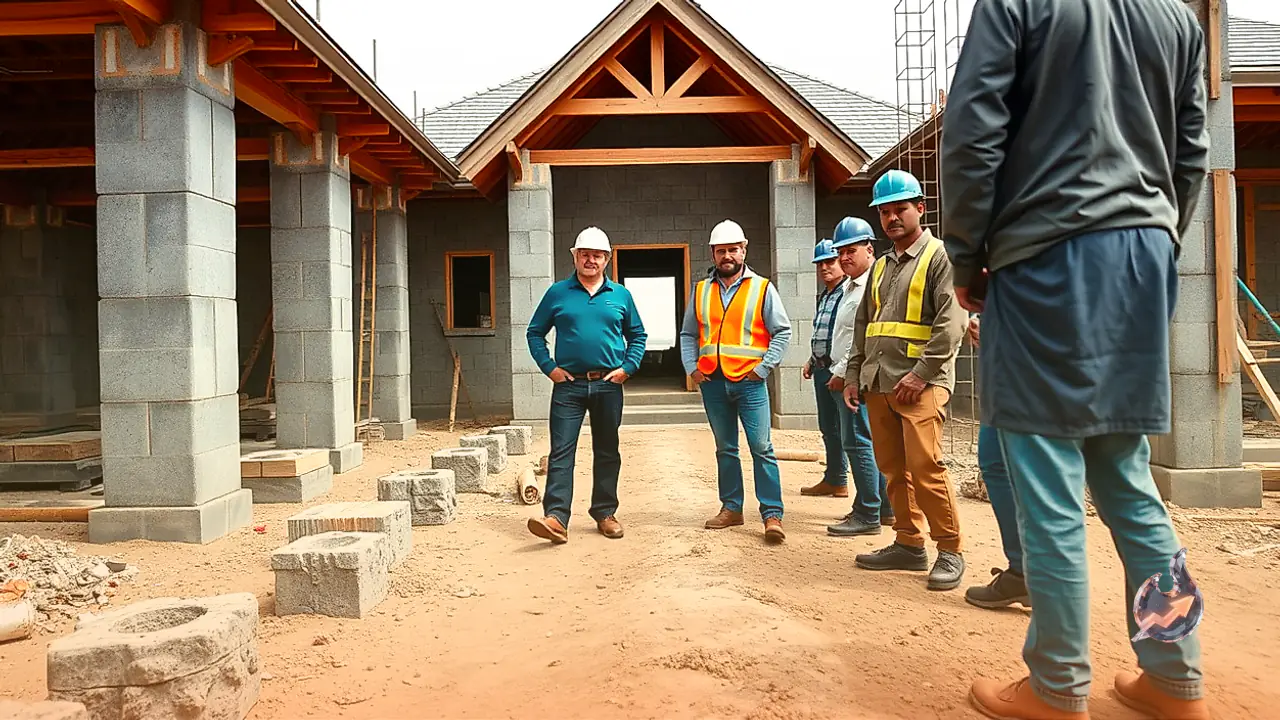
For residential structures intended to span three, four, or five storeys, executing an expanded trapezoidal footing cast, commonly called an elephant foot cast, provides significantly superior load distribution compared to conventional flat pads. The primary structural columns are subsequently erected directly above this cast base. For maximum structural durability, framing columns configured to a 9 by 12 cross-section reinforced with six-line rebar delivers optimal load-bearing strength.
Grading Red Bricks for Masonry Walls
Once the foundation frame cures, exterior and interior wall construction commences. Solid red clay bricks remain the premier choice for exterior wall longevity. Commercial brick supplies are divided into three standard quality tiers, among which first-class deep red bricks represent the highest standard of density and strength.
Second-class bricks share very similar material qualities with the top grade, differing principally in minor variations during kiln firing. In contrast, third-class bricks lack structural strength and should never be incorporated into load-bearing or primary residential walls. Their practical application is strictly limited to underground earth retention or non-structural external boundary wall perimeters.
Selecting River Sand, Specialised Cements, and High-Grade Rebar
Mortar binding and structural concrete placement demand distinct material specifications to achieve targeted compressive strength. For wall bricklaying, super medium sand offers the ideal particulate mix. Sand dredged from the Son River is recognized as the highest benchmark for construction work and is strongly recommended.
Cement formulations vary widely, featuring purpose-built grades tailored specifically for structural column framing, slab casting, and wall masonry. ACC Gold ranks as a premier choice for concrete slab casting, whereas UltraTech and Prism products are widely used across both mortar jointing and structural concrete casting.
For structural reinforcement, selecting verified manufacturing brands and standard metallurgical grades is non-negotiable. Tata and Jindal remain leading standards, while Kamdhenu rebar is widely utilized and established across Mirzapur. Additionally, Gallant rebar demonstrates exceptional current performance. Across all structural rebar purchases, procuring 550 D grade steel guarantees the finest tensile strength and flexibility under load.