























Whenever the monsoon enters its retreating phase, the boundary ridges of farmlands, moist pathways, and open rural plots bring forth a rich bounty of wild edible greens. Across the Vindhya and Baghelkhand belts, this seasonal transition marks the return of forageable wild vegetables that have sustained rural dining tables for generations. In earlier decades, when heavy seasonal rains made fresh market produce scarce or overly expensive, village households relied on these free, naturally sprouting edible greens to nourish their families. Even today, indigenous species such as Kan-Kauwa evoke nostalgic culinary memories, retaining a deep rooted place in rural village households.
Rural Traditions Behind Seasonal Wild Vegetables
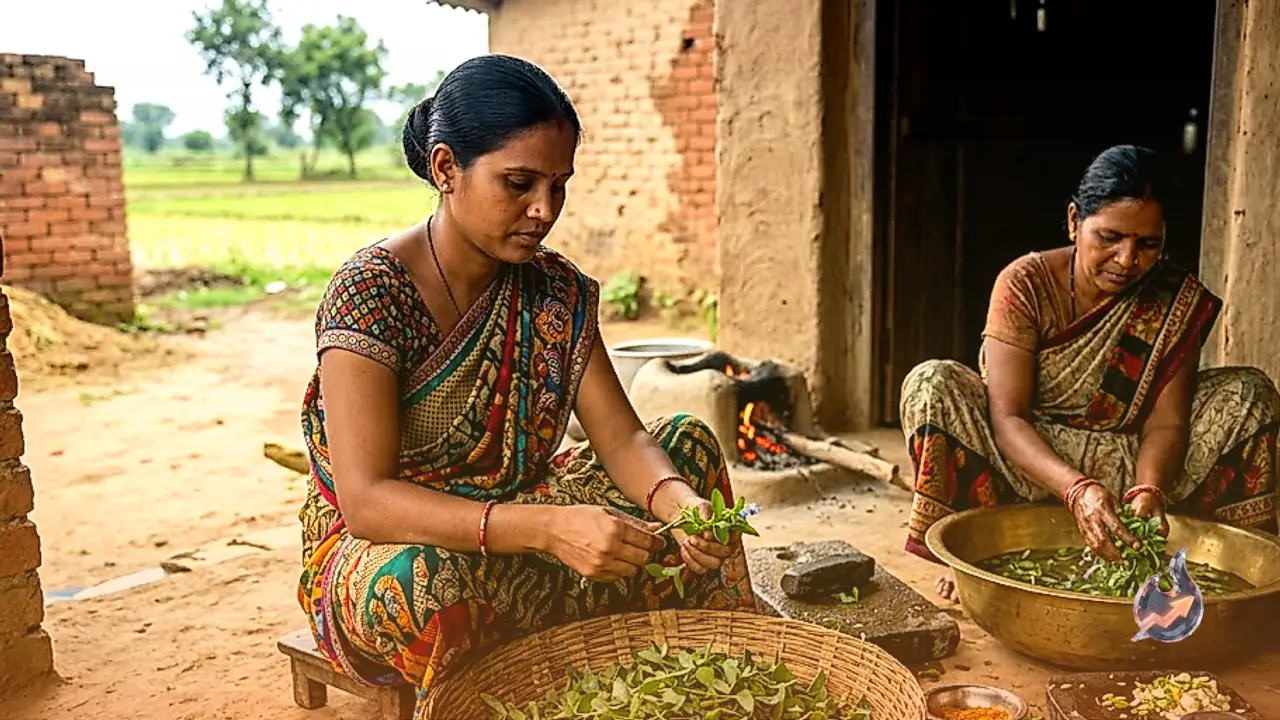
According to Meena Dwivedi, a resident of Satna, the rainy season is currently drawing to a close in the Vindhya region, triggering abundant natural growth of wild edible plants. Varieties such as Chakaunda, Chaulai, and Kan-Kauwa have featured in rural home cooking over generations. Beyond simple sustenance or unique local flavors, gathering these plants forms part of an enduring domestic dietary tradition. Rural families have historically harvested tender leaves from fields and surrounding grounds, cooking them in rustic methods passed down through ancestral lines.
Harvesting Tender Shoots and Cleaning Techniques
Achieving the best culinary results with Kan-Kauwa begins with careful harvesting and rigorous washing. Because the plant sprouts wild along earthen ridges, unpaved roads, and damp uncultivated patches, gatherers must exercise care while plucking the leaves. Only the topmost, tender shoots should be snapped off, discarding any coarse stems, thick foliage, or damaged sections. Since wild forage accumulates dirt and grit, the leaves must be rinsed thoroughly in fresh water three to four times. Once completely clean and drained, the leaves are finely chopped and kept aside for cooking.
The Iron Skillet Method and Aromatic Tempering
To recreate the authentic Baghelkhandi flavor profile, locals recommend preparing the dish in a heavy iron skillet or kadhai. Mustard oil is poured into the heated pan and brought to temperature. The seasoning begins with cumin seeds, a pinch of asafoetida, and a small quantity of fenugreek seeds, quickly followed by finely minced garlic, sliced onions, and whole dried red chilies. The mixture is sauteed until the onions and garlic develop a gentle golden hue. Care must be taken not to burn the garlic, as scorched garlic imparts a sharp bitterness to the entire preparation.
Slow Steam Cooking and Final Searing
Once the aromatic base is ready, the finely chopped Kan-Kauwa greens are tipped into the pan and tossed with the sauteed aromatics. Spices including turmeric, coriander powder, a touch of red chili powder, and salt to taste are added and blended thoroughly. A distinctive characteristic of Kan-Kauwa is that it requires no added water during the cooking process. As the leaves heat up, they release their own natural moisture, gently steaming the dish from within under a closed lid on low heat. Stirring periodically prevents the greens from sticking to the base and ensures uniform spice absorption.
After the greens have fully softened and cooked through, the lid is taken off. The preparation is then continuously stirred over medium heat for approximately 2 to 3 minutes to sear and dry off lingering moisture. This reduction step binds the roasted spices to the greens and infuses the characteristic earthy, rustic aroma that defines the dish. The resulting dry, spiced Kan-Kauwa sabzi is traditionally served alongside fresh, hot rotis or paired as a flavorful side with dal and rice, preserving an age-old culinary identity rooted in the rainy season.