






















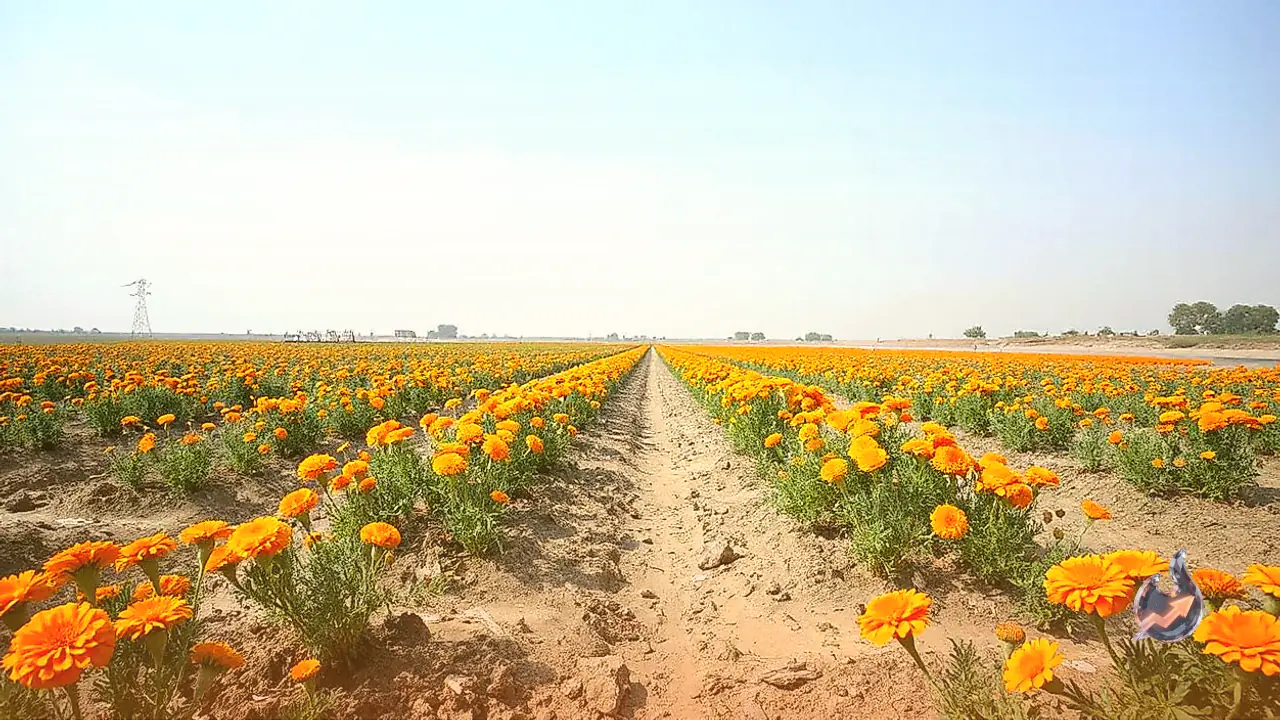

The arrival of the winter chill marks the beginning of intensive floriculture activity across rural heartlands. Among commercial flower varieties, marigold occupies the largest acreage in farming communities because of its strong climate resilience and excellent financial returns. For agricultural producers seeking to move beyond traditional grain crops and secure substantial cash earnings, cultivating marigolds during this season provides an outstanding, dependable opportunity. Adopting disciplined field techniques, along with balanced soil nutrients, allows cultivators to maximise yields and secure strong economic returns.
Land Preparation and Selecting the Right Saplings
Agricultural expert Ankit Kumar, who works closely with marigold farming, points out that field preparation must begin with thorough ploughing of the land. Once the soil is properly tilled and levelled, farmers need to calculate their specific plot area and purchase the required volume of saplings accordingly. For this region, marigold saplings sourced from Varanasi are considered ideally matched to local agro-climatic conditions. These Varanasi varieties exhibit high survival rates, adapt quickly without deteriorating, and eventually deliver a much denser bloom count per plant.
Irrigation Cycles, Nutrient Delivery, and Crop Protection
Immediately after transplanting the Varanasi saplings into the prepared soil, growers must provide an initial watering. Ankit Kumar stresses that fields should never be allowed to remain dry for more than three to four days at a stretch. Maintaining consistent soil moisture is vital, and farmers should plan light irrigation cycles every three to four days. Once proper soil moisture is established, growers can apply urea along with other essential fertilisers. Furthermore, if pests begin attacking the flower buds, farmers should promptly apply appropriate pesticides to keep the blooms healthy and market-ready.
Harvest Timeline, Market Demand, and Profit Margins
Plants start blooming approximately one to one and a half months after initial transplantation into the soil. Once flowering commences, the crop produces fresh blooms continuously over an extended window of four to five months. Due to heavy winter consumption across wedding celebrations, religious ceremonies, and decorative functions, market demand for marigold stays exceptionally strong. Supported by persistent consumer demand, farmers frequently earn three to four times their total cultivation expenditure, making it an exceptionally profitable horticultural enterprise.