





















A tawa or griddle is an indispensable piece of cookware in every Indian kitchen, put to work daily from morning breakfast parathas to evening rotis and chilas. Due to its frequent utility, household members often continue using the same cookware for many years without evaluating its structural condition. However, every piece of cookware has a finite operational lifespan and material tolerance. Over time, the surface of a tawa deteriorates, leading to issues such as food sticking, uneven heat distribution, and inefficient cooking. Recognizing the warning signs of a degraded tawa is essential for maintaining both culinary quality and household safety.
Key Signs That Your Tawa Needs Replacement
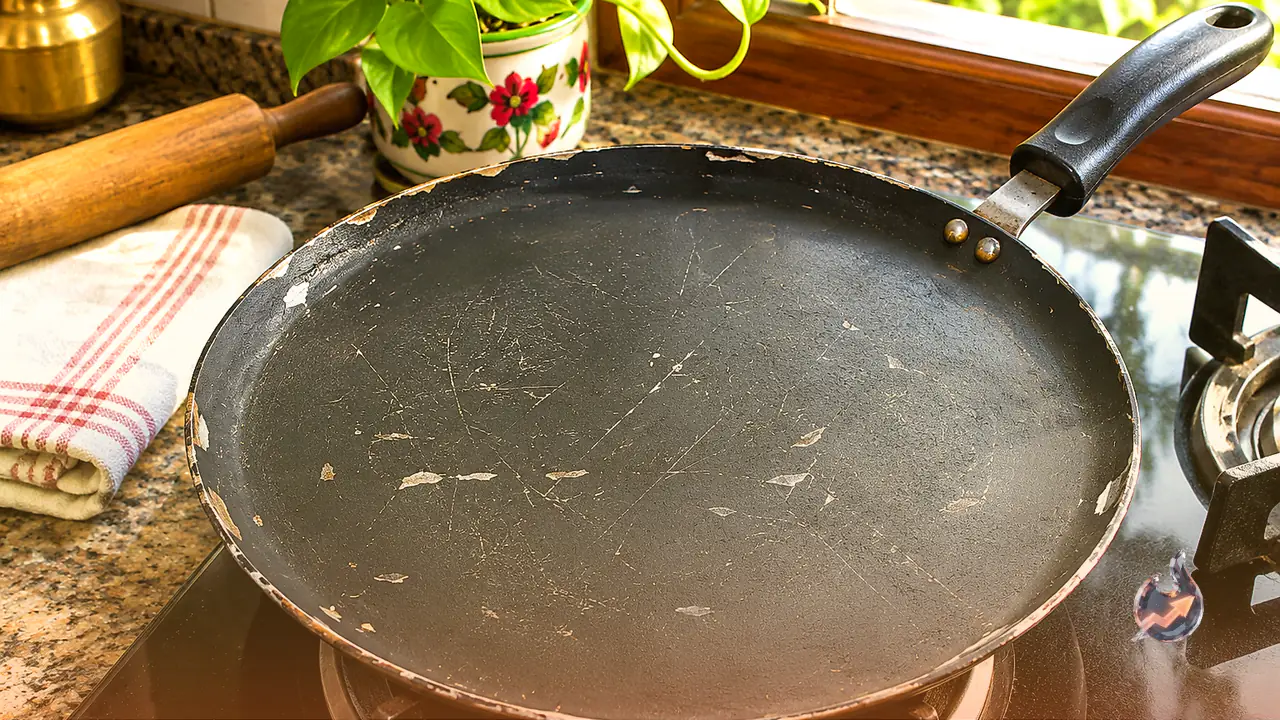
When a tawa reaches the end of its usable lifecycle, clear physical indicators begin to manifest across its body and surface. If you notice deep scratches or gouges on a non-stick tawa that expose the underlying metal layer, it is time to replace the utensil immediately. Similarly, the appearance of surface bubbles, peeling coating, or flaking layers indicates severe wear that compromises functionality.
Another common sign of degradation is when rotis, chilas, or crepes stick to the surface despite applying adequate cooking oil or ghee. This usually occurs when the synthetic non-stick layer is completely worn down or when the oil seasoning on a traditional iron cookware has stripped away. To inspect the flatness of your cookware, place it on a completely flat surface. If the tawa wobbles or sways, its base has warped due to thermal stress. A warped surface causes uneven heat conductivity, leaving rotis partially burnt on one side while undercooked on the other. Additionally, a loose or cracked handle, persistent burnt odors remaining even after washing, and stubborn dark carbon deposits that resist cleaning all signal that a replacement is necessary.
Health Risks and Temperature Sensitivity of Non-Stick Cookware
While minor hairline scratches on a non-stick tawa do not demand instant disposal, extreme overheating presents genuine safety risks. Non-stick cookware should never be subjected to excessively high flame temperatures. When heated above approximately 260 degrees Celsius, the synthetic non-stick chemical coating begins to break down at a molecular level, releasing potentially harmful fumes into the surrounding air.
To avoid this risk, you should never leave an empty non-stick tawa heating on a high flame. Food should ideally be prepared using low to medium heat settings. If the non-stick surface shows widespread damage, deep abrasion, or peeling material, transitioning to a new pan is the safest course of action for health and cooking performance.
Lifespan Differences Across Various Tawa Materials
The longevity of a kitchen tawa varies significantly based on its base metal, frequency of use, and upkeep routines. Non-stick tawas generally have an operational lifespan of 2 to 5 years. In contrast, cast iron tawas possess remarkable durability and can remain functional for many years when properly seasoned and maintained. Stainless steel tawas also offer long term reliability, easily lasting up to 10 years under regular home usage.
For standard iron cookware, the emergence of surface rust does not necessarily mean the end of its life. Rust can be scrubbed away using mild abrasives, followed by re-seasoning with cooking oil. However, if any metal tawa develops structural cracks or deep pits on its cooking surface, continuing to use it becomes unsafe and replacement is advised.
Practical Tips for Proper Cleaning and Maintenance
Adopting appropriate maintenance habits can significantly extend the usable lifespan of your cooking pans. After preparing food on an iron or cast iron tawa, clean it using lukewarm water and a soft-bristled brush. Always dry the pan immediately with a clean cloth and apply a thin coating of cooking oil to shield the iron from humidity and prevent rust formation.
For non-stick cookware, allow the pan to cool down completely before washing it with a soft sponge. Never scrub a non-stick surface with steel wool scrubbers, and refrain from using sharp metal spatulas or spoons that can carve into the coating. To loosen burnt food residues on a stainless steel tawa, pour a small amount of water into the pan and heat it gently, or scrub the area using a mild baking soda paste. Finally, ensure all kitchen griddles are stored in a dry, moisture free cabinet.