















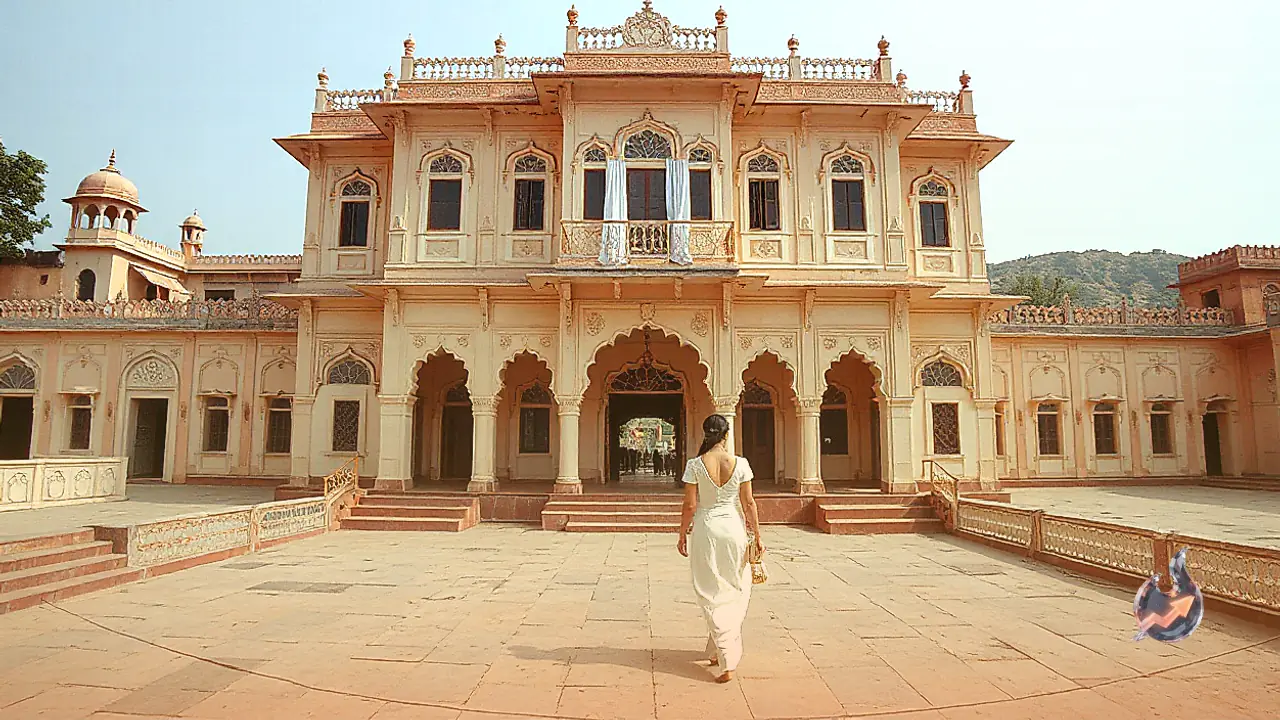

At a time when Indian royalty was almost universally associated with heavily brocaded silks, vivid dyes, and weighed-down finery, Gayatri Devi carved out an aesthetic that felt entirely fresh, timeless, and effortlessly modern. She dismantled the assumption that regal presence demanded excessive pageantry, showing the world that true majesty stems from comfort, simplicity, and an unmistakable personal grace. Her distinctive styling captivated leading international couturiers and high-fashion publications across continents, cementing her status as an enduring global emblem of understated luxury.
The Quiet Revolution of Pastel Chiffons
Any recollection of her visual legacy immediately evokes images of sheer, floating chiffon drapes in exceptionally gentle tones. While traditional royal expectations dictated the use of thick Banarasi silks and ornate zardozi embroidery, she deliberately favored delicate pastel palettes such as soft baby pink, subtle sky blue, pale mint green, and serene ivory. These lightweight sarees were easy to move in, yet the poise with which she draped her pallu created an aura of aristocratic elegance. Believing that beauty thrives in minimalism rather than over-embellishment, she allowed her quiet self-assurance to serve as her most radiant feature.
The Signature Luster of Natural Pearls
Her styling was anchored by a lifelong affinity for pearls, which became her defining sartorial signature. She routinely elevated her understated chiffon sarees with long layered strings of pearls, elegant collared chokers, or quiet stud earrings. Complementing these gems were her soft natural makeup, precisely styled neat bun or subtle waves, and an uncompromised Rajput posture. Her effortless charm gained international acclaim, prompting Vogue magazine to name her among the world's most beautiful women. Her aesthetic remains as modern and inspiring for contemporary wardrobes as it was decades ago.
Unshakable Poise Amid Historic Hardships
Behind the glamorous exterior lay a life marked by severe personal and political turmoil, which she faced with remarkable composure. In 1970, her husband, Maharaja Sawai Man Singh II, the last ruling monarch of the princely state of Jaipur, died following a tragic polo accident. Years later, during the 1975 Emergency under Prime Minister Indira Gandhi, royal residences in Jaipur faced intrusive official raids. She was arrested on tax-evasion allegations and spent five months in Tihar jail. Even within prison confines, she preserved her dignified spirit, choosing to teach fellow inmates and maintaining an unflinching inner calm.
An Enduring Legacy Beyond Personal Loss
Following her release on parole, she stepped away from partisan politics to document her life journey in her acclaimed 1976 memoir, 'A Princess Remembers.' In later chapters of her life, she endured the profound sorrow of losing her son alongside enduring a prolonged legal conflict involving an estate valued at 400 million dollars. Despite such profound tribulations, her graceful demeanor, minimalist philosophy, and devotion to pastel chiffons and pearls remained undiminished until her passing on July 29, 2009, at the age of 90. Today, her sartorial approach continues to guide anyone seeking timeless sophistication rooted in classic Indian grace.