























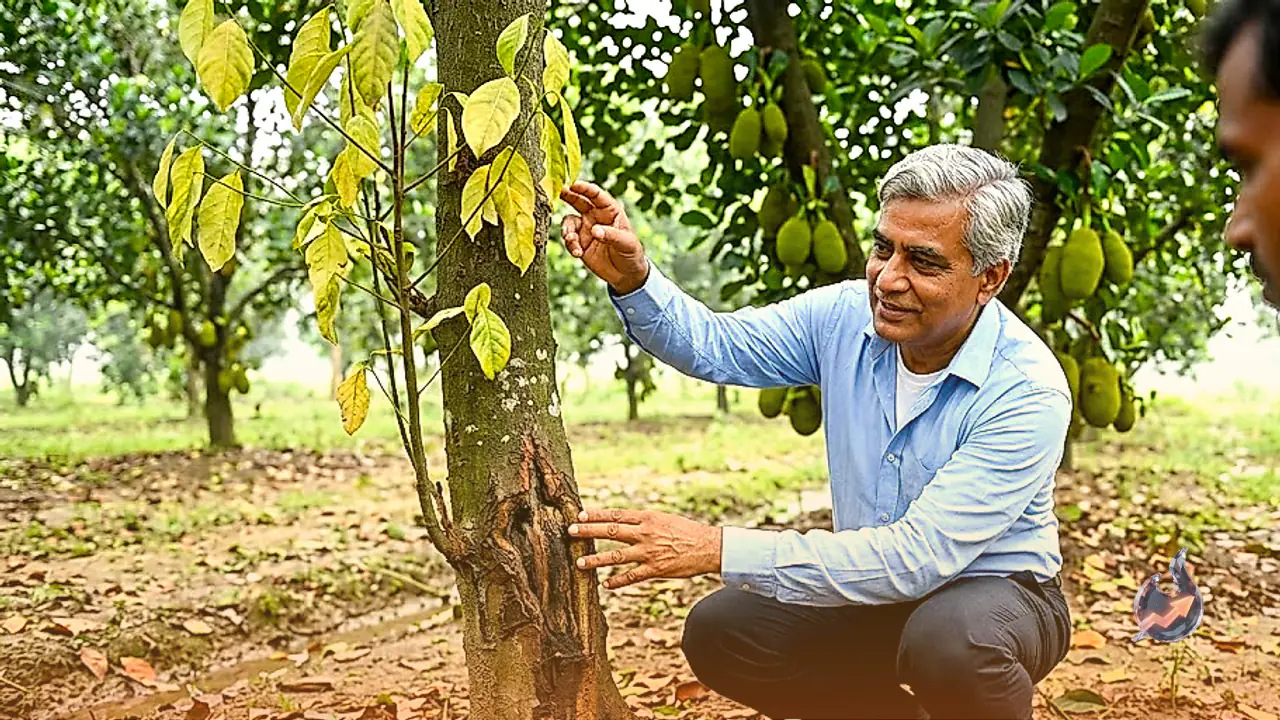

Irregular rainfall patterns, prolonged dry spells followed by sudden heavy downpours, and rising temperatures are triggering a severe outbreak of root rot and wilt disease across jackfruit orchards in Bihar and several other Indian states. Often referred to as the 'tree of nutrition security', jackfruit trees are rapidly turning yellow and drying up under intense fungal attacks. Fruit disease expert Professor Dr. S.K. Singh has outlined key diagnostic signs and four scientific control measures to protect orchards from total devastation.
Fungi Pathogens and Environmental Triggers behind Orchard Damage
Jackfruit cultivation has witnessed substantial expansion across states such as Bihar, Jharkhand, Bengal, and Kerala in recent years. However, erratic weather conditions have exacerbated soil-borne health issues for growers. According to Professor Dr. S.K. Singh, the primary drivers of this crisis are aggressive fungal pathogens, specifically Phytophthora, Fusarium, and Pythium. When fields experience waterlogging immediately after dry periods, these fungal organisms thrive rapidly in the soil and attack the subterranean root structure. As the roots decay, the plant loses its ability to absorb nutrients and water, leading to rapid wilting.
Crucial Symptoms to Spot Jackfruit Root Rot Early
Identifying the onset of root rot early can help orchard managers take preventive steps before trees die. Professor Dr. S.K. Singh notes that initial symptoms appear on the foliage: leaves begin turning pale yellow, start drying from the margins, and shed prematurely. Furthermore, overall vegetative growth halts and the developing fruits remain abnormally small. A definitive diagnosis can be made by excavating the soil around the root zone, where infected roots appear discolored brown or black, soft, and decayed, often emitting a foul odor. Additionally, the bark near the base of the trunk loosens and peels off effortlessly, confirming severe tissue degeneration.
Four Scientific Preventive Steps Recommended by Professor Dr. S.K. Singh
To safeguard jackfruit orchards against fungal decay, Professor Dr. S.K. Singh has detailed four systematic preventive and curative techniques
- Efficient Field Drainage Management: Jackfruit trees cannot tolerate standing water near their base. Orchards should ideally be established on raised beds or ridges. During the monsoon, excess rainwater must be drained immediately. Farmers should utilize drip irrigation methods to ensure moisture remains at a safe distance from the main trunk.
- Root Zone Application of Bio-fungicides: To combat pathogenic fungi naturally, mix bio-fungicides such as Trichoderma and Bacillus into well-rotted cow dung manure and apply it around the root zone. These beneficial microbes neutralize harmful fungi and enhance root resilience.
- Annual Organic Manure and Compost Supplementation: Incorporating compost and organic manure into the soil every year encourages healthy microbial activity. This improves soil structure and boosts the inherent disease resistance of jackfruit plants.
- Chemical Drenching as a Final Remedy: If the fungal infection has reached advanced stages, drench the root zone using recommended chemical fungicides such as Metalaxyl + Mancozeb or Fosetyl-Al. Professor Dr. S.K. Singh emphasizes that chemical intervention should strictly serve as a last resort when organic and cultural practices prove insufficient.