























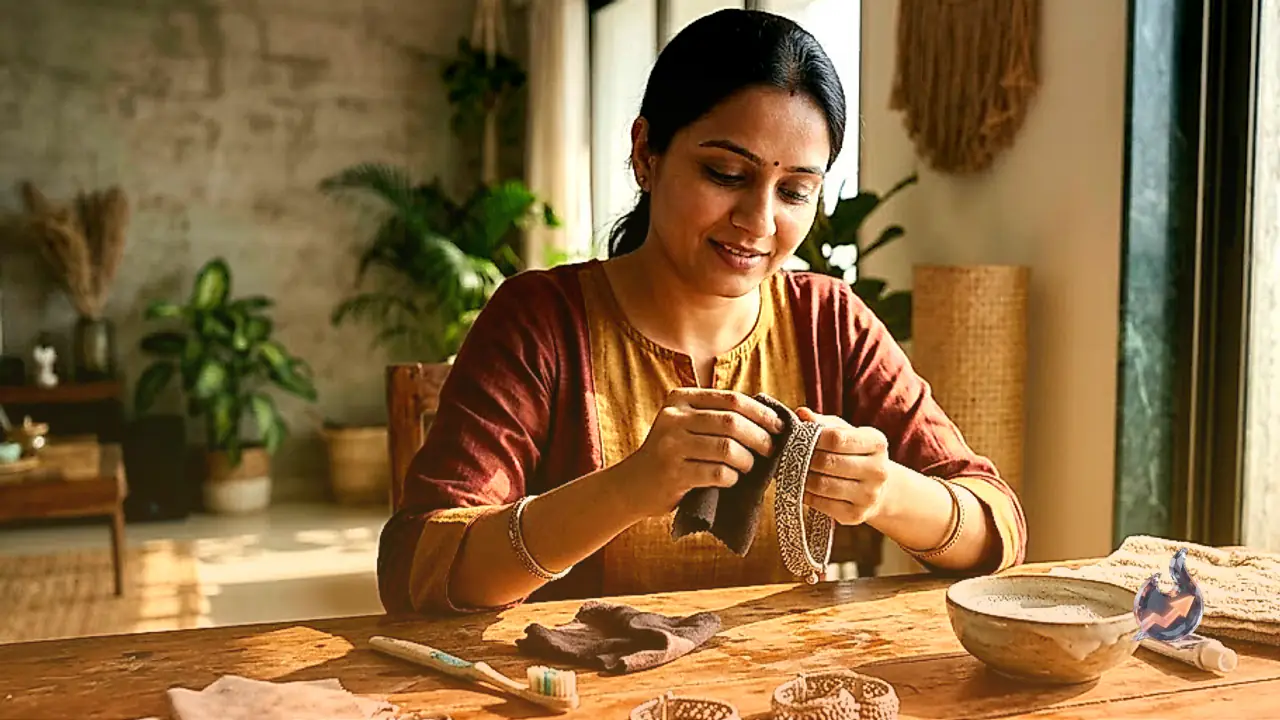

Silver ornaments such as anklets and toe rings hold a cherished place in Indian tradition and everyday fashion. Because they are worn continuously throughout the day, these pieces often lose their characteristic metallic luster quite rapidly, developing a dull, dark coating. Faced with this discoloration, most individuals immediately turn to a local jewelry workshop for professional cleaning. However, understanding how to handle, wear, and store silver can significantly reduce the speed at which it tarnishes in the first place. Furthermore, restoring that original mirror-like shine does not always require specialized equipment. Rampur-based jeweler Shaurya Rastogi has shared practical guidance on safeguarding silver jewelry and reviving blackened pieces using simple household items.
The Chemistry Behind Silver Discoloration
Contrary to popular belief, silver turning black is not simply an accumulation of everyday dust or grease. The underlying cause is an unavoidable chemical reaction. When silver is exposed to atmospheric moisture, natural human sweat, and traces of airborne sulfur, it undergoes a transformation that creates a fine layer of silver sulfide across its exterior. Because anklets and toe rings remain secured around the feet, they encounter far more adverse conditions than earrings or necklaces. They constantly brush against skin damp with perspiration, come into repeated contact with tap water during bathing, and catch dust from the floor. This perpetual exposure accelerates the sulfidation process, making daily-wear foot ornaments darken much faster than other silver accessories stored away in vanity boxes.
Why Metal Quality and Purity Determine Longevity
The speed at which silver ornaments lose their shine is directly influenced by the grade of the metal. Shaurya Rastogi points out that lower-grade silver containing higher proportions of impure alloy mixtures tends to react aggressively to environmental elements. As a consequence, inferior silver blackens very quickly and requires frequent scrubbing. In contrast, jewelry crafted from refined, high-purity silver resists this oxidation process far better, meaning any visible darkening develops at a noticeably slower pace. When shopping for silver items, buyers should never focus solely on artistic craftsmanship; verifying the stated purity and hallmarking of the piece is equally essential to prevent rapid degradation over time.
Protecting Silver from Cosmetics and Personal Care Products
Everyday grooming products represent another major catalyst for silver tarnishing. Deodorants, perfumes, body lotions, moisturizers, and cosmetics contain various synthetic chemicals and sulfur derivatives that react instantaneously upon touching silver surfaces. Such chemical contact strips away the metal's reflective sheen and hastens discoloration. The simplest preventative strategy is adjusting the sequence of dressing up. Lotions, creams, and fragrances should always be applied before putting on any jewelry. Once these cosmetic formulations have fully dried and settled into the skin, silver anklets and toe rings can be put on safely, eliminating unnecessary chemical exposure.
Proper Care Routine After Removing Jewelry
A common misstep is tossing worn jewelry straight into an open drawer or standard jewelry case. Taking a few moments to prepare the items before storing them makes a substantial difference. Rastogi recommends that whenever foot jewelry is removed, it should first be wiped down gently using a clean, soft, and completely dry cotton cloth. This swift wiping action eliminates residual sweat salts, oils, and moisture collected throughout the day. After this initial wipe, the jewelry should never be left out in the open air. Instead, place it into an airtight plastic pouch or zip-lock bag. For optimal preservation, place a thin layer of natural cotton inside the pouch, lay the silver jewelry flat on top, cover it with another sheet of cotton, and press out excess air before sealing the closure. The cotton absorbs lingering atmospheric dampness, while the airtight barrier keeps sulfur-laden air away.
Step-by-Step Home Cleaning Technique
When silver ornaments have already turned visibly black, restoring their shine can be accomplished at home without harsh industrial chemicals. According to Shaurya Rastogi, the process begins by lightly moistening the tarnished piece with a small mist of Colin glass cleaner. Next, sprinkle a modest portion of Colgate tooth powder across the damp surface. Using your fingertips or an extremely soft-bristled brush, massage the powder over the metal with gentle, steady circular motions. Particular care must be taken around intricate patterns, engravings, and recessed grooves where grime tends to settle. Never exert harsh force or scrub vigorously, as aggressive friction can leave microscopic scratches on softer silver alloys. Once the black residue lifts, rinse the piece thoroughly under clean running water. Finally, dry the ornament completely using a soft cloth, ensuring that no lingering droplets remain trapped in the metalwork.
Crucial Precautions for Delicate and Stone-Studded Pieces
While this mild cleaning technique works wonders for solid silver chains, plain bands, and everyday anklets, it should not be treated as a universal solution. Intricate jewelry featuring embedded semi-precious stones, fragile pearls, glass settings, or delicate enamel work requires extreme caution. Applying domestic cleaning agents or abrasive brushing to such items can dissolve underlying adhesives, dislodge carefully set gems, or scratch glossy coatings. For complex, antique, or heavily embellished pieces, it remains safest to bypass home remedies altogether and entrust the restoration to a qualified jeweler equipped with ultrasonic cleaners and specialized techniques.