























Houseplants with bold foliage remain a favored choice for enhancing interior aesthetics and improving indoor atmosphere, with the rubber plant standing out as a premier selection for living rooms and sheltered balconies. Its thick, deep green foliage with an inherent natural sheen adds an instant touch of elegance to any living space. Nevertheless, plant parents frequently observe that despite steady attention, the specimen halts its progress, displays curling leaves, or gradually begins to wither away. Such deterioration stems directly from fundamental oversights in environmental management and basic routine care. Understanding the core requirements of this tropical favorite allows growers to correct these missteps before irreversible damage occurs.
Improper Moisture Regimes and the Danger of Root Rot
Inappropriate watering practices represent the single greatest hazard to the vitality of a rubber plant. Enthusiasts typically err in one of two extremes, either saturating the container daily out of misplaced caution or leaving the potting mix desiccated for protracted stretches. The root architecture of this species cannot tolerate constantly waterlogged conditions. Sustained excess moisture displaces oxygen within the growing substrate, initiating fungal decay known as root rot. As the root tips die off and cease functioning, the foliage loses its support system, causing leaves to turn yellow and drop prematurely from the lower stem.
To establish a dependable moisture routine, gardeners must inspect the top two to three inches of the potting mix before introducing any fresh water. Moisture should only be applied when this upper zone feels dry and crumbly to the touch. Under ordinary indoor conditions during warm summer months, saturating the soil once or twice each week is generally sufficient, whereas the reduced transpiration rates of winter require far less frequent irrigation.
Inadequate Illumination and Direct Sun Exposure
Finding an optimal light exposure is essential for maintaining robust vegetative development. The rubber plant thrives best when positioned in a location that receives generous volumes of bright, indirect natural illumination throughout the day. A frequent misstep involves placing the pot in deep, windowless corners where sunlight never penetrates, or conversely, positioning it directly under fierce, unfiltered sunbeams. Intense direct heat scorches the broad leaf surface, creating bleached or brown burn marks, while acute light deficiency stalls photosynthetic energy production, causing the plant to stay dormant and stunted.
The most effective remedy is setting the container near an east or north-facing window, or behind a sheer drape near a south-facing opening where rays are gently filtered. This arrangement delivers the luminous energy needed for vigorous cell growth while shielding sensitive tissues from the destructive thermal intensity of the afternoon sun.
Dust Accumulation and Insufficient Atmospheric Humidity
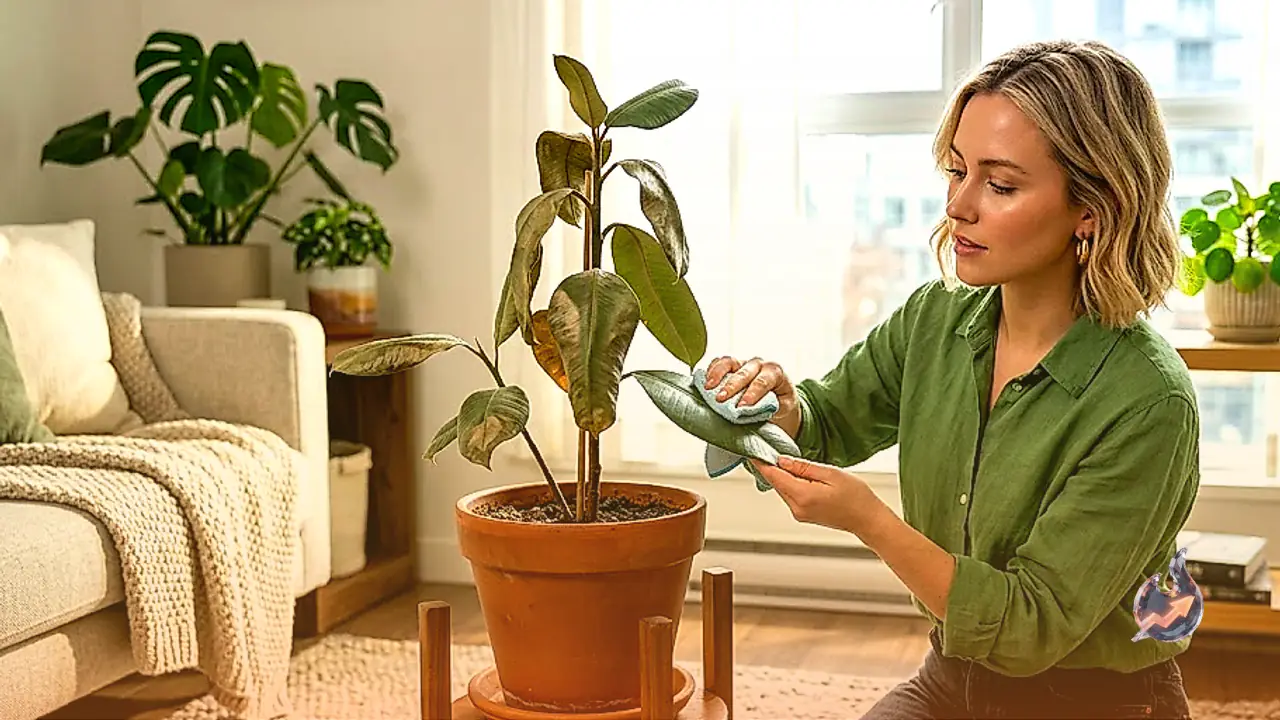
The standout feature of this plant is undeniably its broad, paddle-shaped leaf structure, yet this extensive surface area readily collects settling household dust and airborne grime. Over weeks, a neglected plant accumulates a visible powdery film that completely obstructs the leaf stomata. Because these microscopic pores regulate both gas exchange and moisture release, blocked openings severely undermine the photosynthetic process and respiration. Furthermore, modern climate-controlled spaces often suffer from low ambient moisture, which further causes the edges of leaves to curl, brown, and lose elasticity.
Restoring respiratory function demands routine upkeep. Growers should gently wipe down each leaf blade at least once every week using a soft cotton rag dampened with clean water. Additionally, administering a fine water mist across the foliage helps recreate tropical ambient humidity, allowing the plant to remain refreshed, vibrant, and dust-free.
Fertilizing and Pruning for Accelerated Leaf Expansion
Securing oversized, healthy leaves requires pairing physical cleaning with a balanced nutrient supply and targeted seasonal maintenance. Enriching the topsoil every month with a gentle organic amendment, such as well-aged cattle manure or rich vermicompost, supplies the macronutrients required for thick foliage expansion and root support.
Seasonal pruning performed during late winter or early spring, specifically around February and March, serves as a powerful catalyst for branching. Removing unproductive growth or clipping terminal tips encourages dormant side buds to break, resulting in a fuller silhouette and fresh clusters of oversized leaves. Paying close attention to lighting, drainage, hygiene, and seasonal feedings ensures that even a struggling rubber plant quickly re-establishes steady, vibrant vitality.