























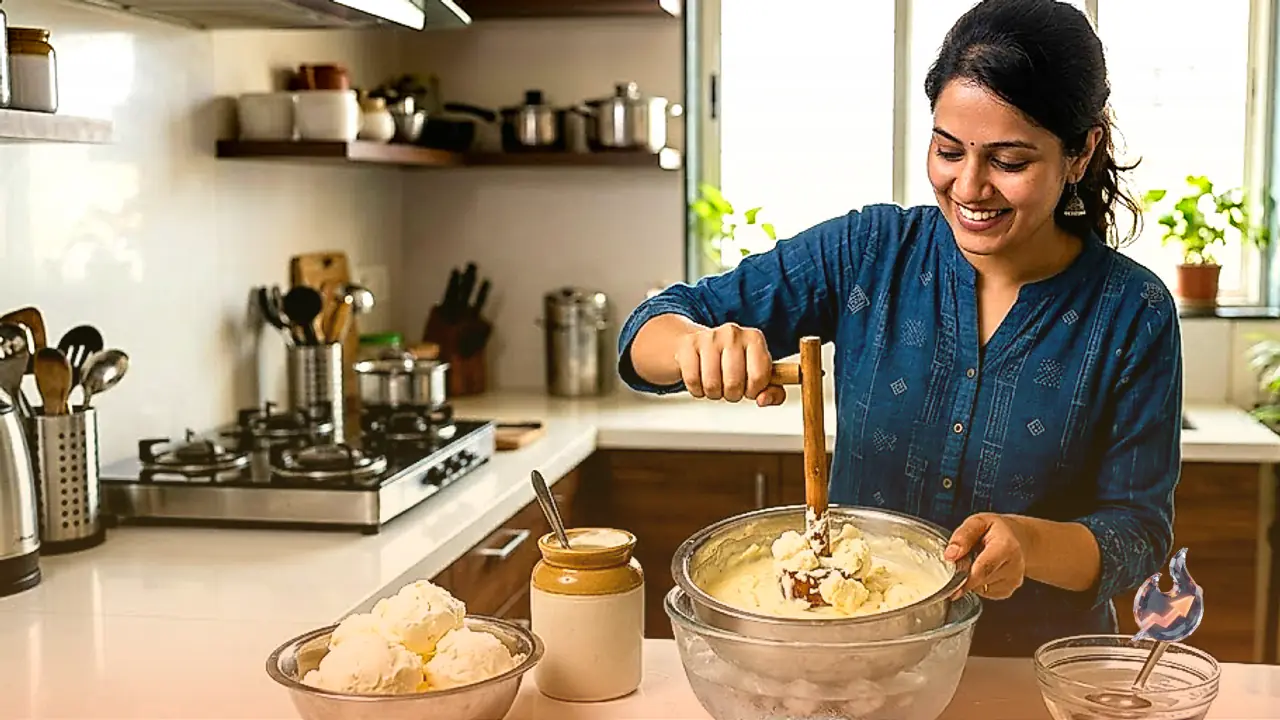

Savouring a dollop of fresh white butter melting over steaming hot parathas, flatbreads, or lentil curry is a timeless culinary pleasure. A common misconception suggests that clarified butter, widely known as desi ghee, can be processed back to yield fresh white butter. However, the scientific reality of kitchen preparation rules this out entirely. Clarified butter is manufactured by simmering churned butter over heat until all moisture evaporates and the milk solids separate completely. Once this transformation occurs, reversing the process to extract white butter from finished ghee becomes impossible. Fortunately, households that regularly collect milk cream can craft fresh, wholesome white butter right on their kitchen counters without relying on store-bought alternatives.
Collecting and Preserving the Milk Cream
The foundational step in preparing authentic homemade butter begins with collecting the rich layer of cream that settles atop boiled and cooled milk. Gather this cream daily for a period of 5 to 7 days, placing it into a designated clean container. Throughout this collection period, the container must strictly remain stored inside the refrigerator to maintain freshness. Once an adequate reserve of cream has accumulated over those 5 to 7 days, remove the bowl from the refrigerator. Allow the chilled cream to sit on the kitchen counter until it naturally settles to ambient room temperature before beginning the churning process.
Churning Mechanics and the Role of Chilled Water
After the cream reaches room temperature, transfer the entire quantity into a large, deep mixing bowl. Introduce a small splash of cold water into the vessel and begin whipping the mixture vigorously using a traditional hand churner or a wire whisk. As steady churning continues, the emulsified fat begins to separate, gradually clumping into delicate, visible curds of fresh butter. If the mixture feels excessively thick or separation slows down, minor additions of chilled water can be poured in during the churning cycle to facilitate rapid clumping of the milk fats from the underlying liquid.
Washing, Shaping, and Proper Storage
Once the butter particles consolidate into a cohesive mass, use clean hands or a kitchen spatula to lift the solids out of the bowl and immerse them immediately into a fresh bowl of cold water. This immediate immersion effectively isolates the solidified butter from any residual thin liquid. Gently rinse the butter 2 to 3 times in clean, cold water using your hands to eliminate all leftover sour liquid traces. Finally, compress and sculpt the clean mass into a smooth round ball or a rectangular culinary block. The finished fresh white butter is ready for immediate consumption or can be preserved safely inside an airtight container within the refrigerator. While a portion of this fresh batch can always be melted down to produce clarified butter, relying on collected cream remains the only genuine way to make white butter at home.