























When giving a home a fresh look, most people naturally focus on repainting walls, replacing seating arrangements, or purchasing decorative accent pieces. Window drapery frequently ends up being an afterthought, even though window treatments wield immediate influence over interior design. Hanging the right curtains does far more than just shield a room from blinding outdoor sunlight; it balances natural illumination, secures indoor privacy, and subtly adjusts visual proportions to make any living space feel significantly larger and more comfortable.
Selecting the Ideal Fabric and Managing Sunlight
The choice of drapery fabric dictates the entire mood of a room and determines exactly how much external daylight filters inside. When the goal is to cultivate an airy, relaxed, and casual environment, lightweight linen is an outstanding option that keeps the setting feeling open. Pure cotton drapery, on the other hand, effortlessly adapts to almost every interior style while offering straightforward daily upkeep. For spaces where an element of luxury and opulence is preferred, heavier velvet fabrics provide a rich texture alongside a distinctly soft feel. In bedrooms or media rooms where harsh glare must be eliminated and total privacy is needed, dedicated blackout curtains are indispensable. Alternatively, gossamer sheer curtains permit diffused daylight to enter during the morning and afternoon while maintaining a comfortable layer of daytime privacy.
Layering Fabrics for Utility and Style
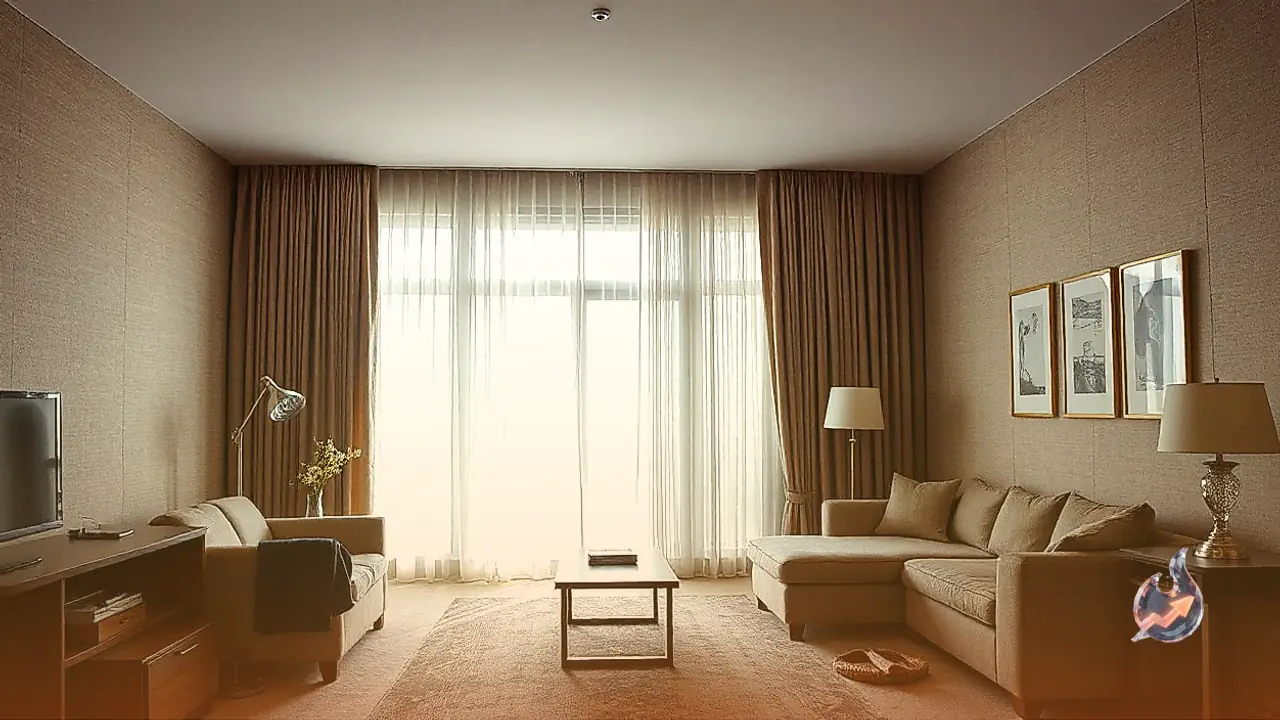
To give window setups a polished look without sacrificing everyday function, adopting a double layered curtain arrangement is especially effective. This layout pairs an inner layer of lightweight sheer drapes positioned closest to the glass with a secondary outer layer made of thicker, heavier fabric. Such a dual setup allows residents to pull back the heavy panels during waking hours to welcome natural illumination, while the sheer underlayer prevents anyone outside from peering in. Once darkness falls, drawing the heavy outer panels immediately secures total visual seclusion and coziness across the entire room.
Elevating Rod Placement to Expand Room Proportions
Homes with compact dimensions or lower ceiling heights can achieve a much larger feel simply by hanging curtain rods more deliberately. Rather than anchoring the curtain rod immediately above the window frame, positioning the bracket closer to the ceiling line and letting the fabric drop straight down to graze the floor creates a strong vertical impression. This vertical line draws the eye upward, giving the distinct illusion of lofty ceilings and extra breathing room. Furthermore, extending the rod slightly beyond the left and right borders of the window frame ensures that opened curtains sit clear of the glazing, allowing unhindered daylight while visually broadening the window expanse.
Balancing Prints and Color Schemes With Existing Decor
Deciding on patterns and palette requires assessing existing furniture upholstery, throw pillows, and floor coverings. In rooms where sofas or area rugs already showcase busy patterns, opting for solid, unadorned curtains prevents the interior from becoming visually chaotic. Conversely, in minimal rooms dominated by neutral walls and understated seating, incorporating geometric, floral, or bold graphic drapery instantly establishes an attractive focal accent. Homeowners can either pick shades that stay within one or two tones of the wall paint for an understated monochrome appearance, or experiment with complementary pairings, such as hanging deep navy blue drapery against warm mustard accents to inject visual vitality.
Achieving an Elevated Look on an Accessible Budget
Revitalizing windows does not require purchasing luxury branded drapery packages at prohibitive price points. Straightforward, cost-effective cotton or linen blend panels can look exceptional if they are measured carefully and hung at the proper architectural height. Adding a bespoke edge to standard off-the-shelf panels is equally straightforward by stitching contrasting borders, decorative trims, or textured fabric tapes along the leading edges. These small personal touches grant modest drapery the refined presence of custom-made designer soft furnishings without stretching the household budget.