























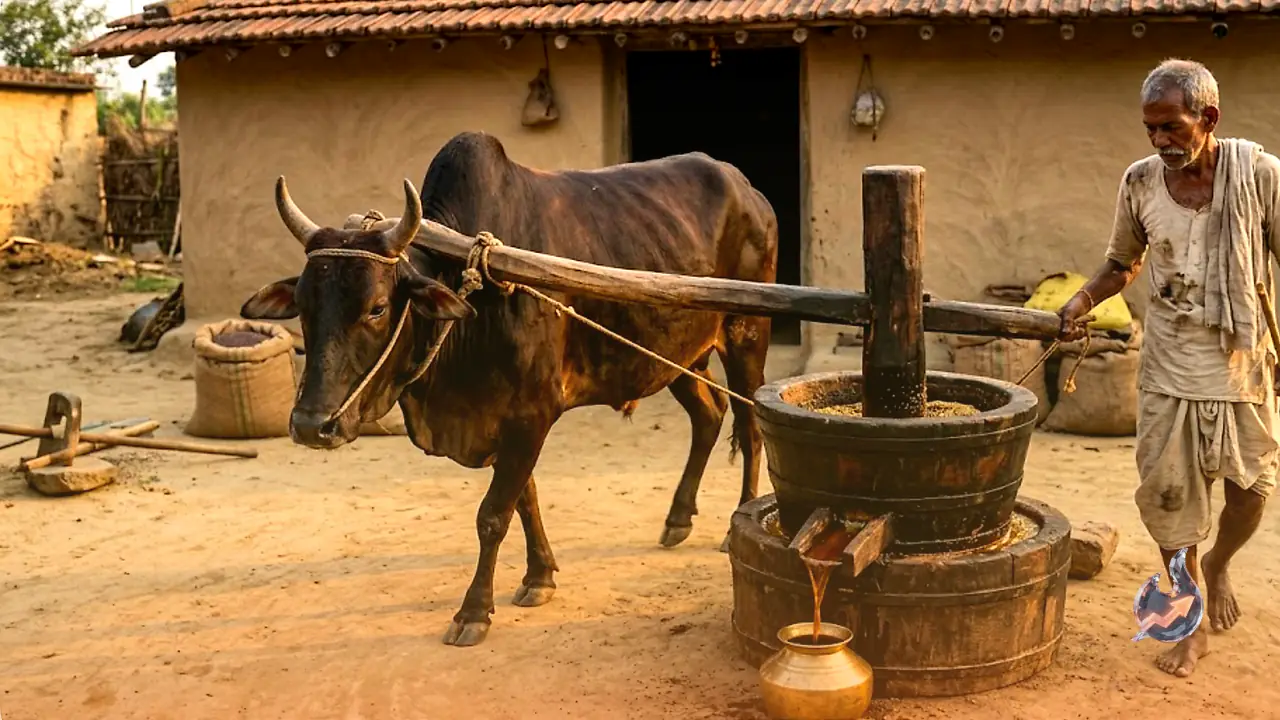

Mustard oil has historically been a cornerstone of Indian kitchens, serving not only for cooking but also for various domestic uses, including baby massages. Doctors and Ayurvedic practitioners alike often recommend its use. However, modern production methods have significantly altered how this essential oil is made. To meet the demands of a growing population, machines now produce oil more quickly and with less manual labor, leading to the near disappearance of traditional, slower methods.
A Living Tradition in Bihar
Amidst this modernization, a unique ancient tradition persists in parts of Bihar. In Jehanabad district, specifically near Mallahchak Mod, mustard oil is still extracted using a bullock-driven mill (kohlhu). This age-old process is more active during winters than summers, with oil extraction continuing throughout the day. Ram Ratan Saw's family has been involved in this trade for centuries, and the kohlhu operates at their residence.
Machine Oil vs. Bullock Kohlhu Oil: Price and Quality Differences
Ram Ratan Saw observes that the advent of machinery has led to the decline of many traditional practices. He recalls a time when their location housed half a dozen bullocks that would collectively produce quintals of oil daily. Today, only one bullock remains, used for extracting mustard and other types of oils. The oil produced by this traditional bullock-driven method is highly valued for its quality and purity, which is reflected in its price. While regular machine-processed mustard oil sells for approximately ₹200 per kilogram, the bullock-driven oil fetches around ₹400 per kilogram in local markets and up to ₹500 per kilogram on online platforms.
Health Benefits and Ayurvedic Recommendations
The premium price of bullock-driven oil is primarily attributed to its production process and perceived health benefits. According to Ram Ratan Saw, machine extraction generates heat, which can destroy many of mustard's natural properties. In contrast, the slow, cold-pressing method of the bullock kohlhu ensures that the oil does not heat up, thereby preserving all its essential nutrients and medicinal qualities. This is why many Ayurvedic doctors specifically recommend using bullock-driven mustard oil, believing it to be more beneficial for health.
Limited Production Meets High Demand
The traditional method is inherently slow, resulting in limited production. During summer, the daily output is about 4 kilograms, which sells out within hours. In winter, production increases to approximately 8 kilograms per day. This swift sale demonstrates a consistent demand for pure, traditionally prepared products, with consumers willing to pay a higher price for their superior quality and health advantages.