






















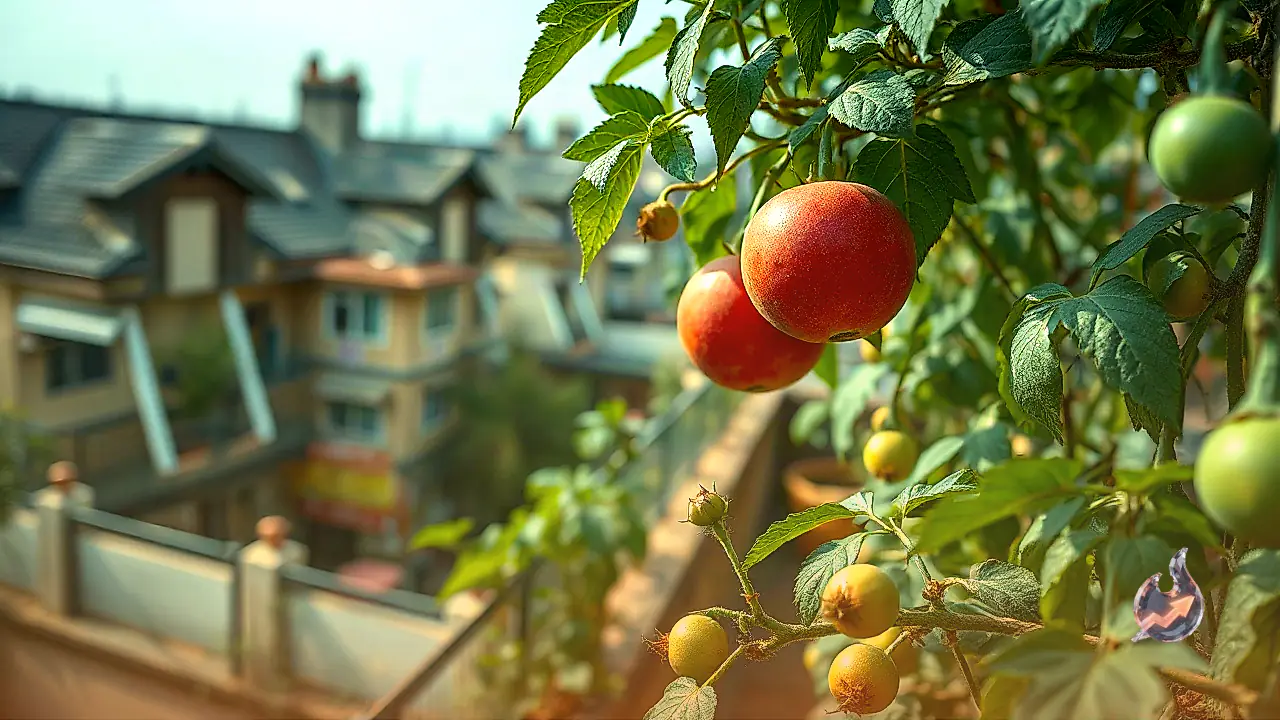

Many urban residents take up gardening on their rooftops, balconies, or courtyards to grow fresh vegetables and fruits at home. While plants grow lush and even begin bearing fruits, a major disappointment often occurs when the produce stops growing at the size of a small finger. Instead of maturing, the fruit or vegetable yellows and rots right on the vine. Gardeners frequently wonder why this happens despite providing adequate sunlight and water to their plants.
Expert Insights and the Root Cause
To understand the science behind this common issue, inputs were gathered from senior scientist Dr. Jogendra Singh Rathore at the Indian Agricultural Research Institute, also known as Pusa in Delhi. He noted that his office regularly receives complaints from individuals who followed every proper procedure while planting crops in their courtyards or balconies, only to watch the fruits fail to expand. While this trouble is observed less frequently in open agricultural fields, urban balcony and rooftop gardeners face it quite often.
The Critical Role of Pollination
Pollination plays an extraordinarily vital role in the proper development of fruits and vegetables. During pollination, pollen grains travel from the male part of a flower to the female part, triggering the biological process that eventually forms fruits and seeds. Honeybees act as major contributors in this cycle. As they sit on flowers to collect nectar, pollen sticks to their bodies and transfers to other blossoms.
Crops That Rely Heavily on Pollination
Numerous crops such as cucumbers, pumpkins, bottle gourds, ridge gourds, watermelons, and muskmelons depend heavily on bees for pollination. If you are growing these items on your terrace or balcony and bees cannot reach them, pollination fails. In such scenarios, manually touching a male flower to a female flower serves as an effective alternative to ensure successful pollination.
Distinguishing Male and Female Flowers
In vine crops like bottle gourds, ridge gourds, pumpkins, and cucumbers, male and female flowers grow separately. A male flower features a long and thin stem, whereas a female flower displays a miniature fruit-like structure right beneath its base. Gardeners can use a small soft brush or a cotton swab during morning hours to gently collect pollen from inside the male flower and dab it onto the center of the female flower.
Methods for Brinjal and Chilli Plants
On the other hand, crops like brinjal and chilli possess different floral structures, requiring a slightly different approach. Simply shaking the plant gently in the morning hours often proves sufficient for these flowers. Alternatively, one can use an extremely soft brush to lightly touch the interior of the blossom to facilitate pollen transfer.
Attracting Pollinators to Your Balcony
A natural question arises regarding how to attract bees and other beneficial insects to a confined balcony or rooftop garden. To solve this, experts recommend planting flowering varieties such as marigolds, tulsi, sunflowers, and zinnias around the garden space. Furthermore, gardeners should avoid the unnecessary application of chemical pesticides, as these substances harm pollinating insects and drive them away.