






















Live: US forces launch heavy retaliation on Iran as West Asia conflict deepensLive
30 Jul 2026, 7:22 am (45 days ago)· 0

Live: US forces launch heavy retaliation on Iran as West Asia conflict deepens

Tensions in West Asia have escalated sharply following recent strikes targeting American assets. While Iranian sources claimed to have shot down multiple US fighter jets, Washington has rejected these assertions, maintaining that all its aircraft and naval blockades remain fully intact.

A fragile one-week lull in West Asia exploded into a severe new phase of armed conflict overnight. In direct retaliation for recent Iranian missile attacks targeting American personnel in Jordan, the US military conducted powerful airstrikes against military installations and command infrastructure across Iran on Thursday, July 30, 2026. The sudden escalation has shattered immediate prospects for diplomatic negotiations while expanding the geographic footprint of the war from the Persian Gulf to the Eastern Mediterranean, where a drone struck a gas storage tanker at Egypt's Port of Damietta. Simultaneously, Jordanian air defense batteries intercepted five Iranian ballistic missiles overhead, and an attack in northern Kuwait left a worker dead at a Chinese commercial facility. As military exchanges intensify across multiple fronts, shipping operations through the vital Strait of Hormuz face dangerous disruptions.

US Launches Massive Aerial Operations Against IRGC Installations

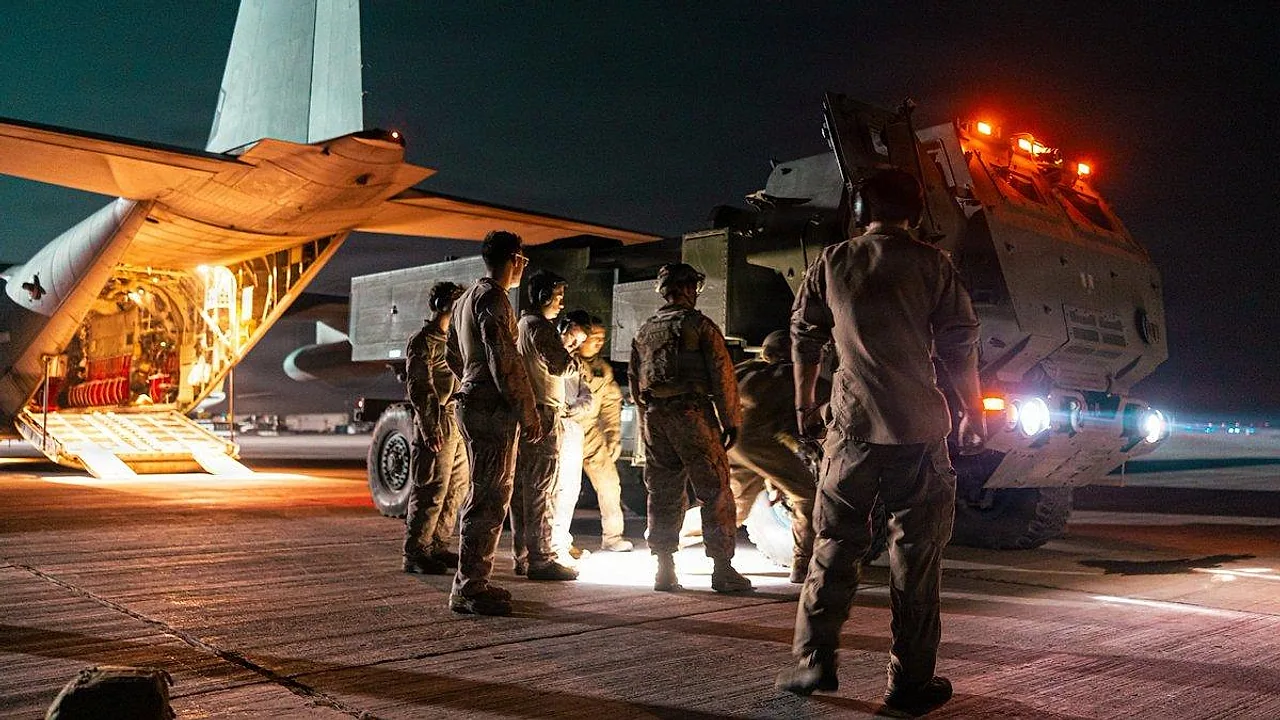
US Central Command (CENTCOM) confirmed in an official statement on Thursday that American armed forces successfully completed a major series of precision air strikes targeting key military facilities in Iran. Military officials detailed that the operation lasted over two hours, striking dozens of strategic installations controlled by the Islamic Revolutionary Guard Corps (IRGC). The targeted infrastructure included primary military command centers, ballistic missile launch sites, uncrewed aerial vehicle (UAV) storage compounds, coastal surveillance radars, and air defense batteries stationed along strategic maritime and inland zones.

Also read

The extensive bombing campaign followed explicit warnings issued by US President Donald Trump during a briefing in the Oval Office. Addressing reporters after the failed attack on American forces stationed in Jordan, President Donald Trump noted that while Iranian officials had previously expressed regret over earlier clashes, the fresh missile attempts against US positions required an unquestionable military answer. He declared that it was time to respond forcefully to determine whether any future negotiation remained possible, emphasizing that the US response would be severe. The action closely followed joint US-Saudi military strikes conducted on July 29, 2026, against Iranian-backed militia strongholds in Iraq, which resulted in the deaths of at least 20 fighters and 6 Iranian military advisors. Concurrently, Israel heightened its defensive posture after accusing Iran-backed Hezbollah of violating ceasefire terms along the northern perimeter.

Addressing claims circulated by Iranian state media outlets, CENTCOM explicitly rejected assertions that Iranian forces had destroyed three American F-35 fighter jets and three naval vessels. US military spokespersons confirmed that zero American aircraft or maritime assets were damaged or lost during the operation. Furthermore, US defense authorities refuted reports suggesting that the commercial tanker M/T Nora had breached the American naval blockade enforced around Iranian petroleum export terminals.

Fatalities and Structural Damage in Qeshm Island, Zanjan, and Kuwait

The impact of the US bombardment reverberated across several Iranian provinces and into neighboring Gulf states. On Qeshm Island, situated within the strategic Strait of Hormuz, an airstrike hit a residential structure in the Chah Tangu neighborhood. Medical officials affiliated with the Hormozgan University of Medical Sciences confirmed that the strike killed three members of a single family: a father, a mother, and their 2-year-old child. Two other children in the household sustained critical injuries and were hospitalized. Iranian officials accused US forces of deploying bunker-buster munitions dropped from combat aircraft staging out of air bases in Jordan.

Further strikes were recorded across northwestern Iran, including Khuzestan and Zanjan provinces. In Zanjan province, the provincial command of the IRGC confirmed that three personnel belonging to the Ansar al-Mahdi IRGC unit were killed during US air raids on July 30, 2026. Meanwhile, north of the Persian Gulf in Kuwait, military authorities reported that an Iranian missile or drone strike hit a facility owned by a Chinese enterprise in northern Kuwait early Thursday morning. The attack caused extensive structural destruction to the commercial building and resulted in the death of one employee.

Jordan Intercepts Ballistic Missiles Over Al-Azraq Base

Early Thursday morning, July 30, 2026, air defense batteries in Jordan engaged incoming threats over the nation's airspace. A spokesperson for the Jordanian Armed Forces confirmed that air defense radars tracked five Iranian ballistic missiles entering Jordanian territory. Prescribed defense protocols were executed immediately, successfully destroying all five missiles in mid-air. Military authorities reported no civilian casualties or ground damage from falling missile debris.

Shortly after the interception, the IRGC issued a formal statement acknowledging that its missile forces had targeted the Al-Azraq Air Base in Jordan. The IRGC asserted that the base hosts US military units and aircraft that were directly involved in executing the bombing run against residential homes on Qeshm Island. Iranian military commanders stated that the missile salvo against Al-Azraq was launched as direct retribution for the civilian deaths in Qeshm.

Drone Strike Hits Egyptian Port of Damietta as Hormuz Transit Strain Escalates

The West Asia conflict reached the Mediterranean coastline on Wednesday, July 29, 2026, when a drone struck the Egyptian port of Damietta. The Egyptian Cabinet and Petroleum Ministry officially confirmed on July 30 that a fire impacting two liquefied natural gas (LNG) vessels was caused by an incoming drone attack, marking the first such military incident on Egyptian territory since hostilties broke out on February 28. Maritime security firms Ambrey and Vanguard reported that the drone struck the starboard side of the US-owned floating storage and regasification unit 'Energos Winter', causing flames to spread to the adjacent Greek-owned LNG carrier 'GasLog Salem'. While emergency crews extinguished the fire without injuries, Egyptian authorities launched a national security investigation. In Yemen, an official from the Houthi foreign affairs office issued a statement via the Saba news agency denying any involvement, calling reports of Yemeni strikes on Damietta completely unfounded.

Meanwhile, in the Strait of Hormuz, ship-tracking data from Kpler and LSEG revealed that the QatarEnergy-controlled LNG tanker 'Al Arish' successfully navigated out of the waterway on the night of July 29, 2026. This marked the first LNG carrier to transit the strategic strait since July 11, following a nearly three-week hiatus. The vessel had loaded its cargo at Qatar's Ras Laffan terminal between July 4 and July 6.

However, general commercial transit remains severely restricted. The IRGC navy declared on Thursday that two oil tankers attempted to navigate the unsafe southern passage of the Strait of Hormuz under US military air escort on Wednesday night. According to the IRGC, a fire broke out on one of the tankers following a confrontation involving US aircraft, forcing both vessels to turn back. The IRGC reiterated that it has maintained full military control over the Strait of Hormuz since February 28, 2026, designating it as sovereign territorial waters. The Iranian naval command warned that the strait would remain closed to non-compliant vessels as long as US military interference and threats persist in the region.

Iran Purchases $70 Million Chinese Air Defense Systems

To address air defense vulnerabilities exposed during US and Israeli airstrikes, Tehran has moved to acquire advanced short-range military hardware. Sources familiar with defense procurement revealed that Iran finalized a contract to purchase 300 to 400 shoulder-fired man-portable air defense systems (MANPADS) from China. The transaction, valued between $60 million and $70 million, includes Chinese-manufactured QW-12 and FN-16 missile launchers, with the first shipment scheduled for delivery within coming weeks.

This procurement represents Iran's most significant low-altitude defense acquisition since the start of hostilities. The contract was negotiated through a Hong Kong-based intermediary firm, Zhongching Baoshang International Investment, which facilitated logistics and financial clearing between Iranian defense buyers and Chinese suppliers. The deployment of these MANPADS is intended to bolster Iranian ground forces against low-flying drones and precision aircraft.

Stalled Diplomacy, Pakistani Mediation, and European Base Pressures

The intense military exchanges have halted fragile diplomatic momentum. While US President Donald Trump publicly claimed that Iran was seeking a return to negotiations, Iran's Deputy Foreign Minister refuted the statement on Tuesday, clarifying that Tehran has made no request to initiate talks for more than two weeks.

In response to the deteriorating security landscape, Pakistan has initiated diplomatic efforts to prevent further escalation. Tahir Andrabi, spokesperson for the Ministry of Foreign Affairs of Pakistan, announced that Islamabad is actively working to bring Washington and Tehran back to the negotiating table. Operating under the framework of the Islamabad Memorandum of Understanding (MoU) signed last month and the June 22 Qatar-Pakistan joint statement, Pakistan is urging both nations to engage in technical-level discussions, exercise maximum restraint, and restore safe commercial navigation through the Strait of Hormuz.

Simultaneously, Iranian Foreign Minister Abbas Araghchi conducted high-level diplomatic calls to counter US military staging in Europe. In a telephone conversation with Bulgarian Foreign Minister Velislava Petrova-Chamova, Abbas Araghchi urged Sofia to reconsider its decision allowing temporary US military aircraft deployment at Bezmer Air Base, describing it as an act that facilitates aggression against Iran. In a separate call with Cypriot Foreign Minister Constantinos Kombos, Abbas Araghchi emphasized that foreign military bases located on Cyprus must not be utilized as launchpads for military operations targeting Iranian territory.
ENDED

Closed

  1. US military refutes Iranian assertions of hitting American aircraft

    The United States armed forces stated today that no American aircraft were lost or damaged during recent Iranian strike attempts. Washington categorically dismissed claims attributed to Iran's Revolutionary Guards, which alleged that three US F-35 fighter jets and three other aircraft had been destroyed. In an official release, US Central Command also clarified that the commercial vessel M/T Nora had not breached the American blockade enforced around Iranian ports, rejecting reports previously circulated by Iran's state television and media outlets.
  2. Iranian FM Araghchi raises concern with European counterparts over hosting US military bases

    Iranian Foreign Minister Abbas Araghchi has asked Bulgaria to review its decision allowing the temporary deployment of American military aircraft at Bezmer air base, according to Iranian state media reports today. In a telephonic conversation with Bulgarian Foreign Minister Velislava Petrova-Chamova, Araghchi stated that Sofia's consent to station US warplanes to support military actions effectively facilitates aggression against Iran. He added that such a step is unacceptable and contradicts the historically friendly relations between both nations. Additionally, Araghchi engaged in a separate phone call with Cyprus Foreign Minister Constantinos Kombos, emphasizing the necessity of preventing foreign military bases in Cyprus from being utilized against Iran.
  3. Houthi rebels deny responsibility for drone strike on Egyptian port

    Yemeni Houthi insurgents declared on Thursday (July 30, 2026) that they were not behind a drone strike a day earlier that hit a US-owned and operated gas storage vessel docked at the Egyptian port of Damietta. According to the Houthi-linked news agency Saba, an official in the group's foreign affairs department stated that rumors alleging Yemen targeted a ship in Damietta Port in the Arab Republic of Egypt are completely unfounded.
  4. Three Revolutionary Guard personnel killed in US strike on northwestern Iran, says Tehran

    Tehran's Revolutionary Guard Corps confirmed that three of its personnel lost their lives following a military strike launched by the United States against Zanjan, a northwestern province of Iran. According to a statement from the Guards' provincial unit cited by the Tasnim news outlet, three dedicated members belonging to the Ansar al-Mahdi IRGC division were killed during the assault conducted by American forces on July 30, 2026.
  5. Pakistan making maximum efforts to revive US-Iran negotiations, says Foreign Office

    Pakistan's Foreign Office stated today that Islamabad is making all possible attempts to restore negotiations between Tehran and Washington in line with the memorandum of understanding signed last month, amidst rising regional strife. Foreign Office spokesperson Tahir Andrabi stressed that dialogue and diplomatic engagement remain the only realistic solution moving forward. Andrabi noted that Pakistan is working tirelessly to restart talks between Washington and Tehran, seeking to resolve disputes in the spirit of both the Islamabad MoU and the Pakistan-Qatar joint declaration from June 22. He expressed ongoing concern regarding the volatile security environment in West Asia, despite a minor lull in combat operations over recent days. According to the spokesperson, the temporary brief pause offered hope that constructive developments could lead to a lasting, respected truce and pave the way for diplomatic discussions to restart. He welcomed all initiatives geared toward halting hostilities and renewing dialogue between Washington and Tehran, adding that deliberations are underway to stabilize the region—particularly near the Strait of Hormuz—and reduce friction. Andrabi appealed to both the United States and Iran to maintain extreme restraint and stick to their obligations regarding the restart of technical discussions as outlined in the bilateral agreements.
  6. Jordanian forces intercept 5 Iranian missiles aimed at its territory

    The military of Jordan reported on Thursday (July 30, 2026) that its air defense units intercepted and destroyed five missiles fired from Iran toward its land, confirming that no casualties resulted from the incident. Iran's Islamic Revolutionary Guard Corps later acknowledged targeting the Al Azraq air facility in Jordan, asserting that American military aircraft stationed there were the intended target. An official armed forces spokesperson stated that defense systems detected, tracked, and neutralized five Iranian projectiles launched early Thursday morning in accordance with established military defense protocols. In an official communication, the Revolutionary Guard claimed that US forces had used military bases inside Jordan to launch an airstrike utilizing bunker-busting weapons against two residential structures on Qeshm Island. Iran's Guards stated that the American bombardment claimed the lives of a mother, father, and one child, while leaving two other children injured. Following a brief multi-day pause in fighting, American and Iranian forces resumed overnight artillery and aerial exchanges, with Washington confirming it conducted heavy retaliation strikes inside Iran following attacks on Jordan. The preceding lull was intended to facilitate diplomatic negotiations, and Pakistani mediators noted on Thursday that de-escalation efforts were still being actively pursued.
  7. Egyptian government confirms Damietta port blaze resulted from drone strike

    Egypt's government disclosed on Thursday (July 30, 2026) that a fire occurring a day earlier at Damietta port was triggered by a drone strike, marking the first such incident in the nation since the West Asia conflict erupted. Officials previously stated that two gas carriers sustained damage in Wednesday's (July 29, 2026) inferno. Private maritime security company Ambrey, based in the UK, reported that the fire originated when a drone hit an American-owned LNG floating storage vessel. Although energy infrastructure elsewhere across the region has repeatedly been struck by missiles and drones during the war involving the United States, Israel, and Iran, Egypt had remained unaffected until now. The Egyptian Cabinet announced that initial inquiries confirmed a drone caused the blast, while noting that no group has formally claimed responsibility yet. The Cabinet added that investigations are progressing to clarify all facts and implement necessary measures to safeguard national security and Egyptian strategic interests.
  8. Three Iranian Revolutionary Guards personnel killed in US strike

    State media reports indicate that three members of Iran's Revolutionary Guards lost their lives during a military strike conducted by the United States inside Iran.
  9. Drone assault on Egyptian port vessels sparks fears of wider regional conflict

    The Egyptian Cabinet confirmed on Thursday (July 30, 2026) that a drone assault caused the fire that damaged two gas vessels at Damietta port on the Mediterranean, officially verifying that the previous day's incident was an intentional attack rather than an accident. With no entity coming forward to take responsibility, authorities stated that investigations are ongoing to ensure Egypt's strategic national security is preserved. British maritime intelligence firm Ambrey had noted on July 29 that an uncrewed aerial vehicle struck a US-owned gas storage tanker, an assessment that raised worries over the conflict spreading further across West Asia. Three commercial trading sources with knowledge of the matter stated that the drone struck the floating storage vessel Energos Winter, starting a fire that subsequently spread to a nearby ship, the Gaslog Salem. Maritime risk group Vanguard reported that the Energos Winter was hit on its starboard side by an unidentified projectile, causing a fire that was successfully put out. It remains uncertain who conducted the attack, which occurred shortly after Iran launched missiles at American military personnel in Jordan, and joint US-Saudi strikes hit Iranian-backed paramilitaries inside Iraq.
  10. IRGC claims full dominance over Strait of Hormuz, warns foreign forces

    Iran's Islamic Revolutionary Guard Corps (IRGC) stated that two oil tankers attempting to navigate away from an "unsafe route" south of the Strait of Hormuz were forced to turn back after fire erupted aboard one of them, as reported by Iranian broadcaster IRIB. In an official statement, the IRGC noted that two tankers, acting on instructions from US aircraft, attempted to exit the unsafe navigation corridor south of the Strait of Hormuz overnight, but retreated rapidly after one sustained a major fire. Asserting complete control over the strategic maritime choke point, the IRGC declared that the Strait of Hormuz is their territory and that the IRGC Navy maintains full oversight, adding that foreign forces coming from thousands of kilometers away will not be permitted to interfere. The statement concluded with a warning that the aggressor would face divine punishment today.
  11. Iran expected to acquire shoulder-fired missile gear from China within weeks: Report

    Iran is preparing to obtain its initial delivery of up to 400 shoulder-launched air-defense missile systems manufactured in China over the coming weeks, according to information provided by three individuals knowledgeable about the transaction. The move comes as Tehran works to reconstruct its defensive capabilities during an active military confrontation with the United States. With an estimated financial value ranging between $60 million and $70 million, this acquisition represents one of Tehran's most prominent attempts to bolster its low-altitude air defenses since hostilities with American and Israeli forces began, exposing vulnerabilities around crucial infrastructure and armed installations. Insiders confirmed that the agreement entails delivering 300 to 400 man-portable air defense units (MANPADS), which include Chinese QW-12 and FN-16 model weapons. The commercial arrangement was finalized through Zhongqing Baoshang International Investment, an entity based in Hong Kong serving as a broker between Iranian representatives and the Chinese manufacturer.
  12. Fatal Iranian raid damages Chinese facility in Kuwait, claiming one life

    A worker was killed and a building belonging to a Chinese business suffered extensive destruction in northern Kuwait on Thursday morning (July 30, 2026) following an attack launched by Iran, Kuwaiti military officials announced. This incident occurred shortly after air defense units in Jordan intercepted and brought down five Iranian missiles. These military actions took place shortly after American armed forces declared the completion of an extensive bombardment campaign against Iranian positions, which was launched to retaliate against a previous Iranian missile assault directed at a US military location in Jordan. United States Central Command revealed via an online update that American forces targeted numerous installations connected to the Islamic Revolutionary Guard Corps. The targeted assets encompassed leadership command posts, unmanned aerial vehicle and missile hubs, alongside coastal defense and monitoring posts. Jordanian military representatives confirmed through the national Petra news agency that no injuries or fatalities resulted from their interception of the incoming projectiles.
  13. Two oil tankers retreat in Strait of Hormuz following fire, claims Iran's Revolutionary Guards

    Iran's Revolutionary Guards announced on Thursday (July 30, 2026) that a pair of oil tankers, moving with American backing through the Strait of Hormuz, retreated after a fire erupted aboard one vessel. In an official statement, the Guards noted that two tankers tried to depart via the hazardous southern passage of the Strait of Hormuz with encouragement from US aircraft on Wednesday night. They added that both ships promptly reversed course once a large blaze broke out on one of the vessels. Tehran has maintained command over the strategic Hormuz waterway since the conflict in the Middle East erupted on February 28. Iranian authorities have required that commercial energy vessels navigating the crucial route obtain approval, utilize designated channels, and remit service charges. Reinforcing their position on Thursday, the elite military force asserted that the passage remains under their sovereignty and will not reopen as long as American leaders persist with aggressive statements, warnings, and interference in regional shipping operations.
  14. Jordan intercepts five Iranian missiles over its territory, official media reports

    Air defense systems in Jordan successfully neutralized five Iranian-launched missiles early Thursday morning (July 30, 2026), as confirmed by an armed forces spokesperson via the state-operated Petra news agency. The state media outlet indicated that the missile interceptions resulted in no injuries or fatalities. This defensive action followed an announcement from the US military that it had executed a major offensive against Iranian targets following a previous missile strike aimed at a US base located in Jordan. According to a social media statement from US Central Command, American forces conducted strikes lasting over two hours against numerous facilities tied to the Islamic Revolutionary Guard Corps. These targets encompassed command centers, missile and drone infrastructure, alongside coastal radar and defense positions. The retaliatory operations unfolded shortly after US President Donald Trump promised a severe response against Tehran over the attack on the Jordanian military installation housing US personnel. Meanwhile, news outlets in Iran reported two injuries caused by strikes on Qeshm island near the Strait of Hormuz, with additional blasts heard across the northwestern region of Khuzestan.
  15. US-Iran hostilities intensify as Saudi Arabia assists against proxies amid stalled talks

    The intermittent military confrontation between Washington and Tehran seems to have shifted into a fresh phase, with Saudi Arabia openly participating in action against Iranian-aligned armed groups. Simultaneously, fragile diplomatic channels attempting to halt the conflict have broken down once more amid growing suspicion between the opposing nations. Following a brief lull, both nations launched military operations within the past day, raising fears of a broader regional war, even as neither US nor Iranian leaders have clearly outlined a long-term strategic resolution. Although President Donald Trump and his administration recently claimed that Tehran was eager to resume discussions, Iran's Deputy Foreign Minister clarified on Tuesday that no diplomatic overtures had been initiated by his government for over a fortnight. After the failed strike on the military base in Jordan, President Trump mixed warnings with potential dialog during remarks on Wednesday (July 29, 2026). Speaking to journalists in the Oval Office, Trump remarked that while Tehran had issued apologies, a military response was necessary, adding that the US would react forcefully while remaining open to a potential future deal. Shortly thereafter, the Pentagon confirmed via social media that it executed strong military strikes reacting to the previous day's attempted Iranian operations targeting American troops in West Asia, though specific locations were not immediately detailed.
  16. US targets Iranian sites after thwarting missile attack on American troops

    The US armed forces initiated retaliatory strikes on Wednesday (July 29, 2026) against targets in Iran in response to Tehran's assault on American personnel in Jordan. This barrage followed a joint US-Saudi operation against Iranian-backed militias in neighboring Iraq, which killed a minimum of 20 fighters and six Iranian advisers. These latest actions occurred hours after US President Donald Trump pledged to strike Iran "very hard" following an attack on a Jordanian base hosting American personnel. Iranian state-run media stated that two individuals sustained injuries during strikes on Qeshm island in the Strait of Hormuz, with explosions also reported further northwest in Khuzestan province. Elsewhere, drone strikes sparked blazes on two natural gas ships docked at Damietta port in Egypt, according to British maritime security company Ambrey. Responsibility for the strikes on the American-owned floating storage facility and a Greek-owned vessel was not immediately clear. No casualties were reported.
  17. US strike kills three on Qeshm island, reports Iranian media

    An assault by US forces resulted in the deaths of three individuals, including a two-year-old child, on Iran's Qeshm island, the Fars news agency reported on Thursday after the US military announced the completion of an intense wave of strikes. "A US attack on a residential home in the Chah Tangu neighbourhood of Qeshm killed three members of a family: the father, the mother, and their 2-year-old child," Fars reported, citing the Hormozgan University of Medical Sciences, while noting that two other children sustained injuries.
  18. First QatarEnergy LNG tanker in nearly three weeks passes through Strait of Hormuz

    According to maritime tracking data disclosed on Thursday (July 30), a liquefied natural gas vessel operated by QatarEnergy passed out of the Strait of Hormuz overnight. This marks the first such tanker detected leaving the strategic channel since July 11. Data from analytics firms Kpler and LSEG showed that the tanker, named Al Areesh, loaded its cargo at Qatar's Ras Laffan facility between July 4 and July 6 before sailing through the strait during the night of July 29.
  19. CENTCOM confirms completion of intense strike operations targeting Iran

    The United States military has carried out an extensive round of bombardments inside Iran on Wednesday (July 29, 2026), US Central Command (CENTCOM) announced, resuming direct military actions against Tehran after a short pause. In a late Wednesday update, CENTCOM stated that its units "successfully completed a heavy wave of strikes against Iran in response to yesterday’s attempted missile attacks on U.S. forces." The barrage targeted dozens of assets belonging to the Islamic Revolutionary Guard, including vital command and control facilities.
  20. US military executes heavy retaliatory strikes against Iranian targets

    The United States armed forces executed "powerful" military strikes against Iran on Thursday, July 30, 2026, responding to Tehran's strikes on American positions in Jordan as fighting across West Asia reignited and re-engaged the Islamic republic's proxy networks. These initial actions following a nearly seven-day reduction in active combat crushed lingering hopes for a return to diplomatic negotiations. US Central Command stated that the bombardments were a direct and forceful reaction to Wednesday's attempted Iranian aggression against American personnel deployed in the Middle East. Concurrently, joint strike operations were announced by Saudi Arabia and Washington against militant bases in Iraq on Wednesday, while Israel accused Iran-aligned Hezbollah forces of breaching cessation-of-hostilities terms.
  21. Drone strikes gas storage vessel at Egyptian port, reports British maritime agency

    A drone collided with an American-owned gas storage vessel at the Mediterranean port of Damietta in Egypt on Wednesday (July 29, 2026), according to an initial assessment by British maritime risk company Ambrey, potentially signaling an expansion of the West Asia war. In contrast, Egypt's Petroleum Ministry released a statement confirming a fire at the port facility without referencing a drone strike or providing a specific cause for the blaze. The drone impact on the gas storage tanker at Damietta port touched off localized fires and heightened anxieties over regional escalation.

Questions & Answers

Why did the US launch retaliatory airstrikes on Iran?
US Central Command (CENTCOM) executed over two hours of airstrikes on July 30, 2026, targeting IRGC command centers, missile sites, and air defense units in Iran following Iranian missile attacks directed at US forces in Jordan.
What happened at Egypt's Damietta port?
On July 29, 2026, an unknown drone struck the US-owned gas storage tanker 'Energos Winter' at Egypt's Damietta port, spreading fire to the Greek-owned 'GasLog Salem'. The Egyptian Cabinet confirmed it was a targeted drone attack.
Has natural gas transport resumed through the Strait of Hormuz?
QatarEnergy's LNG tanker 'Al Arish' successfully crossed the Strait of Hormuz on July 29, the first since July 11. However, IRGC forces forced back two oil tankers after one caught fire during a passage attempt under US escort.
What actions did Jordan take against incoming Iranian missiles?
Jordan's air defense system intercepted and destroyed five Iranian ballistic missiles in mid-air on July 30. The IRGC later stated it was targeting US aircraft stationed at Jordan's Al-Azraq Air Base.
What military deal did Iran make with China to boost its air defense?
Iran signed a $60 million to $70 million contract to acquire 300 to 400 Chinese shoulder-fired MANPADS (QW-12 and FN-16 launchers) brokered by Hong Kong firm Zhongching Baoshang International Investment.
Are there ongoing mediation efforts to de-escalate the conflict?
Yes, Pakistan's Ministry of Foreign Affairs confirmed active diplomatic efforts under the Islamabad MoU and the Qatar-Pakistan joint statement to bring the US and Iran back to technical-level negotiations.

Comments 0

No comments yet — be the first.

Citizen journalism

Become a TrendKia journalist

Voice of the people

Share news, photos and videos from your area with TrendKia and let your voice reach the nation. Every citizen a journalist.

Join now
CH 01 LIVE
TrendKia TV ON AIR