






















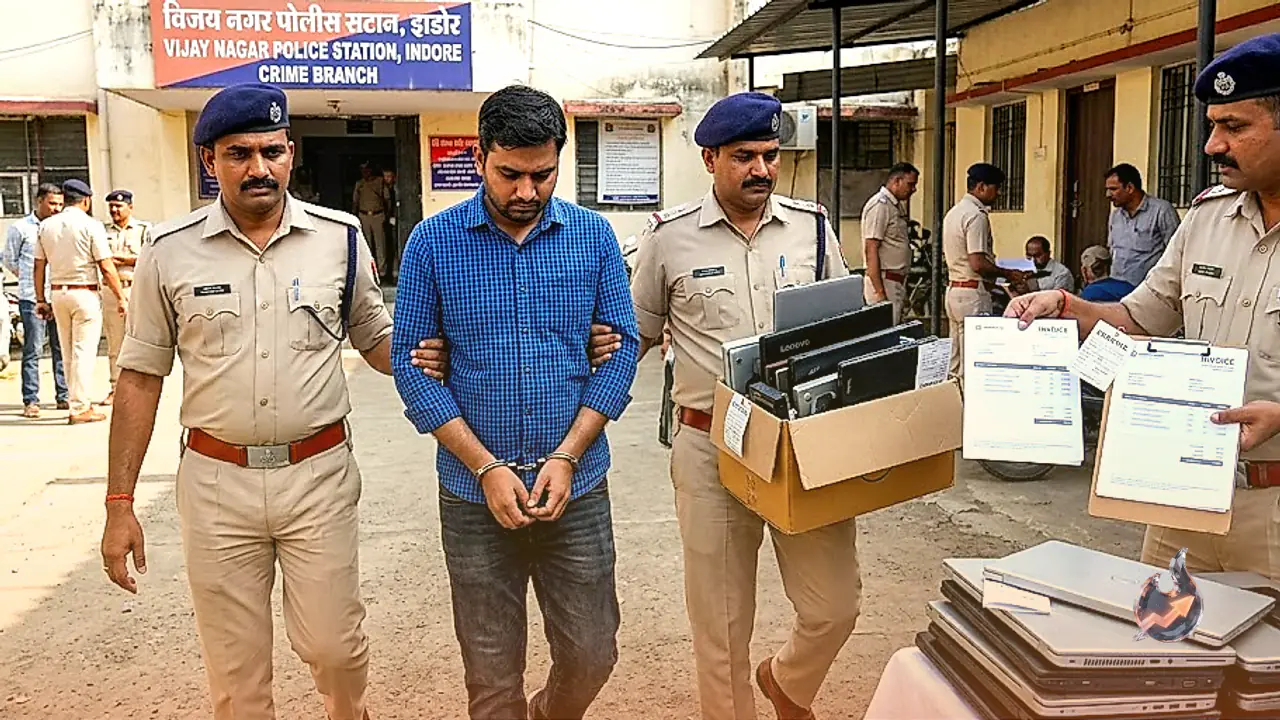

An highly educated professional, who formerly served as a tax assistant, has been apprehended by the Indore Police for orchestrating a series of sophisticated electronic thefts across various student residential zones. The suspect, a 32-year-old mechanical engineering graduate, reportedly turned to a life of crime after falling into deep financial distress due to severe losses in online trading. Debt collectors and mounting financial obligations forced him to leave his previous life behind and exploit his technical knowledge to execute highly planned burglaries.
Targeting Student Zones and the AI-Assisted Modus Operandi
According to the details shared by the investigating officers, the suspect, identified as Pratik Tarachand Likhar, focused his criminal activities on areas densely populated by students and young professionals. He systematically targeted hostels and PG (Paying Guest) accommodations in prominent localities of Indore, including Rau, Rajendra Nagar, Bombay Hospital, Choithram, Bhawarkua, Geeta Bhawan, and Palasia. These locations often have transient populations and relaxed security, making them ideal targets for swift burglaries. From these premises, he stole high-value gadgets such as laptops, tablets, smartphones, and luxury watches.
To sell these stolen goods without raising suspicion among local merchants, Likhar adopted an incredibly modern approach. He utilized the popular artificial intelligence tool ChatGPT to draft counterfeit retail invoices. By generating realistic-looking bills under the names of reputable brands like Flipkart and Lotus, he successfully convinced local shopkeepers that the electronics were legitimately purchased. Armed with these forged documents, he regularly sold the stolen inventory in well-known electronic markets in the city, such as Silver Mall, Yashwant Plaza, and Dollar Market, converting stolen property into quick, clean cash.
The Police Confrontation and Recovery of Stolen Assets
The operational run of this high-tech thief came to an end following meticulous surveillance by the Palasia police station. Using a combination of CCTV footage analysis and local informant networks, officers managed to trace his movements. On July 20, police spotted Likhar behaving suspiciously near Barwani Plaza and intercepted him. In an attempt to evade arrest and intimidate the police team, he tried to leverage his past background, claiming to be an active, high-ranking official within the Income Tax Department.
However, his bluff was quickly called when the police proceeded to search his personal belongings. Inside his bag, officers discovered specialized housebreaking equipment, including a heavy-duty hydraulic cutter, screwdrivers, and various other mechanical tools. Following intense interrogation, Likhar admitted to multiple thefts across the city. The police successfully recovered a massive stash of stolen property from his possession, which included 21 laptops, 4 tablets, 4 mobile phones, and 2 expensive watches. The cumulative market value of these recovered items is estimated to be around 13 lakh rupees.
A Rising Pattern of Tech-Driven Exploitation
This arrest highlights a growing and concerning trend of educated individuals deploying modern technology to facilitate criminal activities. Indore has recently experienced similar cases where advanced digital tools were exploited for fraudulent gains. For instance, the local police previously arrested a student who had utilized ChatGPT to generate a completely fabricated NEET-UG exam paper, which was then marketed and sold to unsuspecting candidates as a genuine leaked question sheet. Law enforcement authorities are now expanding their investigation into Likhar's operations, focusing on identifying and prosecuting the local shopkeepers and receivers of stolen goods who knowingly or unknowingly purchased these high-end electronics.