
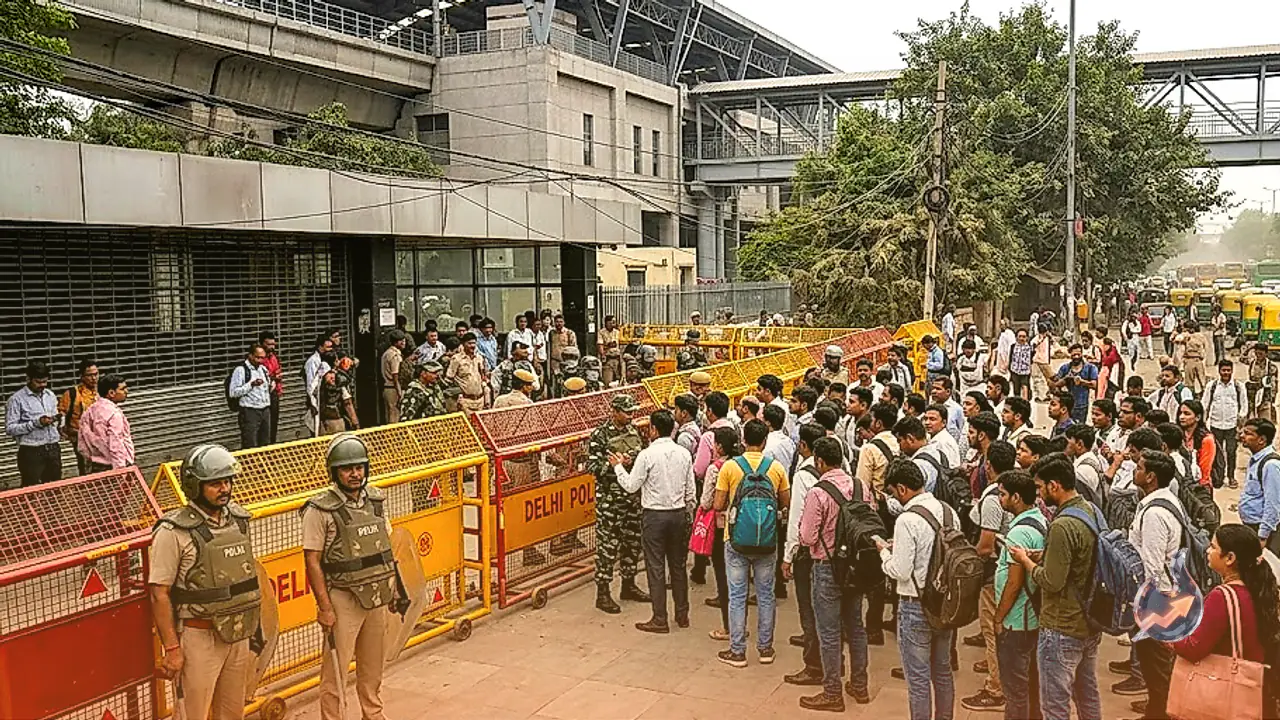

















A division bench of the Madhya Pradesh High Court has delivered a landmark verdict settling a multi-year legal battle over caste quotas in the state. The court declared the 2019 statutory amendment that raised reservations for Other Backward Classes from 14 percent to 27 percent unconstitutional, firmly ruling that OBC candidates in the state will be entitled to only 14 percent reservation in public employment and recruitment processes.
Detailed 159-Page Ruling by Division Bench
Delivering the verdict across a comprehensive 159-page judgment, the division bench comprising Justice Anand Pathak and Justice Vinay Saraf resolved a batch of petitions challenging the quota expansion. After an exhaustive examination of case records, demographic submissions, and constitutional arguments, the bench determined that the state had failed to establish any extraordinary situation or emergent condition warranting an increase in OBC reservation beyond the baseline 14 percent. The court observed that the community already enjoys adequate representation across public services in Madhya Pradesh, leaving no constitutional justification for exceeding statutory limits.
Advocate General Details the Legal Findings
Advocate General Prashant Singh outlined the scope of the ruling, noting that numerous petitions had challenged Ordinance Number 2/2019, promulgated by the state administration on March 8, 2019. The executive order sought to enhance reservation for backward classes in state services from 14 percent to 27 percent. According to the Advocate General, the court reviewed the entire documentary record alongside arguments presented by all parties before concluding that no extraordinary or emergent scenario justified moving the quota from 14 percent to 27 percent, thereby restricting eligibility strictly to 14 percent.
Protection for Past Selections and Directive on Held Posts
Addressing recruitment drives concluded while the legal challenge was underway, the high court shielded selections conducted between September 2, 2019, and September 29, 2022, where OBC candidates had been selected under the 27 percent allocation. Rather than canceling these past appointments, the court directed authorities to adjust and absorb these additional positions across the next three recruitment cycles. Furthermore, the bench ruled on the contentious 13 percent quota share that had been placed on hold during recruitment drives, ordering that these pending vacancies must be filled exclusively from the unreserved category. The administration has been given a strict deadline of three months to execute these adjustments.
Origins of the 2019 Legislative Dispute
The controversy dates back to early 2019 under the tenure of the Kamal Nath administration, which enacted an ordinance on March 8, 2019, raising the OBC quota by 13 percent. The policy was promptly contested in the high court before reaching the Supreme Court of India. The apex court subsequently transferred the consolidated batch of petitions back to the Madhya Pradesh High Court for definitive hearing and adjudication.
Constitutional Limits and the 50 Percent Ceiling
The core challenge against the measure rested upon the constitutional ceiling established in the Supreme Court's landmark judgment in the Indra Sawhney case, which capped aggregate reservations at 50 percent unless extraordinary circumstances exist. In Madhya Pradesh, existing statutory quotas allocate 16 percent to Scheduled Castes, 20 percent to Scheduled Tribes, 14 percent to OBCs, and 10 percent to Economically Weaker Sections (EWS). Expanding the OBC segment to 27 percent pushed overall quotas to 73 percent. Previously, Chief Minister Mohan Yadav had also stated that the Madhya Pradesh government remained committed to providing 27 percent reservation to backward classes.
Counsel for OBC Petitioners Weighs Next Legal Steps
Pushpendra Shah, legal counsel representing the OBC side, noted that the final verdict eliminated the 27 percent reservation framework. He explained that the court concluded the community is adequately represented in Madhya Pradesh, thereby requiring no quota beyond 14 percent. Shah added that the judgment conclusively resolves the status of recruitment notifications issued after September 29, 2022, meaning that the disputed 13 percent held appointments will be filled through unreserved candidates. He suggested that the state government could challenge the decision before the Supreme Court, as the legislative measure originated from the state legislature.