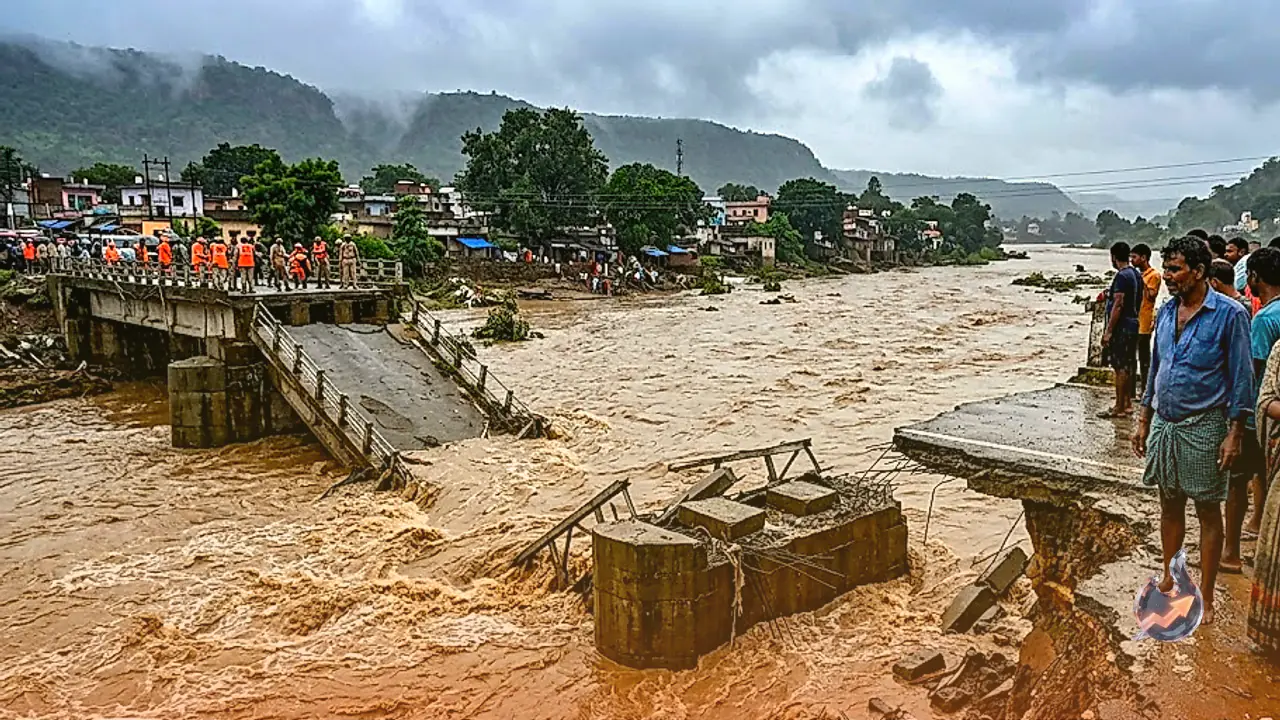



















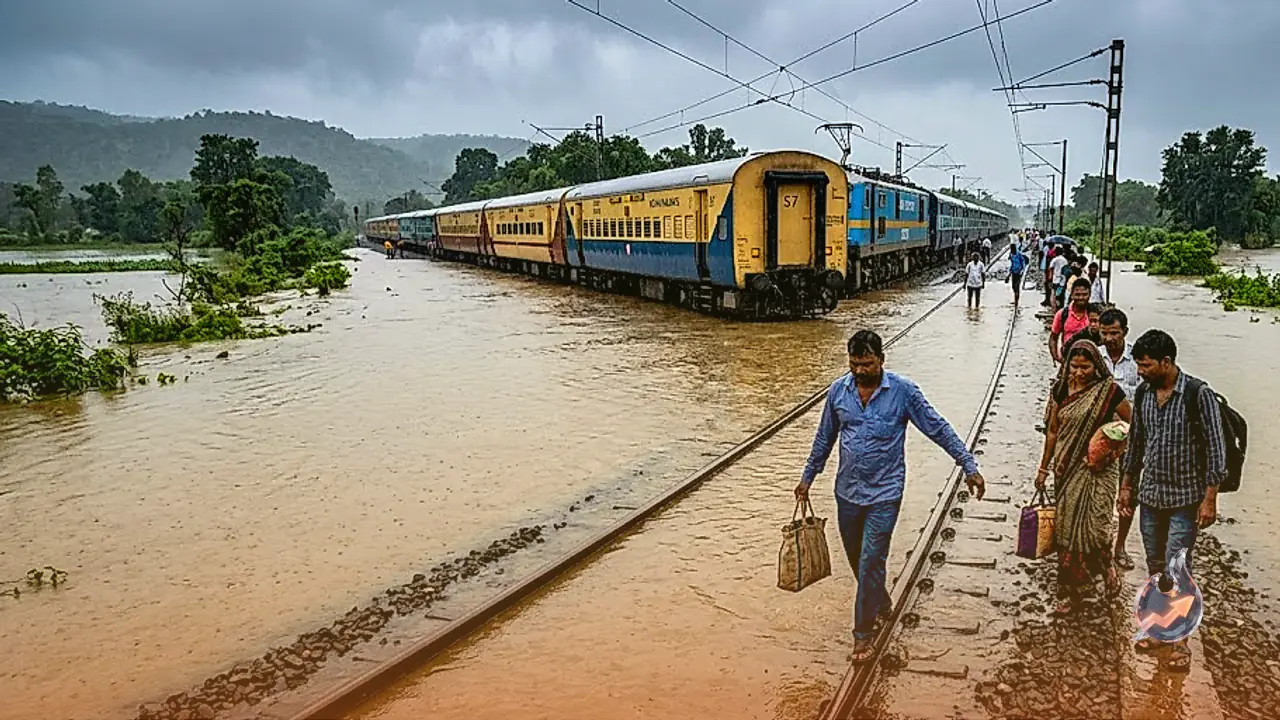

Torrential downpours on Saturday caused the Sarbhanga river to swell dangerously, disrupting train movements across the Satna-Manikpur rail section. With approximately two feet of water flowing over the railway tracks between Khutha and Chithara, authorities halted train operations for roughly four and a half hours as a safety precaution. During this disruption, around 12 trains were held back at various stations including Satna, Manikpur, Majhgawan, and Sagma. Earlier, due to severe weather conditions, रेलवे ने 23 जुलाई 2026 to cancel four originating trains.
Severe weather disrupts railway infrastructure
At around seven in the morning, the Godan Express and a down freight train arrived near Chithara. Upon noticing the rapid water flow and hazardous track conditions, the loco pilots immediately stopped both trains and alerted the railway control room. Subsequently, a team comprising railway officials, staff, and the RPF was dispatched from Satna to the site. However, continuous heavy rain and compromised roadways made it difficult for the rescue teams to reach the affected spot promptly.
Long-distance and Vande Bharat trains halted
The suspension of rail traffic severely impacted several long-distance services. The Anand Vihar-Rewa Superfast was detained at Manikpur station for about two and a half hours, finally reaching Satna around one in the afternoon after conditions improved. Similarly, the Sarnath Express was held at Satna station for nearly two hours before being cleared to depart at 11:40 AM. The morning trip of the Satna-Manikpur MEMU had to be cancelled due to waterlogging, and it was operated instead as a Satna-Katni special service.
Operational challenges near Mukhtiyarganj gate
Water accumulation near the Mukhtiyarganj railway gate forced authorities to stop the Rewa-Bhopal Vande Bharat Express for 5 to 10 minutes. Railway personnel cleared water from the tracks before allowing the train to proceed, a sequence confirmed by station manager Abdul Matin. Once water levels receded and safety monitoring was complete, railway authorities gradually restored operations after roughly four hours. Surveillance has been heightened across vulnerable spots along the tracks.
Major accident averted through timely intervention
Continuous monitoring of waterlogged zones and vulnerable locations helped avert a major disaster amidst the torrential downpours. Although the hours-long disruption caused significant inconvenience to passengers and threw train schedules off track, the proactive vigilance of railway workers ensured safety. Monitoring remains active along the surrounding tracks to prevent any further weather-related disruptions.