























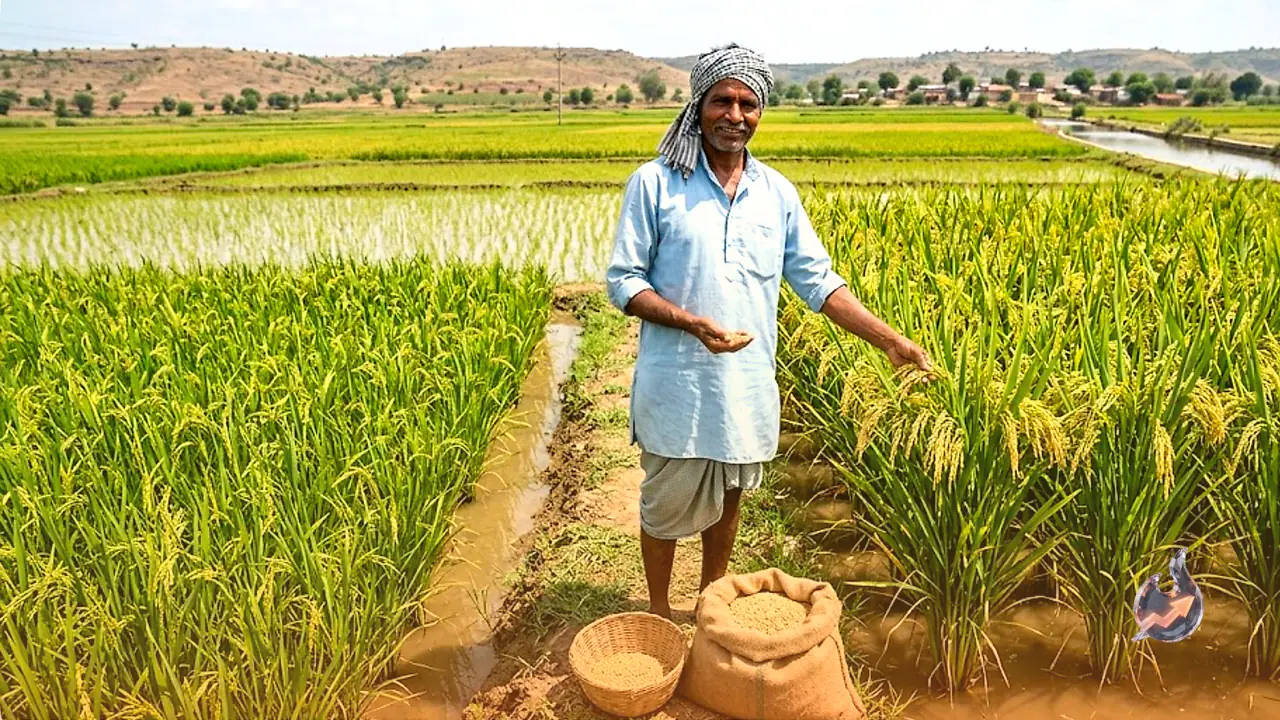

As the kharif season gets underway, farmers in the Bundelkhand region are busy sowing paddy, arhar and soybean. For those looking to cut costs and boost profits in paddy farming, a technique known as Shree Vidhi is gaining fresh attention this season. Agriculture experts are actively promoting it, and demonstration units have been set up in several locations so farmers can see the results for themselves before adopting it.
Why farming needs a technology upgrade
Turning farming into a genuinely profitable enterprise depends on moving away from old-style cultivation and adopting modern techniques. This shift helps farmers become more self-reliant and strengthens their financial position. Paddy is grown extensively across Bundelkhand, but most farmers still rely on the traditional sowing method, which consumes far more seed while capping how much they can actually harvest.
A quarter of the seed, one and a half times the yield
According to Anoop Tiwari, former district agriculture manager with NRLM, the traditional method of sowing paddy requires around 40 kilograms of seed per acre, yet the harvest from all that effort settles at just 12 to 16 quintals. Switch to Shree Vidhi, and an acre needs only 3 to 4 kilograms of seed. Despite that dramatic drop in seed use, the yield actually climbs to between 20 and 22 quintals, meaning far less seed goes in and roughly one and a half times more paddy comes out.
From nursery to transplant: how Shree Vidhi works
Shree Vidhi is the Hindi name for the System of Rice Intensification, or SRI. Under this method, a nursery is prepared first for paddy or arhar. Once a seedling is between 7 and 15 days old, it is transplanted into the field. Unlike the clustered planting of traditional methods, each spot in the field gets just a single seedling.
Why 25 centimetres of spacing makes the difference
Seedlings under Shree Vidhi are spaced roughly 25 centimetres apart. That extra room lets each plant spread out and draw fertiliser and nutrients in the right quantity, which in turn produces more tillers and sturdier plants. The trade-off is maintenance, this method calls for regular weeding and hoeing of the field so weeds do not choke the crop.
Seeing is believing, before farmers commit
Because the technique is still new to most farmers, the agriculture department has set up demonstration units in various places. The idea is simple, let farmers watch Shree Vidhi's results play out in a real field first, and only then decide whether to adopt it across their own land.