






















In an intensified nationwide effort against illicit financial practices, the Enforcement Directorate has executed major operations spanning two different banking fraud investigations. Acting through its Ahmedabad zonal office, the agency provisionally attached movable assets worth ₹43.65 crore belonging to Electrotherm (India) Limited under the provisions of the Prevention of Money Laundering Act, 2002. The enforcement measures stem from an ongoing investigation into corporate loan irregularities and associated illicit fund transfers.
Breakdown of Attached Assets in the Electrotherm Case
The provisional attachment targeting Electrotherm includes substantial liquid funds along with equity holdings. Specifically, investigators have attached ₹25.08 crore lying across two bank accounts maintained with Yes Bank. In addition, the central agency seized 13,57,775 equity shares belonging to the company's promoters, which carry an estimated valuation of approximately ₹18.57 crore. With this latest enforcement step, the cumulative tally of attachments, seizures, and account freezes in this ongoing bank fraud inquiry has climbed to ₹81.97 crore, with further investigative proceedings currently underway.
Search Operations Across Yavatmal in ₹242 Crore Scam
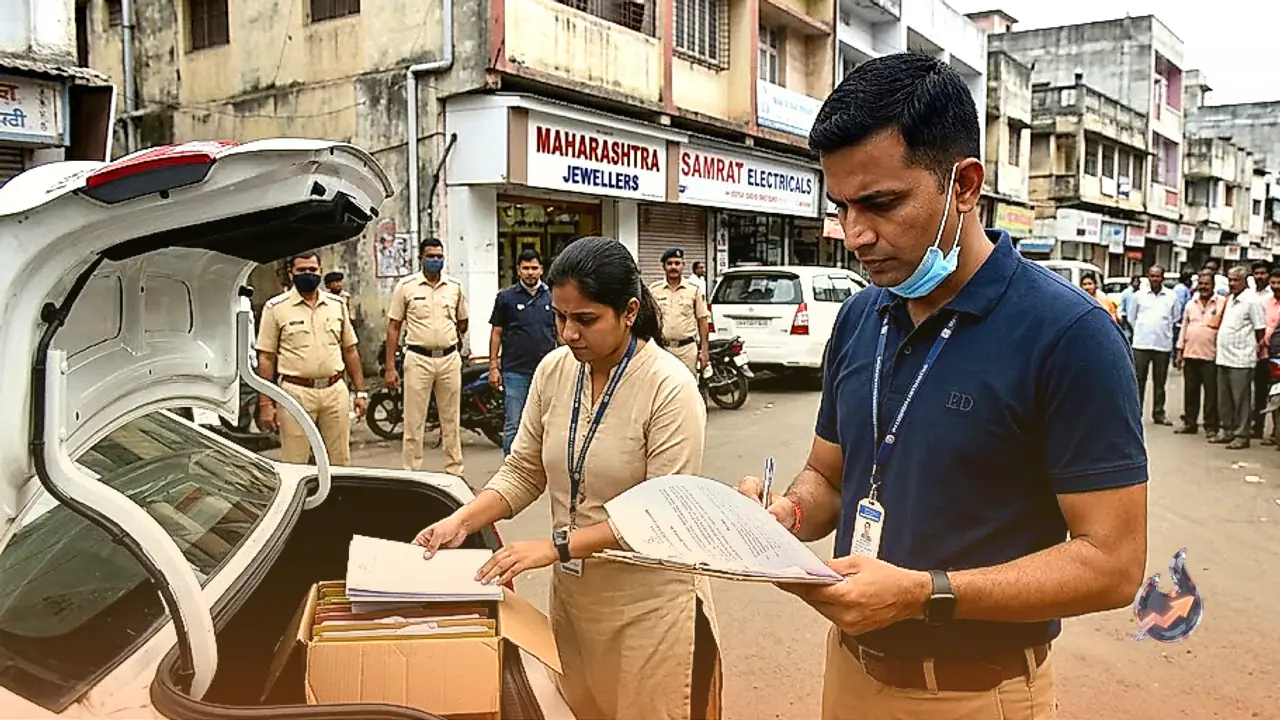
Simultaneously, the agency's Mumbai zonal unit conducted coordinated searches across nine separate premises in the Yavatmal district of Maharashtra in connection with an alleged ₹242 crore scam at Babaji Date Mahila Sahakari Bank. The central enforcement probe was formally initiated following multiple First Information Reports registered at the local Awadhootwadi Police Station against various bank executives, staff members, and borrowers implicated in systemic embezzlement.
Audit Disclosures and Regulatory License Cancellation
Babaji Date Mahila Sahakari Bank Limited had originally been registered under Section 9(1) of the Maharashtra Co-operative Societies Act, 1960. Following an influx of customer complaints concerning fraudulent practices and the siphoning of depositor savings, the state administration ordered a special financial audit. The audit uncovered extensive misconduct, showing that the bank's CEO, chairperson, directors, and officers had colluded with valuers, auditors, and borrowers. Credit facilities were disbursed without proper collateral security or creditworthiness assessments, after which loan proceeds were diverted in clear violation of banking statutes and guidelines set by the Reserve Bank of India. Consequently, the central banking regulator had cancelled the lender's operational banking license in 2022.