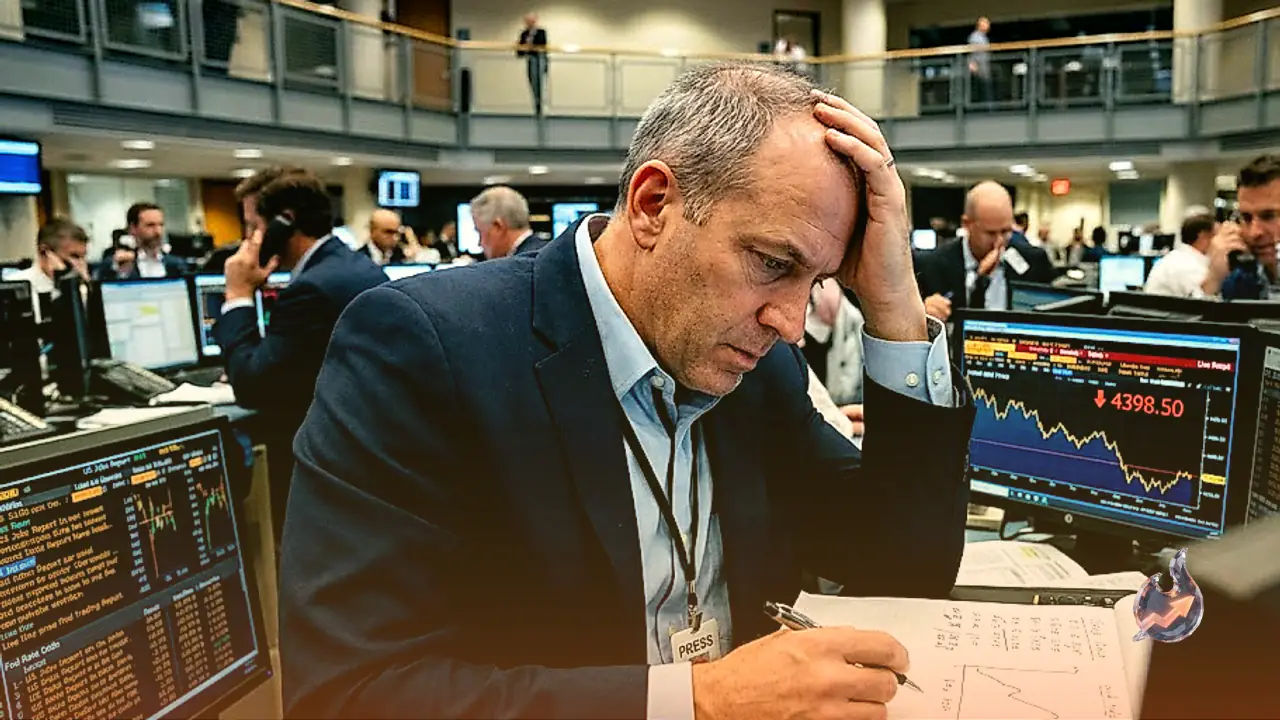

























The foreign exchange market is witnessing a period of calculated recalibration as the Indonesian Rupiah maintains a steady posture against the United States Dollar. The primary catalyst for this stability is Bank Indonesia's entirely unexpected monetary policy announcement, which has caught many institutional investors and retail traders off guard. In a move that defied broad market expectations of a tightening cycle, the central bank opted to hold its benchmark interest rate steady at exactly 5.75 percent. Rather than employing the traditional tool of raising borrowing costs to defend the currency, Bank Indonesia Governor Perry Warjiyo has chosen a more nuanced path. He introduced a series of highly targeted, specialized measures explicitly designed to attract robust foreign capital inflows. These strategic interventions aim to stabilize the Rupiah without placing undue burden on domestic credit markets, ensuring that the local economic engine can continue to run smoothly even amid global headwinds.
On the trading floor, the USD/IDR currency pair exhibited a muted reaction during Thursday's Asian trading hours, initially hovering around the 17,960 level before adjusting slightly. According to current live market data, the pair is presently trading at 17,910, which represents a marginal decline of 0.01 percent from its previous closing price of 17,911. The trading volume stands exactly at 1.00 times the 20-day average, indicating steady, unpanicked participation from market actors. Over the past year, the pair has navigated a wide 52-week range stretching from a low of 15,636 to a high of 18,222. The technical landscape provides a complex but fascinating picture for the USD/IDR pair. The 14-day RSI is currently sitting at 48, squarely in neutral territory and indicating neither overbought nor oversold conditions. Meanwhile, the MACD indicator reads 27.23 against a signal line of 54.78, printing a bearish histogram of -27.55 that suggests some near-term downward momentum. However, the broader macroeconomic trend remains firmly bullish. This long-term strength is technically validated by the presence of a classic golden cross, where the 50-day EMA at 17,832 has confidently crossed above the 200-day EMA at 17,207. Furthermore, the price is currently operating within the boundaries of the Bollinger Bands, which span from 17,797 to 18,184 with a midpoint of 17,991. The ADX stands at a trending 37, while the 14-day ATR of 194.19 serves as a critical metric for traders calculating daily volatility and setting appropriate stop-loss buffers. For those watching immediate technical thresholds, the daily pivot rests at 17,902, with overhead resistance levels stacked at 17,928 and 17,947, and fundamental support floors waiting at 17,883 and 17,857.
Geopolitical Tensions and the Safe-Haven Dollar
While the Rupiah enjoys domestic policy support, the trajectory of the United States Dollar is being heavily influenced by a tense tug-of-war between domestic economic weakness and escalating geopolitical fears. The greenback remains broadly under pressure as concerns over underlying economic fragility begin to outweigh the persistent threats of energy-driven inflation. However, any substantial downside for the Dollar is currently being fiercely restrained by its traditional role as the world's premier safe-haven asset, a status that is back in high demand as tensions in the Middle East reach a boiling point. The geopolitical landscape deteriorated sharply after United States President Donald Trump issued a stern public threat, warning that the American military would strike critical Iranian infrastructure if Tehran dared to target commercial or military ships transiting the highly strategic Strait of Hormuz. Unwilling to back down, Iran immediately vowed swift and severe retaliation against any United States-linked energy assets distributed across the region, raising the specter of a broader regional conflict that could severely disrupt global energy supplies.
These verbal escalations have already begun to manifest in physical confrontations. In a deeply concerning development, Iran-backed Houthi militants have launched coordinated missile and drone attacks targeting two Saudi Arabian oil tankers navigating the waters of the Red Sea. This aggressive assault is particularly significant as it marks the very first instance of direct military strikes on crude tankers in this specific maritime waterway. The attacks severely endanger a vital alternative export route for Saudi Arabian crude oil, effectively opening a dangerous new front in the ongoing regional conflict and sending shockwaves through global energy markets.
The Mechanics of Interest Rates and Currency Valuation
To fully understand the current currency dynamics, one must examine the foundational mechanics of global interest rates. Interest rates represent the fundamental cost of money; they are the fees charged by financial institutions when issuing loans to borrowers, and conversely, they are the yields paid out as interest to savers and depositors who park their capital in banks. These retail rates are inextricably linked to the base lending rates established by central banks, which actively adjust these figures in response to shifting macroeconomic conditions. Modern central banks operate with a primary mandate to ensure long-term price stability. In most developed economies, this mandate translates to formally targeting a core inflation rate hovering around the 2 percent mark. The policy response is generally straightforward: if inflation falls stubbornly below this target, the central bank may initiate a cycle of cutting base lending rates. This reduction lowers the cost of borrowing, theoretically stimulating corporate lending, consumer spending, and ultimately boosting the broader economy. Conversely, if inflation rises substantially above the 2 percent threshold, it normally forces the central bank into a hawkish stance, raising base lending rates in a deliberate attempt to cool the economy and bring inflation back under control.
The relationship between these interest rates and currency valuation is highly direct. Higher interest rates generally act as a powerful magnet, helping to strengthen a country’s sovereign currency. By offering higher yields, the nation becomes a significantly more attractive destination for global investors and institutions looking to park their immense pools of capital for maximum safe return. However, this high-yield environment creates substantial headwinds for non-yielding assets, particularly precious metals. Higher interest rates overall weigh heavily on the price of Gold. This inverse relationship exists because elevated rates dramatically increase the opportunity cost of holding physical Gold, which pays no dividend or yield, instead of investing in an interest-bearing financial asset or simply placing cash in a high-yield bank account. Furthermore, because Gold is universally priced in Dollars on the global market, a high-rate environment that pushes up the overall value of the United States Dollar simultaneously exerts a strong downward gravitational pull on the nominal price of Gold.
At the center of this global financial architecture sits the United States Federal Reserve and its crucial Fed funds rate. This specific metric is the overnight interest rate at which American commercial banks lend their excess reserve balances to one another. It serves as the oft-quoted headline rate meticulously set by the Federal Reserve during its highly anticipated FOMC meetings. The Fed establishes this rate not as a single number, but as a tight target range, for example, 4.75 percent to 5.00 percent, though financial media often quotes the upper limit of 5.00 percent as the definitive figure. Market expectations for the future trajectory of this critical Fed funds rate are closely tracked by institutional analysts using the CME FedWatch tool, a derivative-based probability matrix that fundamentally shapes how global financial markets behave in anticipation of future monetary policy decisions.
Global Markets: European Currencies and Commodities React
Beyond the Rupiah and the Dollar, other major currency pairs are exhibiting their own distinct technical patterns amid the global uncertainty. During Thursday's Asian trading hours, the British Pound demonstrated resilience, with the GBP/USD pair rebounding to trade near the 1.3385 level. However, market analysts suggest that the potential upside for this major pair might be strictly limited in the near term. This ceiling is dictated by recently published, cooler-than-expected inflation data out of the United Kingdom, combined with the dampening effect of the escalating military tensions in the Middle East. Currency traders are now patiently waiting to take more definitive directional cues from the upcoming United Kingdom Retail Sales report, which is scheduled for release later on Friday. Meanwhile, the Euro is showing sustained strength on the continent. The EUR/USD pair extended its steady gains for a second consecutive day, trading comfortably around the 1.1410 mark during the Asian session. The pair continues to gain ground as the Euro finds solid, unwavering technical support ahead of the European Central Bank's highly anticipated upcoming interest rate decision.
In the commodities sector, precious metals and energy markets are reacting aggressively to the geopolitical news flow. Gold is currently consolidating its recent gains, holding firmly above the psychologically significant $4,100 round figure through the Asian trading session. The precious metal seems to have successfully stalled a modest technical pullback from an over two-week high that was touched during the previous trading day. Simultaneously, energy markets are on high alert. Crude oil prices have climbed rapidly to hit a fresh high not seen since June 11. This sharp upward trajectory is being fueled directly by the further escalation of military and political tensions between the United States and Iran. The surging cost of energy is, in turn, fueling renewed fears of sticky global inflation, which bolsters market expectations that the United States Federal Reserve may be forced to maintain or even hike interest rates to combat rising prices.
Crypto Market Convergence and Altcoin Consolidation
The digital asset space is also showing signs of a profound structural shift. According to a comprehensive report published late Tuesday by Matt Hougan, the Chief Investment Officer at Bitwise, the fundamental architecture of the crypto market is evolving. Hougan argued convincingly that the next major cryptocurrency bull market could be driven primarily by the rapidly growing convergence between blockchain-based financial infrastructure and traditional, legacy finance systems. The report noted that the crypto sector may already be exhibiting the early, telltale signs of a definitive market bottom. This thesis is supported by relative performance metrics; for instance, Bitcoin has impressively gained 9 percent since July 1, showing remarkable resilience even as the tech-heavy NASDAQ 100 index declined by 6 percent over the exact same period.
However, the broader altcoin market remains somewhat tentative. Major established tokens like Ripple and Stellar continue to trade very cautiously as both digital assets hover dangerously close to key technical inflection points. Ripple's native token, XRP, is currently testing formidable overhead resistance right at its 50-day EMA, struggling to find the momentum needed for a decisive breakout. Concurrently, Stellar's XLM continues to consolidate in a tight trading range, hugging the critical 0.187 support zone. Market sentiment is further clouded by mixed data emerging from the crypto derivatives markets. Options and futures metrics are currently showing a slight but noticeable bearish tilt, which suggests that leveraged traders remain highly cautious, keeping the next major directional move for these altcoins highly uncertain in the immediate term.