






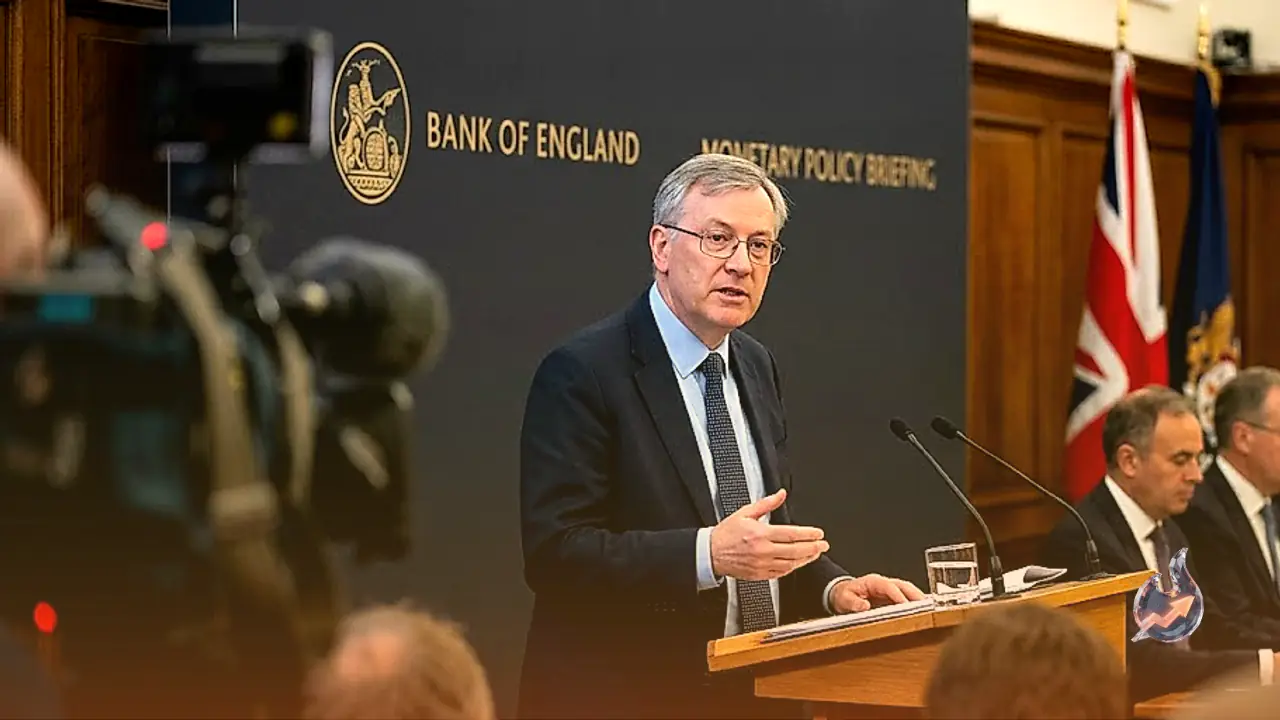
















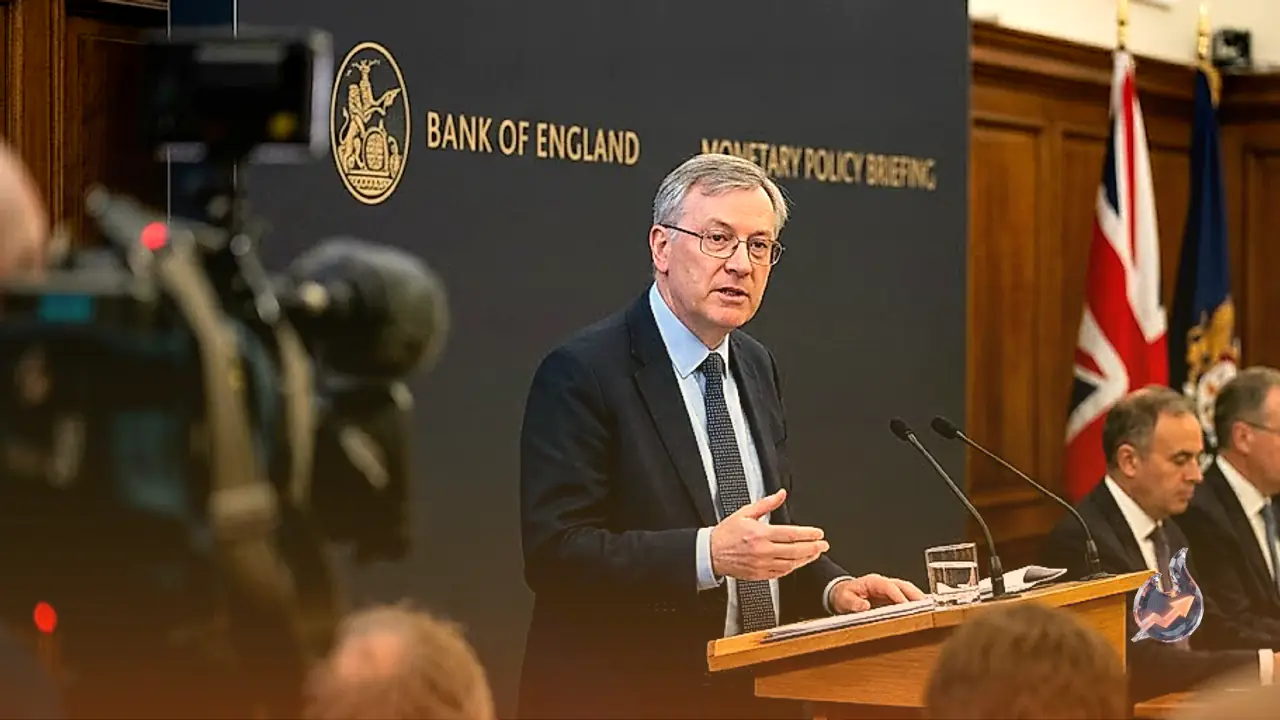

Financial markets have recalibrated expectations following key guidance from the United Kingdom central bank. Bank of England Chief Economist Huw Pill, who has voted in favour of a quarter-point interest rate increase in recent months, stated on Thursday that policymakers should not give the impression that a rate hike now would mark the start of a series of increases. His remarks directly temper speculation of a prolonged monetary tightening campaign, indicating that future adjustments may be far more restrained than aggressive rate-hiking trajectories witnessed in previous policy cycles.
Shift Toward a Dovish Tone and Impact on Sterling
Analytical tracking of Huw Pill's language highlighted a distinct dovish evolution. The speechtracker score evaluating the tone dropped sharply to 3/10 from an earlier benchmark of 6.4/10, confirming an easing in policy rhetoric. By explicitly cautioning that an immediate rate rise should not be viewed as the foundation for consecutive hikes, Pill successfully pushed back against assumptions of an extended monetary squeeze, thereby putting a ceiling on immediate upward momentum for the British Pound.
This communication demonstrates that the Bank of England is placing greater emphasis on steering market expectations rather than committing to a rigid, aggressive tightening path. In foreign exchange markets, this perspective reduces the competitive yield appeal of the Pound Sterling relative to the US Dollar and the Euro. Global currency traders are treating any near-term rate move as an isolated adjustment rather than the launch of an ongoing bullish cycle for the UK currency.
Live Technical Outlook and GBP/USD Trading Dynamics
Live trading metrics place GBP/USD at 1.32, marking a 0.09 percent decline from the preceding close of 1.33. Over the past 52 weeks, the currency pair has moved across a range between 1.30 and 1.38, with transaction volume matching the 20-day average at 1.00x. From a momentum standpoint, the 14-period Relative Strength Index stands at 43, indicating moderate downward pressure without yet entering oversold territory.
Trend indicators show the pair navigating an established long-term downtrend, underscored by a death cross where the 50-day exponential moving average sits below the 200-day exponential moving average. The EMA20 is registered at 1.33, while both the EMA50 and EMA200 sit at 1.34. Correspondingly, the 50-day and 200-day simple moving averages are flat at 1.34. The 20-period Bollinger Bands delineate boundaries between 1.31 and 1.34 around a middle band of 1.33, containing the current price. Trend strength is validated by an Average Directional Index reading of 31, while Stochastic oscillators post a fast line of 63 against a signal line of 52. Daily volatility reflected by the 14-period Average True Range is 0.01. Critical price thresholds outline pivot support and resistance at 1.32, with upside resistance levels R1 and R2 positioned at 1.33, while downside supports S1 and S2 reside at 1.32. Across a 20-day horizon, technical support is pegged near 1.31 against overhead resistance at 1.34.
Monetary Policy Mechanics at the Bank of England
The Bank of England serves as the ultimate authority for formulating and executing monetary policy across the United Kingdom. Its statutory core objective centers on maintaining price stability, defined as an annual consumer inflation rate of 2 percent. The primary instrument employed to fulfill this mandate is the adjustment of base lending rates. By establishing the benchmark rate at which the central bank lends to commercial banking institutions and at which commercial banks lend to one another, the central bank establishes the baseline cost of borrowing throughout the wider economy, which fundamentally dictates valuation dynamics for the Pound Sterling.
When inflation accelerates past the statutory 2 percent threshold, the central bank counters by elevating interest rates, increasing borrowing expenses for both households and businesses. This development typically supports the Pound Sterling, as higher yields entice global capital to deposit funds within UK financial instruments. Conversely, when headline inflation slips below target, signaling sluggish economic momentum, policymakers evaluate interest rate cuts to lower credit costs. The objective is to encourage commercial borrowing and stimulate capital expenditure, an outcome that typically exerts downward pressure on the Pound Sterling.
Asset Purchase Policies: Quantitative Easing Versus Quantitative Tightening
Under severe macroeconomic stress when conventional interest rate reductions prove insufficient, the Bank of England has the authority to deploy Quantitative Easing. This mechanism enables the central bank to inject substantial credit directly into an impaired financial system. Operating as a policy measure of last resort, Quantitative Easing entails creating central bank reserves to purchase government gilts and high-grade corporate bonds carrying AAA ratings from institutional lenders. This injection of liquidity expands commercial lending capacity, though it historically results in a weaker Pound Sterling.
Conversely, Quantitative Tightening represents the deliberate reversal of this process, implemented as broader economic growth stabilizes and inflationary pressures mount. While Quantitative Easing involves expanding the central bank balance sheet by acquiring sovereign and corporate paper to incentivize credit issuance, Quantitative Tightening halts secondary market asset purchases and ends the reinvestment of maturing bond principals. By withdrawing excess balance sheet liquidity, Quantitative Tightening generally provides fundamental backing to the Pound Sterling.
Broader Foreign Exchange Movements and Commodity Benchmarks
Broader currency markets displayed substantial volatility across Thursday's Asian session. AUD/USD sustained downward pressure near 0.6950 following disappointing employment statistics out of Australia, building on the prior session's retreat from monthly highs to touch a fresh weekly trough. Mitigating deeper losses, a retreat in US Treasury yields pulled the US Dollar back from highs last seen in April 2025, which had been spurred by Wednesday's elevated US consumer price index reading.
Meanwhile, USD/JPY extended its pullback from a three-week peak, triggering continued selling interest that dragged the pair below the 158.00 threshold during Asian trade. Currency dealers maintained heightened vigilance amid market chatter regarding potential direct intervention by Japanese authorities to stabilize the Yen. The US Dollar simultaneously surrendered gains driven by the hot inflation print as Treasury yields fell amid talk of Chinese sovereign bond buying.
In commodities, gold demonstrated resilient recovery from weekly troughs, reclaiming the $4,150 mark early Thursday. Bullion drew strength from the concurrent tumble in the US Dollar and sovereign yields following reports of Chinese bond purchases. Despite the rebound, gold's daily RSI maintained a bearish posture, posing ongoing headwinds for prospective buyers. Concurrently, a Bloomberg report highlighted that China appears to be shifting United States securities into non-US custodian institutions across third-party jurisdictions, effectively obscuring its ongoing role in financing American budget deficits.