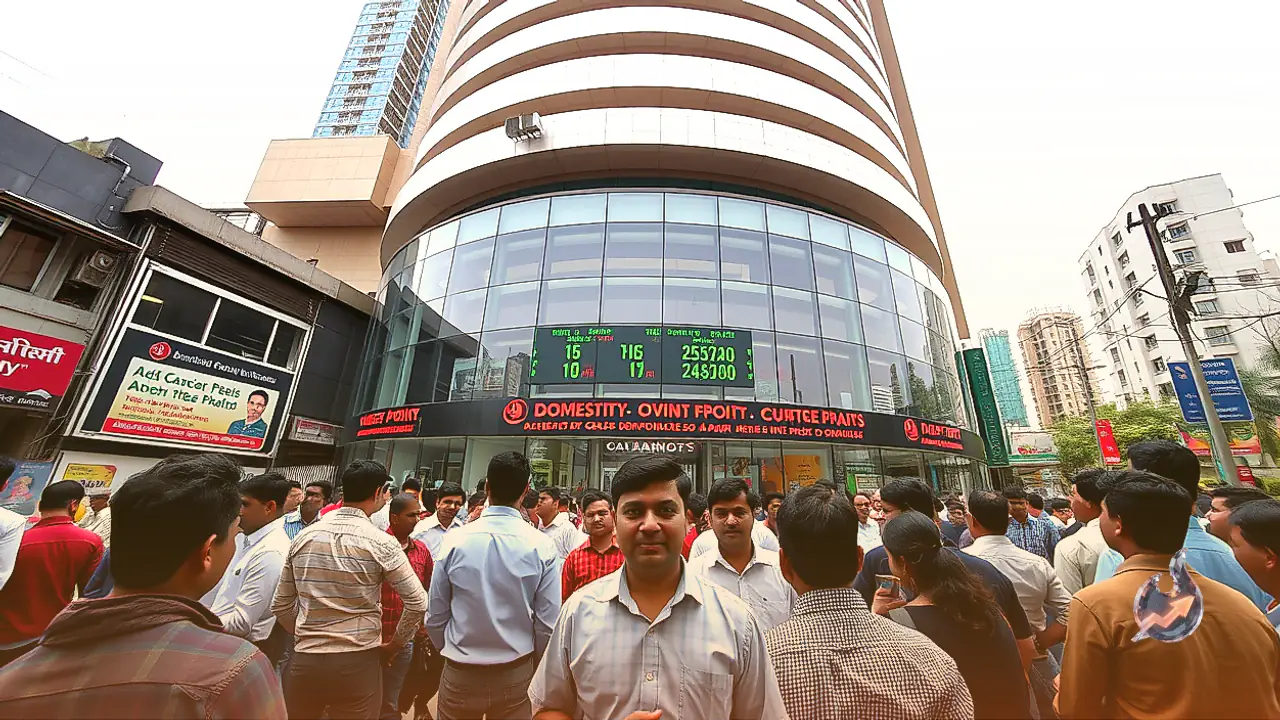
























Trading in the foreign exchange market commenced with significant gains for the Indian Rupee against the US Dollar as a combination of domestic regulatory interventions and positive international developments bolstered sentiment. The currency pair dropped by 1% right at the opening bell toward 95.80, reversing recent losses. Fresh live market figures place the USD/INR quote at 95.69, marking a 1.17% decline from its preceding finish of 96.82. Fresh administrative curbs deployed to restrain Dollar demand delivered immediate relief to the home currency.
Targeted Dollar Windows and Stricter Hedging Regulations
Over the weekend, the central bank rolled out aggressive structural measures to shore up exchange rate stability. Under the revised framework, public sector undertaking oil marketing companies will route their extensive foreign exchange requirements through a dedicated window operated directly by the monetary authority. Diverting state refiners away from open spot trading eliminates a dominant source of recurring Dollar bids, directly insulating the spot currency market from persistent downward pressure.
Complementing this move, authorities introduced tighter rules surrounding foreign exchange hedging transactions to curb speculative positions that amplify exchange rate swings. Market strategists noted that while carving out corporate oil demand insulates spot trading from sharp spikes in volatility, the mechanism requires funding directly from sovereign holdings, which will eventually be reflected in a depletion of foreign exchange reserves over the coming reporting cycles.
Crude Oil Slump Enhances External Trade Balance
The domestic currency gained further traction from shifting geopolitical dynamics that drove international energy benchmarks downward. Crude oil prices retreated sharply after an energy ceasefire agreement was announced between Russia and Ukraine. Because India relies on foreign shipments to satisfy the vast bulk of its domestic petroleum requirements, any moderation in international energy prices materially compresses the country's import bill.
This relief was immediately reflected on domestic commodity bourses. On the Multi Commodity Exchange, the crude oil futures contract scheduled for expiration on October 19 slumped by 2.22% during initial dealing to settle near Rs. 8,684. Falling oil expenditures reduce the aggregate volume of local currency sold to procure foreign exchange, directly supporting the exchange rates of import-reliant developing economies.
Upcoming Inflation Metrics Take Center Stage
Market participants are now focusing on the impending release of nationwide consumer price index numbers for September, scheduled for publication at 04:00 PM (10:30 GMT). Inflation readings serve as an essential input for monetary policymakers weighing benchmark lending rates against growth objectives.
Projections compiled by Societe Generale suggest that the domestic price environment faced mounting challenges during September 2026. The institution forecast that headline retail price growth accelerated to 5.6% year-on-year, up from 4.8% recorded in August. This upward momentum was attributed primarily to an anticipated surge in food costs, which likely expanded to approximately 7.5% year-on-year. A sustained rise in inflation could complicate the rate path, introducing conflicting dynamics between currency valuation and policy yields.
Underlying Factors Governing Currency Valuation
The exchange rate of the Indian Rupee remains inherently sensitive to shifts in external conditions. Core variables include prevailing global petroleum costs, the overarching purchasing power of the US Dollar, and the magnitude of incoming foreign capital flows. The central bank regularly participates in currency markets to counter disorder and maintain orderly conditions for international commerce, while guiding benchmark interest rates toward a headline inflation target of 4%.
From a macroeconomic perspective, general gross domestic product expansion, trade deficits, and international risk appetite actively dictate currency trends. An accelerating economy frequently draws cross-border capital, strengthening the currency through sustained investment demand. Conversely, elevated domestic price growth relative to external trading partners devalues purchasing power and enlarges the trade gap, necessitating higher interest rates to stimulate capital inflows via carry-trade dynamics.
Technical Structure and Critical Levels
Technical charting for the USD/INR cross showcases notable structural boundaries, with the asset having traversed an annual 52-week band of 85.86 to 97.05. The current spot level of 95.69 sits below the 20-day exponential moving average at 96.03 and closely tests the 50-day EMA at 95.72, while remaining comfortably above the 200-day EMA at 93.72. On the simple moving average front, the 50-day line stands at 95.54 and the 200-day line rests at 94.08, confirming an ongoing golden cross posture.
Momentum oscillators present a mixed posture: the 14-period relative strength index stands neutral at 47, while the moving average convergence divergence indicator plots at 0.25 over a 0.24 signal line, yielding a positive histogram of 0.01. Bollinger Bands spanning 95.42 to 96.71 encompass current trading activity. Average directional movement registers at 24, pointing to subdued directional strength, accompanied by stochastic indicators of 29 on the fast line and 72 on the signal line. With an average true range of 0.58, technical levels reflect a central pivot at 96.02, flanked by resistance barriers at 96.46 and 97.22, against downside supports situated at 95.25 and 94.81. Sustained weakness below immediate support could trigger extended declines toward the 95.00 psychological threshold.
Movements Across Competing Global Assets
Subdued trading volume stemming from regional market holidays framed price action across broader foreign exchange pairs. The Australian Dollar traded softer below 0.7000 against the greenback as softening domestic rate hike expectations limited buying enthusiasm despite falling US Treasury yields.
Meanwhile, the US Dollar held steady above 158.00 against the Japanese Yen, where traders remained alert to potential intervention by Tokyo authorities. Concurrently, spot gold extended its rebound from a two-month trough of $4,067, hovering above the $4,200 threshold as the broader Dollar advance took a temporary pause.