
























The Canadian Dollar found robust support in international markets as crude oil prices surged following heightened geopolitical friction between the United States and Iran around the strategically crucial Strait of Hormuz. With standoff conditions persisting over the primary maritime energy corridor, global oil markets experienced sharp upward momentum that directly buoyed commodity-linked currencies. Simultaneously, positive signals regarding trade negotiations provided an additional tailwind for the Canadian currency.
Geopolitical Flashpoint in Hormuz and Washington's Economic Strategy
In response to escalating tensions in the Strait of Hormuz, the administration in Washington is preparing to deploy an intensive economic pressure campaign targeting Iran. President Donald Trump described the forthcoming initiative as an economic D-day, with official details scheduled for public release on Monday. The strategic objective of the campaign is to dismantle Tehran's integration with global commercial and financial networks, effectively cutting off critical revenue streams.
According to statements made by US Treasury Secretary Scott Bessent, the aggressive economic measures aim to collapse Iran's financial lifelines, significantly reducing the potential necessity for large-scale military intervention. Scott Bessent emphasized that applying maximum economic leverage renders kinetic escalation far less likely. The measures specifically target Iranian banking institutions, commercial entities, maritime shipping registries, cross-border cash transfers, and illicit smuggling networks to compel negotiations over nuclear capabilities, regional security disputes, and maritime passage rights through Hormuz.
Scotiabank Analysis and Canadian Dollar Performance
Market strategists at Scotiabank noted that the Canadian Dollar is absorbing strength from a favorable dual mechanism: widespread softness in the Greenback coupled with tangible headway in bilateral US-Canada trade discussions. Scotiabank analysts highlighted that the combination of broad US Dollar weakness and signs of progress on trade relations is actively driving the currency higher.
While intraday gains for the Canadian Dollar remained somewhat measured, market analysts underscored that the currency's 0.3% rise ranked second only to the New Zealand Dollar (NZD) among major global currencies during the session. This performance highlights the Loonie's resilient tone despite broader market fluctuations and shifting global sentiment.
US Treasury Yield Dynamics and Debt Buyback Expansion
Despite the downside pressure observed on the USD/CAD pair, deeper losses may remain constrained due to structural resilience in the US Dollar. Although the US Department of the Treasury introduced a long-end bond buyback program designed to temper elevated yields, US Treasury yields rebounded and resumed their upward trajectory, establishing a dependable floor for the US Dollar.
US Treasury Secretary Scott Bessent indicated that accelerated debt buyback operations could eventually surpass the initially scheduled $4 billion allocation per issue. Bessent also outlined that a comprehensive fiscal plan is currently being drafted, adding that the US federal budget deficit is projected to have reached its peak under President Donald Trump before beginning a downward trend.
As part of these tactical financial operations, the US Treasury took definitive action on Wednesday at 12:32 GMT by announcing a plan to at least double liquidity support buyback operations within the 10-year to 20-year and 20-year to 30-year maturity sectors. The official maximum threshold was elevated from $2 billion per operation to at least $4 billion, effective from September 9 through November 4.
Key Economic Drivers of the Canadian Dollar
The valuation of the Canadian Dollar (CAD) is governed by six fundamental economic and financial pillars
- Bank of Canada Interest Rate Policy: The Bank of Canada (BoC) establishes the target overnight interest rate, influencing interbank lending rates and borrowing costs across the economy. The central bank's primary mandate is maintaining inflation within a 1% to 3% target corridor. Higher interest rates relative to other central banks boost CAD valuation by attracting capital inflows. Conversely, Quantitative Easing (QE) weighs negatively on CAD, whereas Quantitative Tightening (QT) provides positive support.
- Crude Oil Prices: Petroleum represents Canada's single largest export product. Consequently, crude oil price movements exercise an immediate, direct impact on the Canadian Dollar. Rising oil prices increase global demand for CAD and expand Canada's Trade Balance (exports versus imports), strengthening the currency. Falling oil prices produce the opposite effect.
- Modern Inflation Dynamics: Historically viewed as a currency depressant due to purchasing power erosion, modern capital mobility has reversed this relationship. Elevated inflation leads central banks to implement rate hikes, attracting yield-seeking international institutional investors and driving demand for the domestic currency.
- Macroeconomic Data Releases: Indicators including Gross Domestic Product (GDP), Manufacturing PMI, Services PMI, labor market employment statistics, and consumer sentiment surveys provide real-time gauges of Canadian economic health. Robust economic performance encourages foreign investment and rate tightening, strengthening CAD, while weak data induces currency depreciation.
- Global Market Sentiment: Investor risk tolerance heavily impacts commodity-linked currencies. During risk-on environments, investors gravitate toward growth-oriented assets and commodity currencies like CAD, whereas risk-off sentiment shifts capital toward traditional safe havens.
- US Economic Interdependence: As Canada's largest commercial trading partner, the overall health and import demand of the United States economy exert a powerful influence over Canadian export volumes and currency dynamics.
Global Foreign Exchange and Commodity Market Overview
Beyond the Canadian Dollar, notable developments unfolded across other major currency pairs and asset classes. The British Pound (GBP/USD) maintained its daily footing, holding near the 1.3630-1.3620 region on Thursday despite a temporary rebound in the Greenback, as market participants awaited key UK economic data releases scheduled for Friday.
Meanwhile, the Euro (EUR/USD) gave up earlier intraday gains, sliding back below the sub-1.1700 threshold as late US Dollar buying emerged during the North American trading session. Currency traders are turning their focus to upcoming preliminary S&P Global Manufacturing and Services PMI reports across Europe and the US.
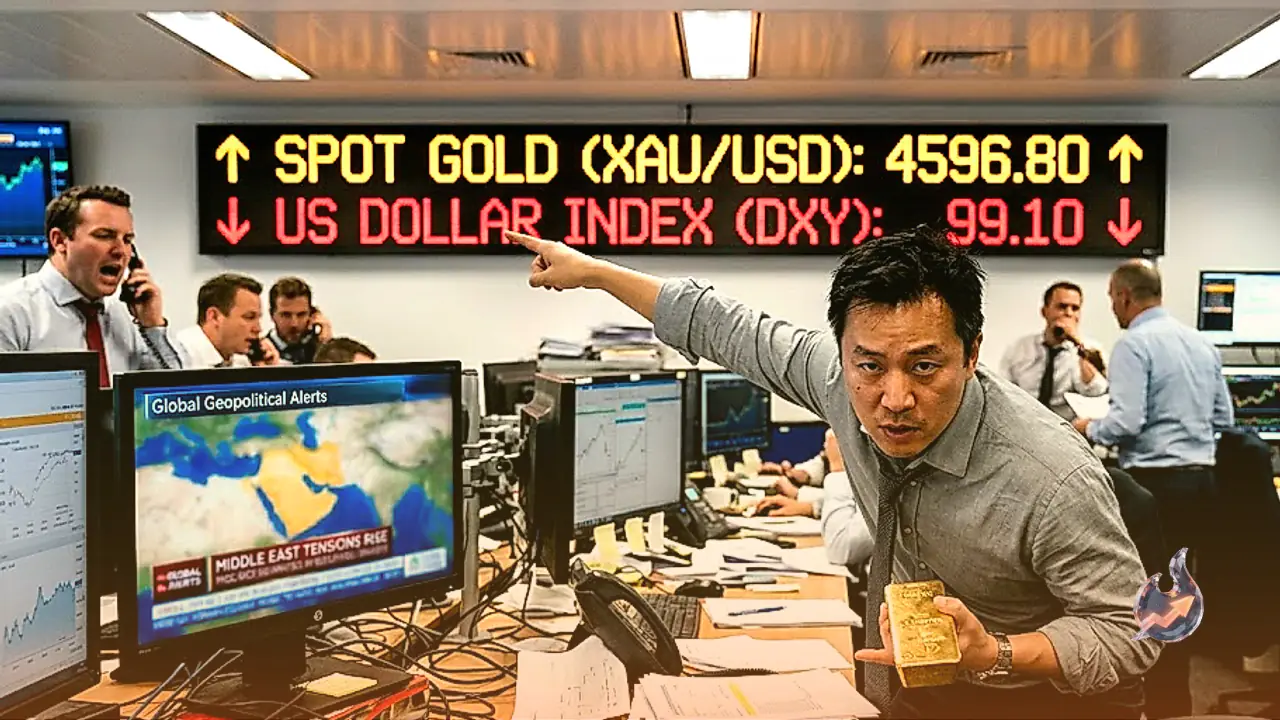
In commodities, Gold (XAU/USD) traded steadily above $4,500 during Friday's Asian session, remaining on track to lock in gains for a third consecutive week. Easing expectations of aggressive Federal Reserve interest rate hikes provided underlying support to bullion, though rising US Treasury yields and energy-driven inflation concerns helped limit broader losses for the US Dollar.