
























The Euro is experiencing noticeable downside pressure in global foreign exchange markets, with the EUR/USD currency pair sliding toward its lowest marks recorded since June. A steady upward march in US Treasury yields alongside mounting expectations of further monetary tightening by the Federal Reserve has bolstered the US Dollar across the board. Simultaneously, an unresolved standoff between the United States and Iran is keeping crude oil prices elevated. Currency traders and institutional investors are now positioning ahead of an incoming batch of key economic reports that will provide crucial clues regarding the health of the US economy and the trajectory of interest rates.
Geopolitical tensions and Strait of Hormuz negotiations
Diplomatic efforts in the Middle East remain delicate and fraught with uncertainty. According to a source briefed on the negotiations, mediators are scheduled to conduct separate discussions with US and Iranian representatives on Monday or Tuesday. The primary subject on the agenda is a revised iteration of Iran's seven-day framework aimed at reopening the Strait of Hormuz. US President Donald Trump rejected an earlier version of the proposal over the weekend, leaving crude markets nervous over potential supply disruptions through the vital maritime corridor and fueling concerns about persistent global inflationary pressures.
Federal Reserve policy trajectory and vital economic releases
Recent public commentary from Federal Reserve officials indicates that policymakers remain open to implementing further interest rate hikes to pull inflation back toward their established 2% annual objective. Market participants are focusing heavily on a data-dense week in the United States. Key releases include the Personal Consumption Expenditures (PCE) inflation gauge on Wednesday, the Institute for Supply Management (ISM) Manufacturing Purchasing Managers' Index (PMI) on Thursday, and the official Nonfarm Payrolls (NFP) employment report on Friday. These metrics will serve as direct barometers for whether another benchmark rate increase will materialize during the central bank's October meeting.
European Central Bank rate outlook and energy exposure
On the European side of the equation, the single currency has found little durable support despite expectations that the European Central Bank (ECB) could deliver further tightening after already raising rates twice this calendar year. Analysts at HSBC highlighted that the Euro continues to face structural vulnerability due to uncertainty surrounding the ECB's willingness to pursue additional interest rate hikes. This vulnerability is especially evident in contrast to the Federal Reserve's overtly hawkish rhetoric delivered at its September gathering. HSBC analysts noted that while relative interest rate differentials may not always trigger dramatic swings in EUR/USD, Europe's pronounced vulnerability to elevated energy costs threatens economic growth prospects and external commercial balances.
Christine Lagarde's assessment of inflation and growth risks
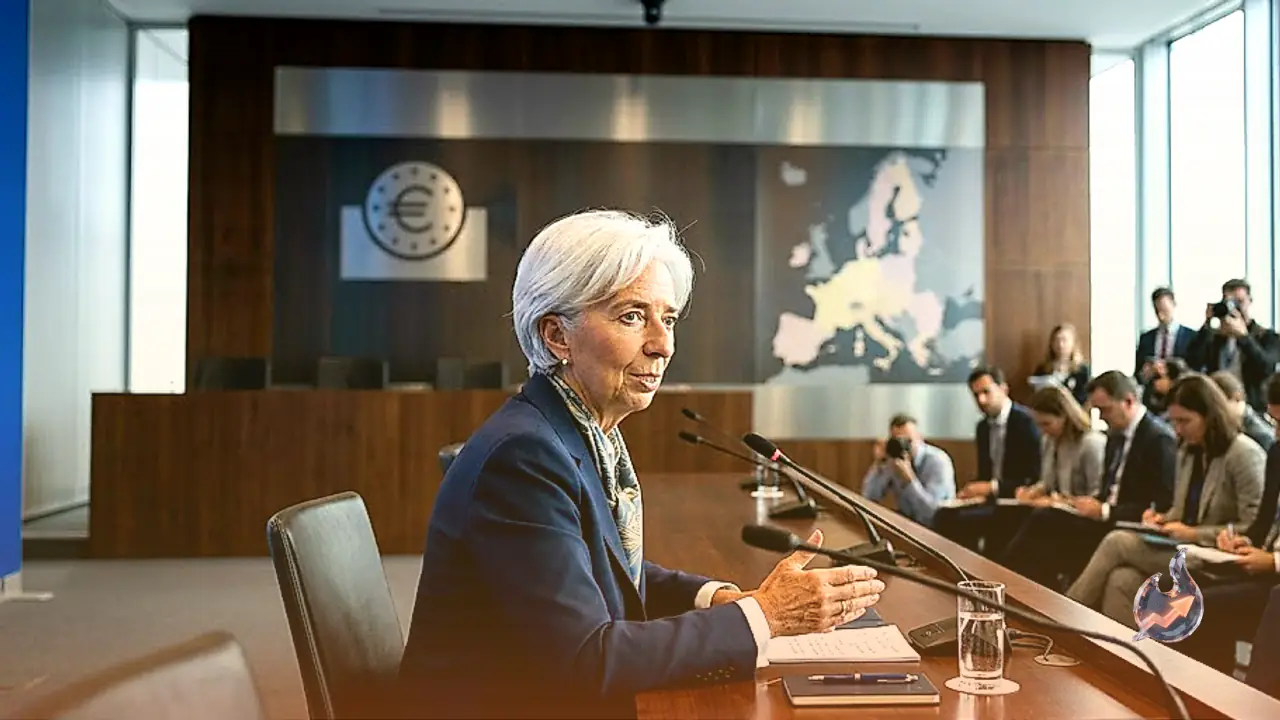
Addressing the economic landscape, ECB President Christine Lagarde underscored that policy must navigate both upside inflation hazards and downside threats to overall output. Lagarde said, “We see higher inflation ahead but no signs yet that it is becoming embedded.” She followed by stating, “We view a measured response as appropriate to keep inflation in check.” Lagarde also noted that prevailing interest rates currently stand at the upper boundary of the neutral range, though she explicitly clarified that the central bank does not configure its monetary settings based strictly on the theoretical neutral rate.
Cross-currency movements across Yen and Australian Dollar
A broad assessment of currency markets reveals that the US Dollar registered broad-based appreciation, booking its strongest daily advance against the Swiss Franc. Concurrently, the Australian Dollar (AUD/USD) fought to protect the 0.7000 threshold at the opening of the trading week, hovering near its weakest valuation since August 4 under the weight of the bullish greenback. Elevated oil prices and persistent bets on an October Fed rate hike kept US yields near multi-year peaks, a dynamic that bolstered safe-haven flows into the US Dollar ahead of Tuesday's policy decisions from the Reserve Bank of Australia (RBA).
In Asia, USD/JPY managed to attract dip-buyers, clawing back part of Friday's retreat that had been triggered by market talk that Japanese authorities might intervene directly to bolster the Yen. Nevertheless, dovish policy minutes released by the Bank of Japan (BoJ) capped upward momentum in the Japanese currency. Coupled with rising crude oil prices stemming from the US-Iran confrontation, which reinforced inflationary expectations and solidified bets on an October Fed rate hike, the pair rallied back toward the 158.00 handle.
Sell-offs in Gold and consolidation in Bitcoin
Financial cross-currents also exerted heavy influence on precious metals and digital assets. Gold encountered persistent selling pressure as the trading week opened, pulling back toward $4,100 per troy ounce, a neighborhood not observed since early August. The convergence of heightened geopolitical unrest, rising Treasury yields, and broad-based Dollar strength kept spot bullion under clear downward momentum on Monday.
In digital currencies, Bitcoin changed hands below $82,800 on Monday following a rally of over 4% the preceding week. The advance showed signs of fatigue near recent peaks as upward momentum stalled. Nevertheless, consistent institutional demand channelled through spot Bitcoin Exchange Traded Fund (ETF) inflows continues to underpin long-term buying interest across the sector.
Energy market milestones and parallel central bank moves
In the United Kingdom, diesel prices touched an all-time record, intensifying domestic economic anxiety even as broader worries over immediate petroleum supply availability showed modest signs of easing despite higher crude benchmarks. Market commentary continues to debate whether the aggressive rate-hiking stance anticipated from the Fed is strictly necessary given broader growth considerations, while investors also monitor broader rotations within technology and artificial intelligence holdings.
Notably, both the Federal Reserve and the Bank of Japan recently executed strikingly similar monetary maneuvers. Each central bank raised benchmark interest rates by 25 bps during the previous week, both institutions face ongoing inflation management challenges, and both leadership teams have affirmed that forthcoming policy adjustments will remain strictly contingent on incoming economic data.