























Trading operations across Indian financial markets have been halted on Monday, September 14, 2026, to celebrate the commencement of Ganesh Chaturthi and the traditional Ganpati sthapana. The vibrant ten-day festival is celebrated with immense fervor across multiple states, most notably in Maharashtra. Because the country's primary stock exchanges, the Bombay Stock Exchange and the National Stock Exchange, are headquartered in Mumbai, where thousands of community pandals and extensive festive processions take place annually, market operations are routinely suspended on this auspicious day. Nevertheless, global equity markets, including key Asian bourses and Wall Street, remain operational, offering domestic investors a clear window into international market movements.
Trading Schedule for Domestic Stock Exchanges
According to the official holiday calendars published by BSE and NSE, domestic equity trading is completely suspended on September 14, 2026, in observance of Ganesh Chaturthi. The temporary market closure applies universally across the cash equity segment, equity derivatives, currency derivatives, and commodity derivatives on the primary equity bourses. Standard trading operations will recommence on Tuesday, September 15, 2026, at normal morning hours, giving market participants time to assess ongoing macroeconomic developments before initiating fresh positions.
Partial Operations Scheduled at MCX
Unlike equity and currency bourses, commodity trading follows a distinctive dual-session timetable on national holidays. The Multi Commodity Exchange conducts two distinct daily sessions, consisting of a daytime morning session and an extended evening session. On September 14, 2026, the morning trading window, which routinely runs from 9:00 am to 5:00 pm on weekdays, remains entirely closed due to the broader market holiday. However, the exchange will open for its regular evening session starting at 5:00 pm and concluding at 11:30 pm or 11:45 pm depending on the asset contract. This phased operational structure allows domestic commodity participants to trade precious metals, energy products, and base metals in alignment with European and US commodity hours.
Cultural Significance of the Ten-Day Festival
The celebration of Vinayaka Chaturthi, popularly referred to as Ganesh Chaturthi, marks the auspicious arrival of Lord Ganesha across homes and communities in Maharashtra and other parts of India starting September 14, 2026. Lasting ten full days, the observance concludes with large-scale visarjan ceremonies on the final day. Devotees commemorate the occasion through religious rituals, offerings of modak, and colorful street processions. Elaborate idols in diverse artistic designs and dimensions are installed in community pandals and private households to usher in new beginnings, paying homage to the deity revered as the remover of hurdles and the embodiment of wisdom, prosperity, and intellect.
Asian Equities Face Selling Pressure and Tech Selloffs
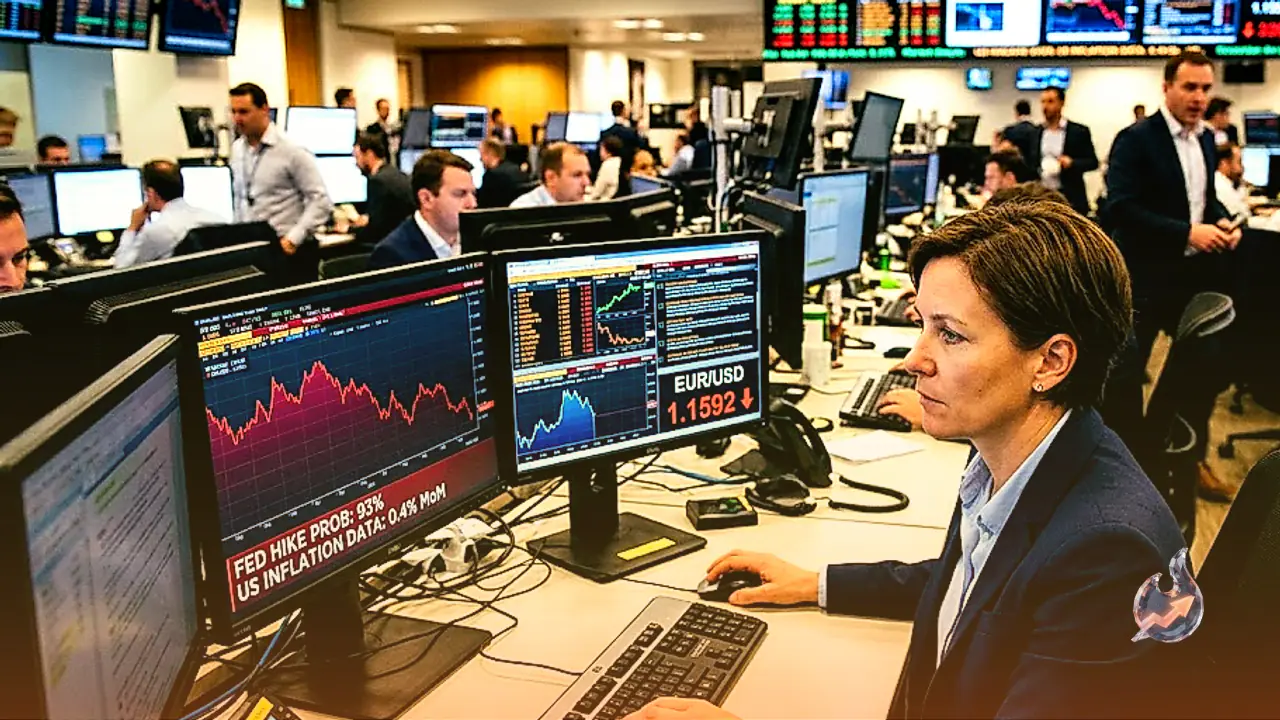
While domestic trading floors remained silent, trading across major Asian financial centers continued with noticeable downside volatility on Monday morning. Regional sentiment was rattled by expectations of ongoing monetary tightening and the growing probability of an interest rate hike from the upcoming US Federal Reserve policy review. Deepening the cautious tone, semiconductor and artificial intelligence hardware shares experienced sharp selling across major Asian hubs. South Korean memory producer SK Hynix fell more than 5%, Samsung Electronics dropped 4%, and chip testing firm Advantest slipped 4.7%, while Japan's Kioxia tumbled by over 9%.
Key benchmark indices across the region mirrored the prevailing risk aversion. Japan's Nikkei 225 declined by 1%, South Korea's KOSPI index suffered a steep decline of over 2.4%, and Taiwan's TAIEX index sank 1%. Elsewhere, Australia's S&P/ASX 200 experienced heightened intraday volatility, while mainland China's Shanghai Composite and Hong Kong's Hang Seng index managed to register modest fractional gains.
Wall Street Prepares for Trading Following Weekly Pullback
Across the Atlantic, US equity exchanges are set to conduct business as usual on September 14. During the preceding session on Friday, September 11, Wall Street benchmarks closed higher, with the Dow Jones Industrial Average advancing 509.19 points, or 0.98%, to settle at 52,573.29. The tech-focused Nasdaq 100 gained 264.93 points, or 0.91%, to close at 29,368.44. Similarly, the broader Nasdaq Composite climbed 251.31 points, or 0.96%, closing at 26,333.04, while the S&P 500 rose 65.28 points, or 0.86%, to conclude the day at 7,656.98.
Despite that single-day rebound, the major US indices incurred meaningful weekly losses. Over the entire five-day stretch, the Dow Jones dropped 1,011.60 points, or 1.9%, registering as the steepest weekly decliner among key benchmarks. The Nasdaq 100 gave up 171.13 points on a week-on-week basis, while the Nasdaq Composite fell 254.86 points, or 0.96%. Concurrently, the S&P 500 recorded a weekly drop of 93.21 points, or 1.20%, highlighting widespread investor caution heading into a critical week of global central bank decisions.
Expert Strategy and Portfolio Guidance
Evaluating the technical and macroeconomic backdrop, Ajit Mishra, SVP of Research at Religare Broking, noted that markets enter the trading week carrying a cautious tone. He pointed out that elevated crude oil prices, ongoing geopolitical developments, and the forward policy path of the US Federal Reserve remain decisive factors in determining short-term market momentum. A continued surge in international crude oil prices could place heightened pressure on domestic inflation projections, the Indian rupee, and overall corporate operating margins, while a restrictive stance from the Federal Reserve could discourage foreign capital inflows into emerging economies.
In terms of portfolio allocation, Mishra advised investors to adopt a disciplined, selective approach, prioritizing companies characterized by solid balance sheets, stable earnings visibility, and limited exposure to fluctuations in global demand and crude oil costs. He suggested staggering fresh allocations over time with strict emphasis on risk management until external economic conditions stabilize. For short-term market traders, he cautioned that price volatility will likely stay elevated surrounding the Fed policy verdict, domestic inflation readings, and overseas geopolitical headlines. He recommended managing active trades through prudent position sizing and well-defined stop-loss levels while avoiding aggressive leveraged exposure during sharp swings.
Critical Economic Indicators and Global Catalysts Ahead
Several vital macro developments will capture investor attention throughout the week. Internationally, headlines surrounding the US-Iran conflict and fluctuating Brent crude benchmarks will act as primary market movers. The overarching global highlight remains the US Federal Reserve monetary policy conclusion and subsequent forward guidance regarding borrowing costs. Market participants will dissect the official statement alongside remarks from Fed Chair Warsh to gauge the central bank's perspective on lingering price pressures, economic resilience, and long-term interest rate trajectory.
On the Indian economic calendar, market observers await the publication of August Wholesale Price Index and Consumer Price Index inflation figures, followed closely by domestic unemployment figures and foreign trade balance data. These metrics will shed light on local inflationary trends, labor market dynamics, and export-import balances. Additionally, the weekly foreign exchange reserves data slated for release on September 18 will be scrutinized as currency markets navigate pressure on the rupee driven by high global oil prices.