























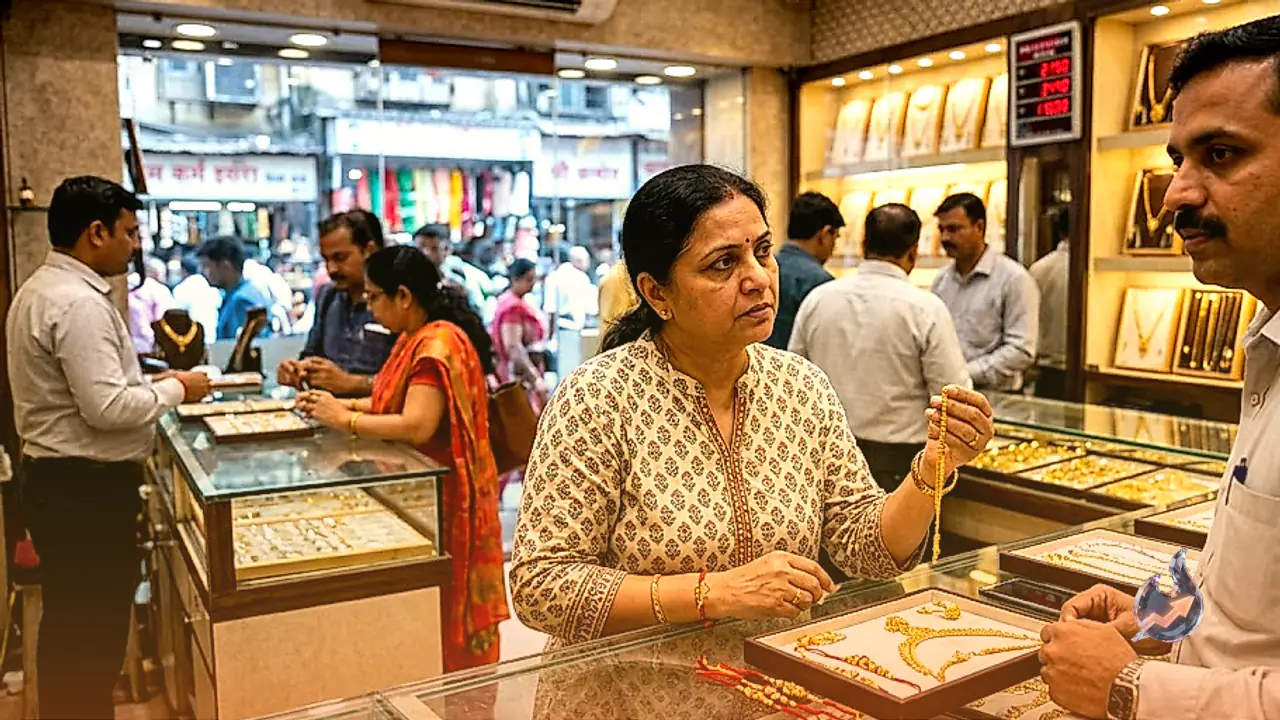

Indian bullion markets have recorded a notable price correction around Raksha Bandhan 2026, offering welcome financial relief to consumers and investors ahead of key festive celebrations. Gold prices across all purity grades as well as silver rates experienced substantial declines across retail and wholesale categories in the domestic market. The drop in local rates comes amidst broader international caution, where global investors are watching macroeconomic developments and interest rate projections in the United States.
Detailed Breakdown of 24 Karat Gold Rates
The rate for 24 Karat gold, representing the highest purity grade of physical gold, dropped by Rs 316 per gram on Friday to stand at Rs 15,982 per gram. This single-gram price adjustment translated into broader price reductions across larger retail and commercial quantities traded across Indian cities.
For small retail investors purchasing an 8-gram unit of 24K gold, the price dropped by Rs 2,528 to reach Rs 1,27,856. Meanwhile, standard 10-gram purchases, which serve as the primary benchmark for retail bullion consumers in India, decreased by Rs 3,160 to settle at Rs 1,59,820. On a wholesale scale, 100 grams of 24K gold saw a substantial decline of Rs 31,600, settling at Rs 15,98,200. These downward adjustments provide significant cost savings for individuals acquiring pure bullion coins or bars during the festive period.
Price Movements Across 22 Karat and 18 Karat Gold Categories
Jewelry buyers also experienced significant price reductions across 22 Karat and 18 Karat gold, which constitute the bulk of consumer ornamental demand. The price of 22 Karat gold fell by Rs 290 per gram, reaching Rs 14,650 per gram compared to previous trading levels.
An 8-gram quantity of 22K gold was priced at Rs 1,17,200, representing a drop of Rs 2,320. The benchmark 10-gram rate for 22K gold declined by Rs 2,900 to settle at Rs 1,46,500. Bulk purchases of 100 grams of 22K gold registered a price decrease of Rs 29,000, bringing the overall total to Rs 14,65,000. For budget-conscious shoppers looking at lighter jewelry options, 18 Karat gold rates declined by Rs 237 per gram to Rs 11,987 per gram. An 8-gram piece of 18K gold decreased by Rs 1,896 to Rs 95,896, while 10 grams fell by Rs 2,370 to Rs 1,19,870. The 100-gram tier for 18K gold slid by Rs 23,700 to reach Rs 11,98,700.
Silver Markets Experience Sharp Downward Adjustment
Alongside the correction in gold prices, silver recorded a broad-based decline across domestic trading centers. The retail price of silver dropped by Rs 5 per gram, moving down from Rs 260 per gram to Rs 255 per gram.
Small quantities of silver saw proportional price drops, with 8 grams selling for Rs 2,040 following a Rs 40 decline, and 10 grams available at Rs 2,550 after a Rs 50 drop. Larger consumer quantities also recorded price pullbacks, as 100 grams of silver dropped by Rs 500 to Rs 25,500. Industrial users and wholesale traders saw the price of 1 kilogram of silver fall by Rs 5,000, bringing the per-kilogram rate down to Rs 2,55,000. Silver demand typically surges during Indian festive periods for traditional gifting and ceremonial purposes, making this price adjustment particularly relevant for buyers.
Global Economic Cues and Federal Reserve Policy Projections
The domestic softness in precious metal prices mirrors international trends, where gold and silver faced downward pressure as global market participants exercised caution. Investors worldwide are closely monitoring upcoming comments from Federal Reserve Chair Kevin Warsh at the Jackson Hole symposium, looking for indications regarding the future trajectory of monetary policy and interest rates in the United States.
Providing market context on current bullion dynamics, Prithviraj Kothari, Managing Director at RiddiSiddhi Bullions Ltd. and President of India Bullion and Jewellers Association Ltd., noted that gold and silver maintained a firm stance earlier in the week, buoyed by persistent concerns over currency debasement. Kothari highlighted that market expectations for interest rate cuts currently stand at 36.5% for September and rise to 72.7% by December, indicating that investor focus remains firmly anchored on central bank policy decisions.