























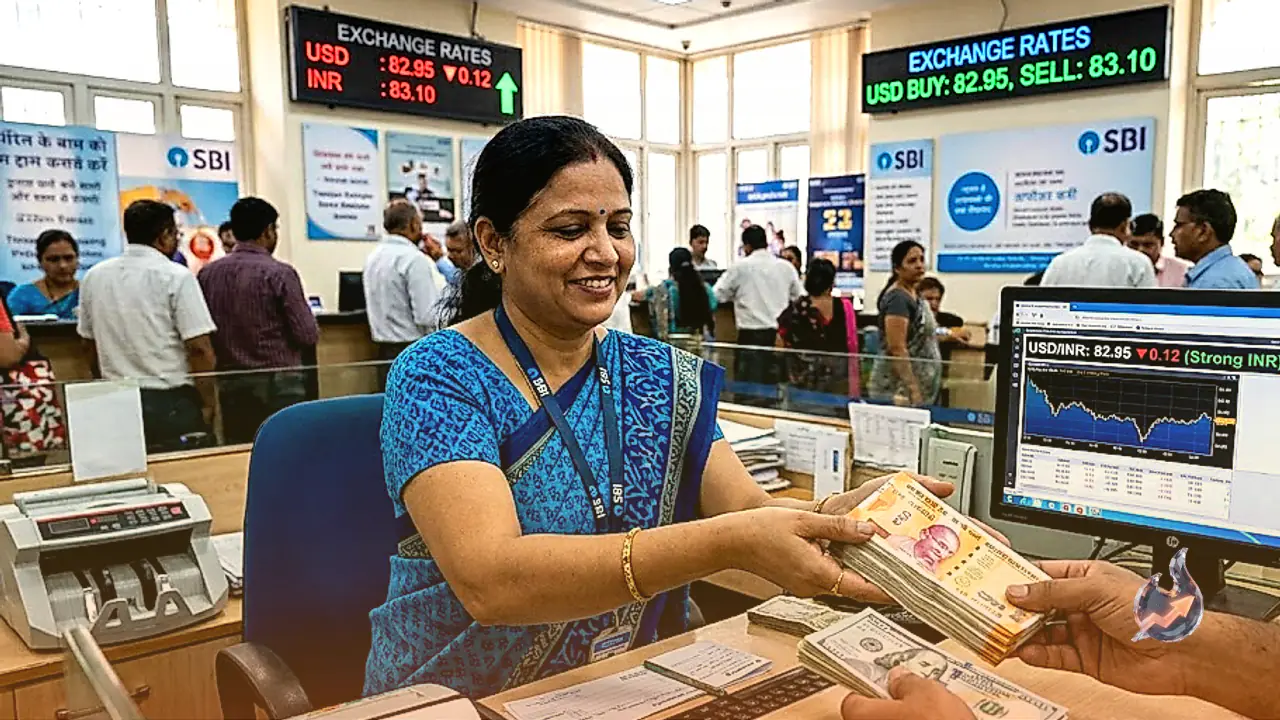

The Indian Rupee advanced against the US Dollar for the second straight session, setting a quiet tone for the start of the week. Strong capital inflows have provided essential backing to the local currency, though market participants continue to monitor volatile energy markets and potential interventions by the Reserve Bank of India designed to curb excessive volatility. Immediate downward pressure on the currency had eased earlier due to a temporary dip in crude oil prices as investors booked profits ahead of anticipated policy announcements regarding stricter US measures against Iran.
Energy Markets and Geopolitical Pressures
Despite the brief respite, crude oil prices face renewed upward risks following statements from US Treasury Secretary Scott Bessent concerning plans for unprecedented measures targeting Iran. Potential disruptions to Iranian oil shipments, reduced allocations for Chinese buyers, and ongoing naval patrols in key transit lanes threaten to tighten global energy supplies further. Geopolitical friction around the Strait of Hormuz keeps vessel transit well below historical averages, presenting a significant risk for India. As the world's third-largest crude importer, India previously experienced heavy foreign equity outflows due to elevated energy costs.
Even with broader risk sentiment remaining subdued due to geopolitical uncertainties, losses in the Rupee are expected to be mitigated by active central bank participation. Over the preceding weekend, reports indicated that the central bank accumulated nearly $73 billion under initiatives introduced in June to bolster the balance of payments, pushing foreign exchange reserves close to historical highs.
Analysts at MUFG/BTMU observe a noticeable shift in the policy communication coming from the Reserve Bank of India. They noted that the recent minutes were more hawkish than expected, suggesting that the central bank may have concluded its monetary easing cycle and could pivot toward rate normalization or hikes in subsequent months.
Meanwhile, domestic equities edged higher following consecutive weekly losses. Last week, benchmark indices such as the Nifty 50 and BSE Sensex retreated due to rising energy costs and climbing bond yields amid Middle East escalations. Investor caution persists as markets digest the implications of newly announced trade restrictions.
Fiscal Policy Shifts and Currency Dynamics
The USD/INR currency pair drifted lower as the greenback reacted to fresh fiscal adjustments in Washington. The US Treasury Department surprised observers by announcing plans to at least double its buyback operations for longer-dated government debt to manage rising borrowing costs. Officials signaled that buyback volumes could exceed $4 billion, aiming to align yields more closely with broader economic fundamentals.
Strategists at Scotiabank emphasize that the currency functions as the primary shock absorber for shifting fiscal dynamics. With policymakers focused on moderating long-term yields, the US Dollar is expected to bear a greater negative burden from domestic fiscal concerns.
Live market data places the USD/INR pair around 95.66, holding above key moving averages including the 20-period and 50-period exponential moving averages, which sustains a mildly constructive near-term bias. The 14-day Relative Strength Index prints near 51, indicating neutral-to-firm momentum without overbought conditions. Key technical levels identify resistance near 95.70 and 95.75, with immediate support resting at 95.62 and 95.59.
Macroeconomic Drivers of the Rupee
The Indian Rupee remains highly sensitive to external variables, including international crude oil quotations, the broader valuation of the US Dollar, and cross-border investment flows. Direct interventions by the Reserve Bank of India in the foreign exchange market, alongside domestic interest rate adjustments, play a vital role in smoothing exchange rate fluctuations.
Monetary authorities utilize interest rate levers not only to manage currency stability but also to anchor inflation around the targeted 4% threshold. Higher domestic interest rates typically enhance the appeal of the Rupee through mechanisms like the carry trade, where investors borrow in lower-yielding jurisdictions to fund higher-yielding local assets.
Broader macroeconomic indicators such as GDP growth, the trade balance, and foreign direct and portfolio investments heavily dictate currency valuation. Faster economic expansion encourages foreign capital inflows, lifting demand for the Rupee, whereas persistent inflation can erode trade competitiveness and weigh on the local currency by necessitating higher import expenditures.