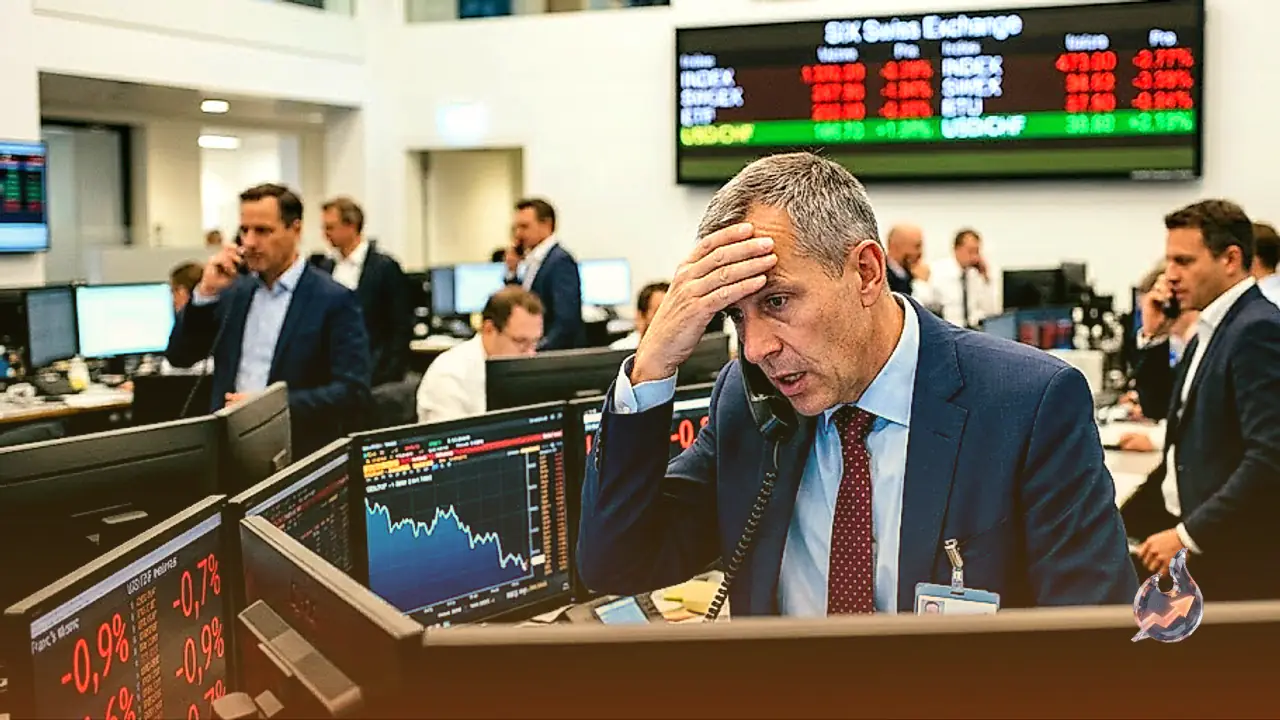

























Addressing pressing sovereign finance challenges across the continent, European Central Bank President Christine Lagarde underscored that France's escalating public debt load represents a serious economic predicament. With national liabilities sitting at roughly 120 percent of gross domestic product and showing no defined trajectory toward reduction, she stressed that establishing a transparent budget path coupled with deep economic reforms is vital to reviving investor and market confidence.
Resilience of European Financial Architecture Versus French Fiscal Woes
Despite sovereign debt pressures inside individual member states, Lagarde emphasized that the broader European financial system rests on far firmer foundations today than it did during earlier turmoil. She noted that current institutional frameworks are substantially more solid than the vulnerable structures witnessed during the 2008 global financial crisis and the 2011 sovereign debt crisis. Capital buffers and systemic safeguards have meaningfully improved across regional lenders. Nevertheless, she cautioned that systemic stability cannot fully substitute for national responsibility, making France's lack of a clear strategy to lower its 120 percent debt ratio a standout concern for European policymakers.
Presidential Ambitions Dismissed and Leadership Continuity
Addressing persistent domestic speculation about whether she might consider entering the French political arena, Christine Lagarde ruled out running for the French presidency, asserting directly that such a move would not be a good idea at all. Furthermore, when questioned about her tenure at the helm of the Eurozone's central bank, she indicated that if she were to depart from the ECB early, it would only be by a matter of a few months. Her remarks underscore an institutional focus on guiding the monetary body through current geopolitical and macroeconomic headwinds.
Foreign Exchange Dynamics and the Euro Under Pressure
Currency movements revealed a divergent trajectory for the common European currency. During today's trading sessions, the Euro emerged strongest against the Australian Dollar. According to standard currency percentage tables and cross-currency heat maps, which evaluate base currencies against counter quotes such as the US Dollar, the Euro displayed defensive positioning across several crosses but sustained intense pressure against the greenback.
The EUR/USD exchange rate slipped to its lowest level since May 2025, falling to 1.1312 on Wednesday. This marks an extended decline from its January peak of 1.2082. The steep downward trajectory mirrors a potent mix of broad-based US Dollar resilience, persistent geopolitical instability, and renewed concerns surrounding Europe's vulnerability to surging energy prices. Nonetheless, financial analysts point out that an unexpected upside shock in Eurozone consumer prices could alter rate expectations and offer the Euro an unanticipated temporary lifeline.
ECB Mandate, Governance, and Rate Mechanisms
Operating out of Frankfurt, Germany, the European Central Bank functions as the primary reserve institution for the nineteen-plus nations comprising the Eurozone. Its main responsibilities revolve around establishing base lending rates and steering monetary governance for the single-currency economic bloc. The ECB holds a primary mandate to preserve price stability, defined explicitly as keeping inflation near the 2 percent target over the medium term.
Interest rate adjustments serve as the bank's core lever to govern inflationary momentum. Elevated lending benchmarks typically bolster Euro valuation by drawing cross-border capital inflows, whereas benchmark reductions tend to soften the currency. Rate actions and strategic directives are determined by the ECB Governing Council across eight scheduled policy meetings held throughout each calendar year. These pivotal decisions are deliberated by governors from Eurozone national central banks alongside six permanent board members, led by ECB President Christine Lagarde.
Balance Sheet Tools: Quantitative Easing Versus Quantitative Tightening
During severe economic shocks where conventional rate cuts fail to revive inflation or stimulate activity, the European Central Bank deploys extraordinary balance sheet measures known as Quantitative Easing. Under QE, the monetary authority creates Euro reserves to purchase large volumes of government and corporate bonds directly from commercial lenders and financial institutions. By supplying ample liquidity and depressing long-term yields, QE often prompts depreciation in the Euro. The central bank leaned heavily on this policy during the 2009 to 2011 financial shockwaves, throughout the low-inflation environment of 2015, and during the severe disruptions of the covid pandemic.
Conversely, Quantitative Tightening represents the deliberate reversal of this process once sustained economic recovery takes hold and inflationary pressures threaten price stability. Rather than injecting liquidity via asset purchases, the ECB halts additional bond acquisitions and allows the principal from maturing sovereign and corporate debt holdings to roll off without reinvestment. By steadily reducing the monetary footprint, Quantitative Tightening generally exerts an upward, bullish influence on Euro valuations.
Cross-Asset Movements in Currencies, Commodities, and Crypto
Broader financial markets experienced notable volatility across asset classes throughout Wednesday's sessions. The AUD/USD pair hovered near two-month lows around 0.6950 during Asian trading hours after below-forecast August Australian underlying CPI readings dampened market bets on future Reserve Bank of Australia interest rate increases. Subdued Chinese factory activity measures also failed to provide buying momentum, even as the US Dollar paused its broader rally.
Meanwhile, the USD/JPY cross maintained its drop beneath the 157.00 handle in Asian trading. Expectations of an increasingly hawkish Bank of Japan monetary stance, paired with persistent threat of official intervention, underpinned the Japanese Yen and offset disappointing domestic industrial output and retail sales figures. A pullback in the US Dollar added further downward momentum to the pair.
In the commodities space, gold reversed earlier upside momentum, pulling back toward $4,150 per troy ounce after failing to sustain its run above the $4,200 threshold. Mixed US Treasury yields and an intraday recovery in the greenback trimmed bullion's appeal.
Cryptocurrency benchmarks traded quietly without decisive momentum on Wednesday. Bitcoin struggled to preserve immediate technical support near the $83,000 zone. Ethereum moved in lockstep with the broader crypto complex, trapped beneath the $2,700 ceiling and maintaining support above $2,600. Ripple traded in a narrow corridor around the $1.50 marker.