























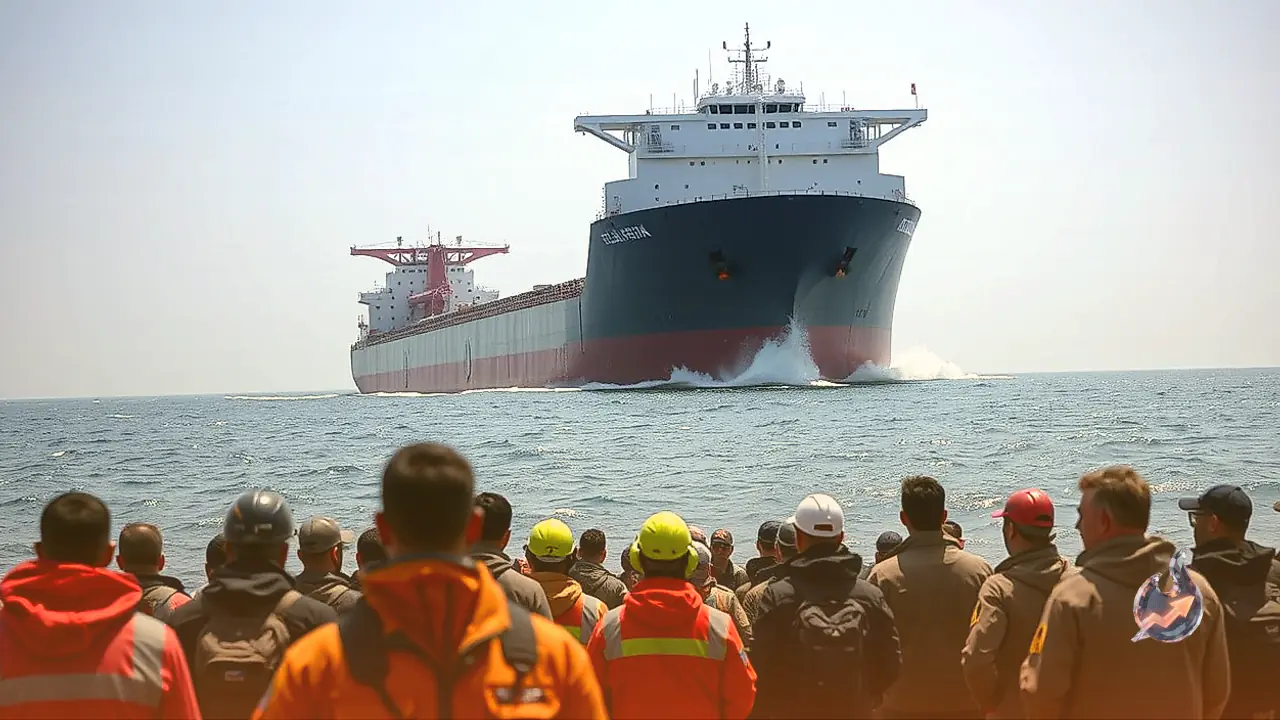

Mounting threats to energy transportation corridors across the Middle East provided fresh momentum to global oil benchmarks on Wednesday. Trading during Asian hours saw West Texas Intermediate (WTI) advance for the second consecutive session to hover near $89.50 per barrel, as persistent security risks around regional transit choke points outweighed signs of rebounding production flows from the Persian Gulf. Live market data reveals Crude Oil (CL=F) advancing 1.07 percent from its previous close of $89.43 to $90.39 per barrel, remaining inside its 52-week trading span of $54.98 to $119.48.
Tanker Disruptions and Missile Interceptions Escalate Tensions
Maritime security in the Strait of Hormuz has deteriorated sharply in recent days, directly impacting sentiment across physical energy markets. Tankers navigating this vital waterway have faced heightened aggression, with Iranian forces intensifying harassment operations. Monitoring reports from the UK Maritime Trade Operations indicate that nine separate shipping incidents have already taken place within the area so far this month, creating acute logistical anxiety for international carriers traversing the primary export gateway of Middle Eastern oil.
Regional security dynamics deteriorated further following cross-border military confrontations involving Yemen. A coalition led by Saudi Arabia confirmed that defense units intercepted and destroyed a ballistic missile fired by Houthi militants toward the southwestern Saudi city of Khamis Mushait. The ongoing frequency of missile launches directed at strategic targets reinforces market concerns regarding potential collateral disruption to energy infrastructure across the Arabian Peninsula.
Persian Gulf Pumping Capacity Shows Resilience
Despite heightened security hazards, upward momentum in crude benchmarks encountered resistance from visible recoveries in export operations. Commercial tankers have maintained movements through the Strait of Hormuz, opting for discreet navigation strategies rather than halting departures entirely. These uninterrupted transits have ensured that baseline maritime volumes continue reaching global destinations.
Simultaneously, inland transportation networks in Saudi Arabia have provided an essential logistical cushion. The kingdom's strategic East-West pipeline system fully restored its crude transport capacity to 5.8 million barrels per day. By funneling crude overland from eastern fields directly to Red Sea terminals, this infrastructure allows export volumes to bypass the Strait of Hormuz entirely, capping broader risk premiums across international benchmarks.
Demand Dynamics Counterbalance Flow Additions
Market evaluations from TD Securities emphasize that while crude prices experience downward pressure from expanding supply flows, these additional barrels are being steadily absorbed by resilient global demand alongside recurring Iranian and Houthi hostility. In their analysis, the interplay between solid consumption and geopolitical disruption has kept the physical crude balance significantly tighter than gross flow metrics might indicate, preventing a sustained downward correction.
Understanding WTI and Its Global Role
West Texas Intermediate represents one of the premier grades of crude oil actively traded across international financial markets, standing alongside Brent and Dubai Crude as a standard pricing reference. Classified as light and sweet due to its low density and minimal sulfur content, WTI yields high shares of refined fuels like gasoline and ultra-low-sulfur diesel through straightforward refining processes.
Extracted primarily within the United States, WTI is routed through the central storage and transit terminal at Cushing, Oklahoma. Known internationally as the Pipeline Crossroads of the World, the Cushing complex functions as the physical settlement hub for crude futures. Prices registered at Cushing serve as a primary gauge for broader macroeconomic energy costs.
Core Drivers Influencing Crude Valuations
Crude prices fluctuate according to basic dynamics of global supply and demand. Accelerated worldwide economic expansion typically fuels energy consumption and pushes valuations higher, whereas slowing macroeconomic conditions reduce fuel use and depress benchmark prices. Geopolitical conflicts, regional blockades, and economic sanctions impose supply restrictions that trigger rapid upward price spikes.
Currency movements represent another fundamental driver. Because crude oil is universally priced in US Dollars, a depreciating dollar lowers purchasing costs for international buyers using foreign currencies, stimulating physical demand. Conversely, dollar strength increases import expenses globally, softening demand profiles.
Inventory measurements provide critical weekly visibility into consumption patterns. The American Petroleum Institute (API) releases private industry storage tallies on Tuesday, followed Wednesday by official government data from the Energy Information Administration (EIA). Drawdowns in commercial stockpiles reflect demand outstripping supply, driving price gains, while inventory builds point to oversupply and depress pricing. Historical records show that the two reports track closely, aligning within 1 percent of each other roughly 75 percent of the time, with EIA figures commanding greater market authority due to their governmental origin.
OPEC Production Quotas and Extended Coalitions
The Organization of the Petroleum Exporting Countries comprises 12 oil-producing states that convene biannually to determine coordinated output ceilings for their members. When OPEC opts to curtail production targets, the resulting artificial shortage tightens global balances and lifts crude benchmarks. Relaxing quota caps generates the inverse outcome by expanding available barrels.
The cartel operates alongside an extended coalition known as OPEC+, which incorporates ten non-member producers into collective supply pacts. Among these external partners, Russia holds the most prominent position, coordinating baseline exports and production strategies directly with traditional Middle Eastern producers.
Cross-Asset Movements Across FX, Gold, and Central Banks
Financial markets experienced broad repositioning alongside oil price movements on Wednesday. The AUD/USD currency pair struggled to extend its rebound from the three-month low of 0.6900, remaining suppressed below 0.7000 as dip-buying interest bolstered the US Dollar following climbing US Treasury yields. However, expectations surrounding potential policy rate hikes by the Reserve Bank of Australia prevented steeper losses ahead of the release of FOMC Minutes. Concurrently, USD/JPY advanced toward a one-and-a-half-week peak as traders eyed the 200-day simple moving average near mid-158.00, supported by fiscal worries in Japan and elevated Treasury yields.
Gold bullion softened during the Asian trading session, losing steam after rebounding from the two-month trough near $4,100 the preceding day. Renewed bids for the greenback and advancing bond yields limited appetite for non-yielding precious metals, keeping bullion confined within a one-week consolidation band. Market attention remains focused on the impending FOMC meeting minutes for hints on monetary trajectory.
Meanwhile, central banking developments unfolded in Asia and Europe. The Reserve Bank of India scheduled its bi-monthly monetary policy announcement for Wednesday at 10:00 AM IST, with widespread expectations pointing toward a 25-basis-point increase in the benchmark Repo Rate from 5.25% to 5.5%, marking the start of a rate-hiking cycle. In Europe, the European Central Bank faces policy friction as inflation runs at nearly double its mandate. While conventional responses call for aggressive rate hikes, parallel tightening by bond markets has complicated decision-making for European policymakers.
Technical Indicators and Market Levels
Technical parameters from live price action demonstrate that crude oil remains anchored within a long-term upward trajectory, evidenced by a golden cross where the 50-day EMA ($90.18) sits above the 200-day EMA ($80.90). The 14-day RSI reads 47, indicating neutral momentum, while the MACD histogram remains negative at -1.18 with a MACD reading of 0.02 against a signal line of 1.20. Bollinger Bands span between $85.76 and $105.86, with the 14-day ADX registering 20 to denote range-bound trading. Using the 14-day ATR of $4.32 for volatility planning, key operational markers include the pivot at $90.13, upper resistances at $90.65 (R1) and $90.90 (R2), alongside lower supports at $89.88 (S1) and $89.36 (S2).