

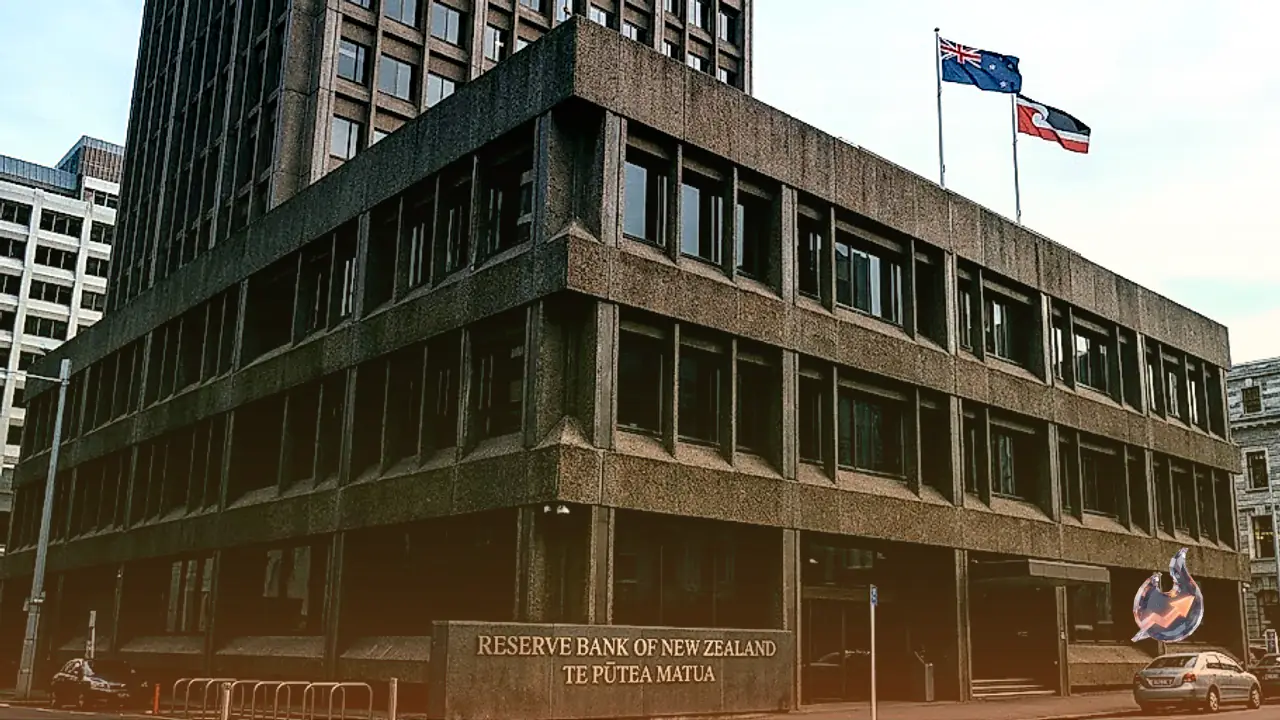





















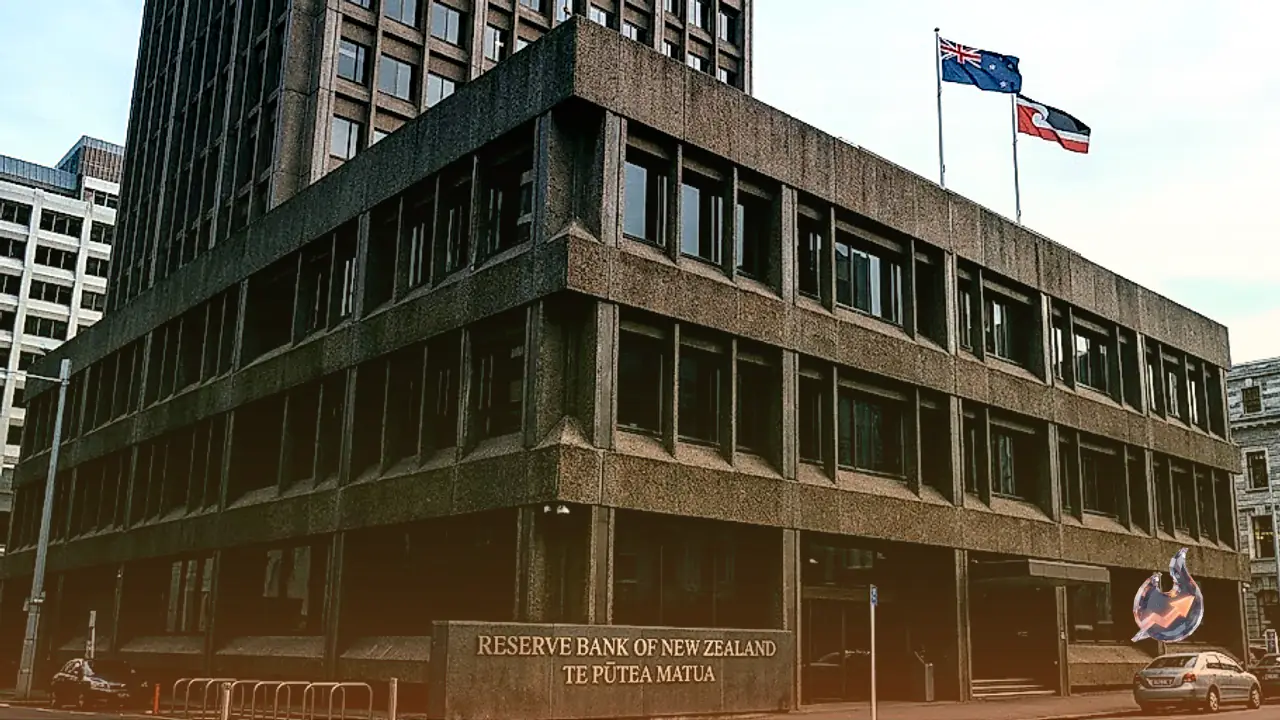

Currency markets saw the New Zealand Dollar lose ground on Monday, declining by 0.25% as the NZD/USD currency pair slipped to trade near 0.5680. The downward move occurred even as expectations mounted that the Reserve Bank of New Zealand will deliver another round of monetary tightening in its upcoming policy review. Investors appeared cautious, refraining from aggressive bets ahead of a cluster of major global central bank decisions and top-tier macroeconomic data releases scheduled throughout the trading week.
Shifting Expectations for the Reserve Bank of New Zealand
Market consensus regarding the Reserve Bank of New Zealand's impending policy choice has experienced a marked shift toward higher interest rates. Strategists at TD Securities revised their near-term outlook for the central bank, pointing out that their previous baseline had anticipated a pause at the October meeting. The institution now forecasts the central bank to implement a 25-basis-point increase to the Official Cash Rate during this week's gathering, lifting the benchmark rate to 3.0%.
Beyond the immediate decision, institutional expectations continue to price in an extended tightening cycle. Strategists at TD Securities reiterated their forecast for additional 25-basis-point rate hikes in both December and February. Consequently, this anticipated trajectory pushes their projected terminal rate upward from 3.25% to 3.50%. If realized, this policy move would mark the third consecutive rate hike by the central bank as it contends with persistent price pressures across the domestic economy.
Inflation Trends and Central Bank Divergence
Underpinning the policy debate, economic data from New Zealand revealed that headline inflation eased slightly more than anticipated during the third quarter. Despite that temporary moderation, economists project consumer prices to accelerate again in the fourth quarter. Such a re-acceleration threatens to push inflation above the 4% threshold, well clear of the Reserve Bank of New Zealand's target corridor of 1% to 3%.
In the United States, monetary policy projections present a different timing. Market pricing derived from the CME FedWatch tool suggests a 90% probability that the Federal Reserve will hold its benchmark interest rate unchanged in October. However, the probability of an additional rate increase in December remains elevated at 79%. This developing divergence between the policy paths of both institutions could offer underlying support for NZD/USD over the medium term, particularly if New Zealand's central bank signals an intention to prolong its cycle of rate hikes.
Technical Indicators and Moving Average Dynamics
Examining the one-hour technical chart, NZD/USD was seen trading around 0.5687, caught within a range bounded by key technical indicators. The pair held above its 200-period simple moving average situated at 0.5665, while facing persistent ceiling pressure just below the 100-period simple moving average at 0.5689. This positioning reflects a constrained intraday environment despite maintaining structural support on the downside. Meanwhile, the 14-period Relative Strength Index hovered at 47.2, remaining slightly beneath the neutral 50 threshold and pointing to consolidative momentum following a recent pullback from the 0.5700 zone.
According to live market tracking, NZD/USD trades at 0.5682, down 0.04% from its prior close of 0.5685, within a 52-week band of 0.5567 to 0.6093. Trading activity reflects volume running at 1.00 times its 20-day average. From an indicator perspective, the 14-period RSI stands at 51, while the MACD histogram prints 0.00 with a mildly bullish bias. The moving average profile shows the 20-day exponential moving average at 0.5664, the 50-day EMA at 0.5717, and the 200-day EMA at 0.5795, with the EMA50 trailing beneath the EMA200 in a death cross structure that reinforces a prevailing long-term downtrend. Bollinger Bands span between 0.5568 and 0.5703 around a midpoint of 0.5635, while an ADX value of 41 points to solid trend strength. Stochastic lines sit at 80 on the fast line and 86 on the signal line. On key reference levels, the daily pivot rests at 0.5688, flanked by upside resistances at 0.5703 (R1) and 0.5724 (R2), and downside supports at 0.5667 (S1) and 0.5652 (S2).
Cross-Currency Action Across Asian Trading
Developments across other foreign exchange pairs reflected broad sentiment shifts during the Asian session. AUD/USD managed to maintain ground above the 0.7000 handle, fluctuating close to a one-month high reached early Monday as fresh selling hit the US Dollar. A mild softening in crude oil prices coincided with lower US Treasury yields, limiting the greenback's capacity to rebound from three-week lows. Expectations surrounding a possible rate increase by the Reserve Bank of Australia in November provided underlying demand for the Australian currency, though upside momentum slowed ahead of the two-day Federal Open Market Committee meeting scheduled to begin Tuesday.
Concurrently, USD/JPY faced renewed selling interest, which halted its recovery from the lowest mark recorded since September 18. Weakness in US bond yields weighed directly on the US Dollar against the Japanese currency, while an increasingly hawkish tone from the Bank of Japan offered additional traction to the Yen. Market participants nevertheless exercised caution, keeping the downside contained as they awaited central bank verdicts from both Washington and Tokyo.
Commodities, Crypto, and Broad Macro Themes
Commodities displayed divergent moves as gold recovered from two consecutive sessions of losses to retake the $4,000 per troy ounce threshold. The combination of mixed US Treasury yields, a subdued US Dollar trajectory, and softening crude oil prices provided a supportive backdrop for the precious metal's rebound. In contrast, Bitcoin traded near $80,500 on Monday after three straight weeks of downward corrections. Elevated geopolitical tension across the Middle East continued to generate upward pressure on energy costs, reviving inflation anxieties and dampening speculative risk appetite across broader asset classes.
A critical calendar lies ahead, with five of the globe's foremost central banks scheduled to deliver monetary policy determinations this week. Elevated interest rate expectations remain prevalent worldwide as energy shocks threaten to keep consumer prices persistently above established targets. Adding to market complexity, the US Dollar confronts heightened volatility ahead of the November 3 midterm elections. While investors assign high odds to a December Federal Reserve rate hike, political shifts that determine control of Congress could fundamentally alter fiscal policy frameworks, subsequently exerting an indirect influence on the trajectory of US monetary policy toward 2027.