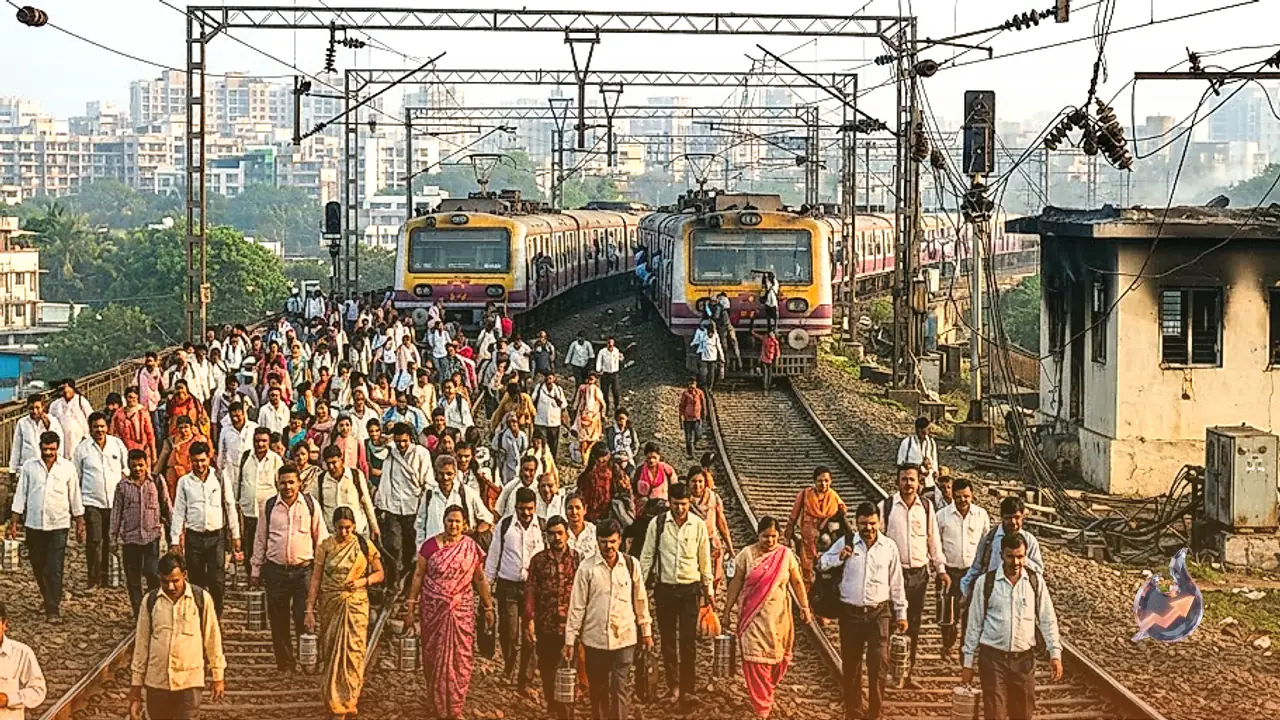
















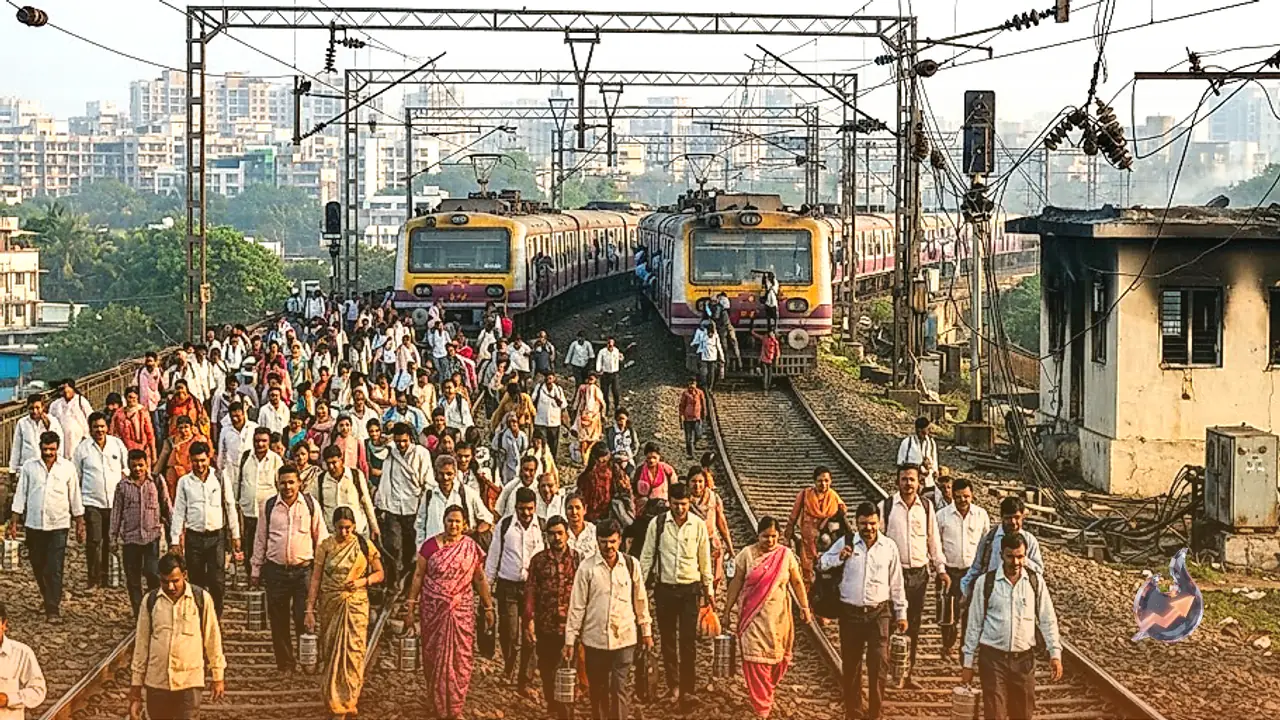

A catastrophic sequence of technical failures paralyzed Mumbai's Central Railway local train network during Monday morning peak hours, resulting in three fatalities and widespread chaos across the suburban commuter corridor. A fire inside a signaling control room near Kanjurmarg, paired with a dangling overhead equipment wire between Mulund and Thane, brought both slow and fast services to a complete standstill for hours. Unable to obtain status updates, thousands of stranded commuters stepped off halted carriages and began walking along live railway tracks to reach nearby stations. Central Railway authorities have initiated a high-level probe into the incident.
Dangling Overhead Cable and Signal Room Blaze Trigger Chaos
The operational crisis began unfolding early Monday morning around 9:23 AM when railway personnel detected a dangling overhead equipment line along the down slow track between Mulund and Thane stations. To rectify the hazard, railway engineers instituted a power block at approximately 10:00 AM, which required nearly an hour of repair work. However, before normal transit could resume, a fire broke out inside the signaling room near Kanjurmarg station between 9:30 AM and 10:00 AM.
The fire knocked out the electronic signaling matrix entirely, trapping suburban trains across the Kanjurmarg stretch. In total, 24 signals were rendered inoperable across six main lines between Kanjurmarg and Bhandup. These affected corridors included the fifth and sixth lines, which are dedicated to handling long-distance express and mail trains, thereby compounding the regional transit backlog.
Stranded Trains and Absence of Updates Drive Passengers onto Tracks
The breakdown struck at the height of the Monday morning rush hour, stranding office-bound commuters traveling from Chhatrapati Shivaji Maharaj Terminus toward Thane, Kalyan, and beyond. In several locations, suburban trains sat motionless on open tracks for well over an hour. Commuters reported that no public address announcements were made inside the stranded coaches or at nearby platforms to clarify when services might resume.
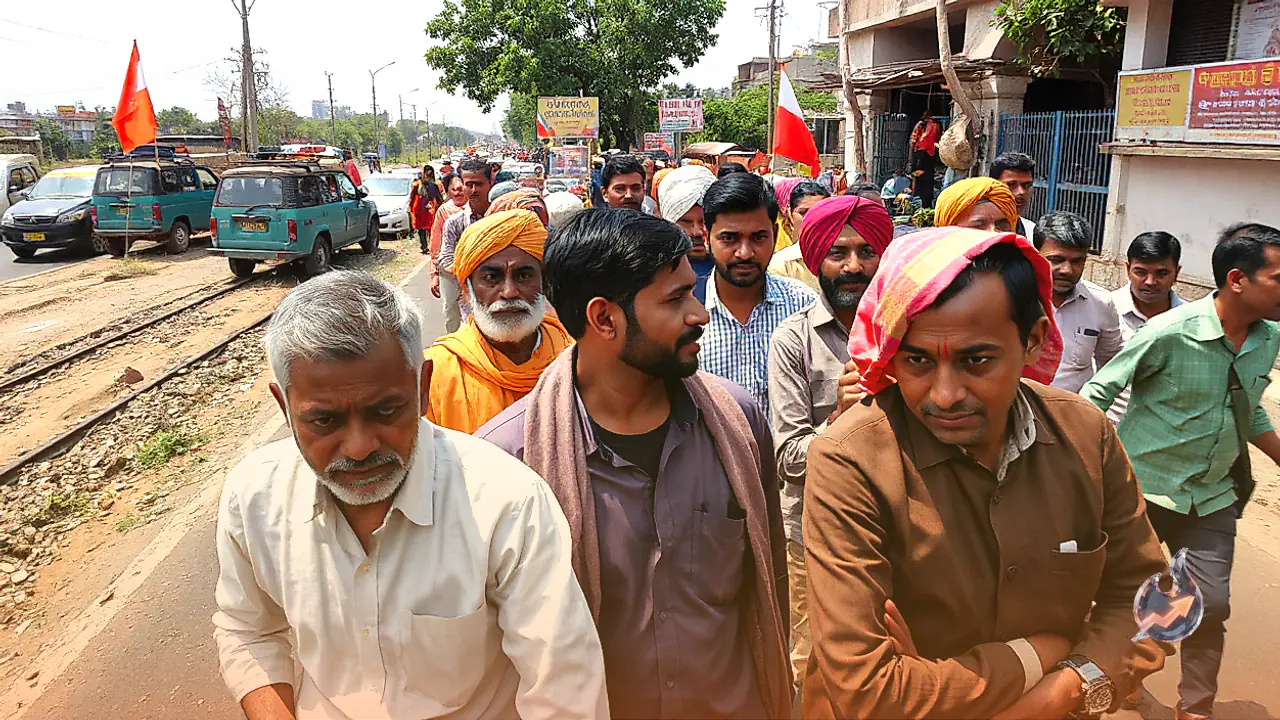
Faced with stifling warmth inside overcrowded coaches and no timeline for movement, scores of passengers exited the carriages and began walking along the railway tracks toward the nearest station platforms. This sudden movement of pedestrians along active rail lines significantly escalated safety risks across the busy corridor.
Three Fatalities Reported Amid Track Walkouts
The hazardous conditions on the tracks quickly turned tragic. At Bhandup station, near platform number 3, a college student attempting to cross the tracks was struck by an oncoming AC local train traveling from Mumbai toward Thane and Kalyan. The impact dragged the victim 15 to 20 feet along the railbed, inflicting fatal injuries instantly.
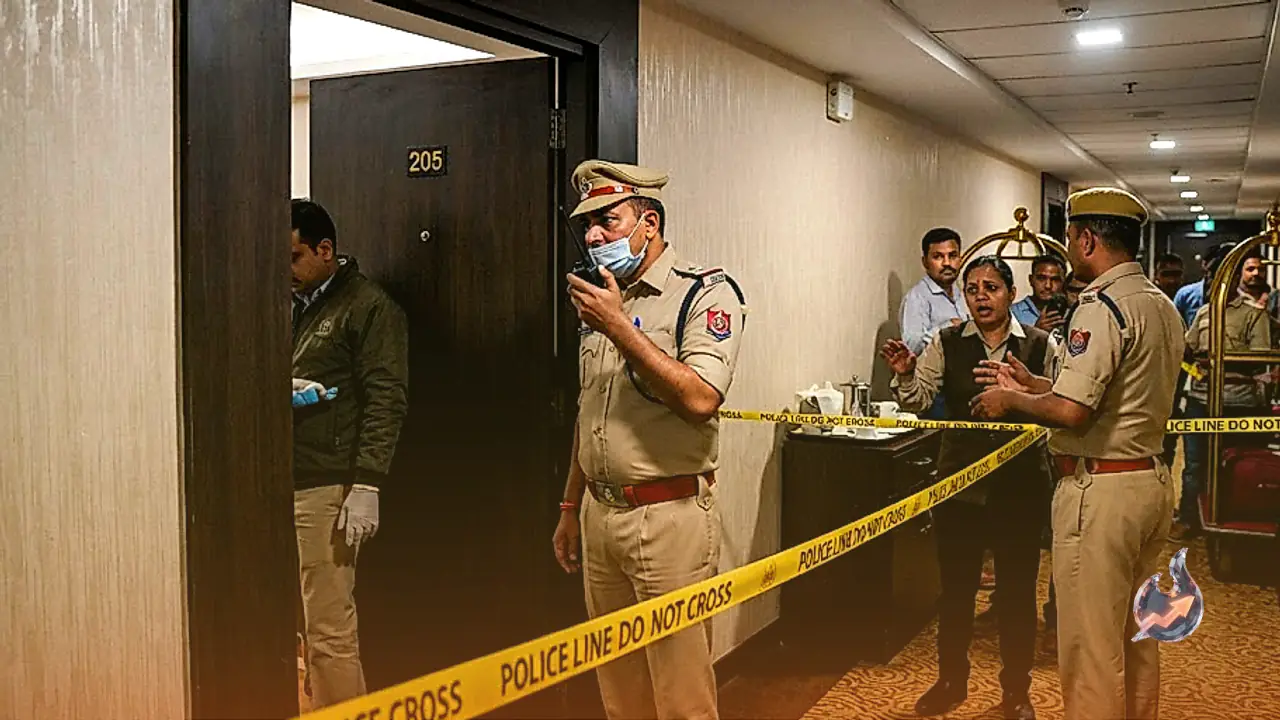
Separately, authorities discovered two more deceased individuals along the track section between Ghatkopar and Vikhroli stations. Investigators suspect these individuals were hit by oncoming trains while navigating the rail corridor on foot following the service disruption. In light of the fatalities, railway officials issued an urgent warning advising passengers never to vacate stranded trains or trespass on operational tracks.
Special Manual Ops and Phased Restoration Schedule
To prevent a total shutdown of the network, Central Railway controllers implemented manual signaling procedures and restricted speed permits. Controlled operations were established between Vikhroli and Bhandup across the down local, down fast, up slow, and up fast tracks to maintain a trickle of train movements.
Central Railway Chief Public Relations Officer Swapnil Nila confirmed that technical crews worked through the afternoon to restore normal operations in stages. The down fast line was brought back online at 4:10 PM, followed by the up fast line at 4:46 PM. The down slow line resumed operation at 5:30 PM, and the up slow line was fully restored by 6:18 PM. Central Railway has ordered a comprehensive inquiry to identify the exact cause of the signaling fire and review the emergency response time.