























Global financial markets are witnessing a contrasting narrative as robust domestic infrastructure funding drives economic growth in Central Europe, while hawkish monetary policy signals from the United States trigger widespread pullbacks across currency, commodity, and cryptocurrency markets. Analysts expect Poland's second-quarter 2026 GDP flash estimate to be confirmed at 3.8% year-on-year, primarily bolstered by a sharp rebound in fixed capital investment. This capital expansion has been heavily fueled by accelerated disbursements from European Union funds, including the Recovery and Resilience Facility (RRF). However, private consumption in Poland is experiencing a slight moderation as elevated fuel prices and slowing wage growth place pressure on household purchasing power.
Poland's Investment Acceleration and Inflation Dynamics
A closer examination of Poland's economic metrics reveals that fixed investment growth surged to 8.5% year-on-year in the second quarter, marking a substantial turnaround from the disappointing 2.4% figure recorded in the previous quarter. Heightened investment activity among large enterprises during the first half of 2026, combined with the rapid execution of EU-financed infrastructure projects, provided a solid foundation for this expansion. On the price front, August CPI inflation in Poland is projected to have inched up to 3.1% year-on-year from 3.0% in July. Core inflation remained steady at 3.1% year-on-year, as the upward pressure from higher fuel costs was almost entirely offset by deepening food price deflation.
Hawkish Jackson Hole Speech Triggers US Dollar Rally
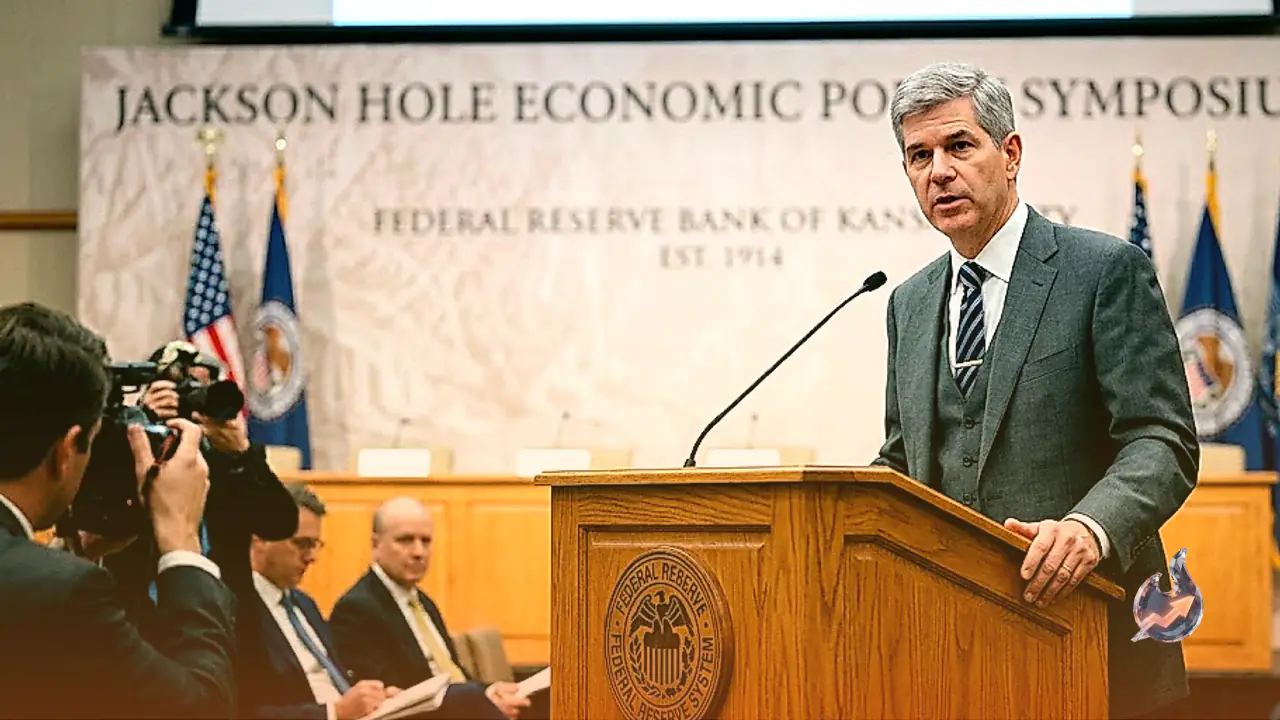
In the foreign exchange markets, the US Dollar experienced a strong resurgence following hawkish remarks delivered by Federal Reserve Chair Warsh at the Jackson Hole Symposium. Coupled with the US Non-Farm Payrolls (NFP) annual revision showing a downward adjustment of 79,000 jobs, market participants quickly repriced the trajectory of Fed monetary policy. The resulting surge in the Greenback pushed Cable (GBP/USD) down toward the 1.3530 region on Friday. Similarly, the EUR/USD currency pair accelerated its decline, retreating to a seven-day low in the sub-1.1600 zone as investors adjusted to the prospect of higher-for-longer US interest rates.
Precious Metals Slump while Diesel Spreads Hit Record Highs
The combination of a stronger US Dollar and rebounding US Treasury yields exerted significant downward pressure on precious metals. Gold saw increased selling momentum, breaking down toward its critical 200-day Simple Moving Average (SMA) near $4,530 per troy ounce. In energy markets, while headline crude oil prices appeared relatively stable, refined products signaled acute underlying tightness. The US diesel crack spread, which measures the premium of ultra-low sulphur diesel futures over WTI crude oil, breached $100 per barrel for the first time in history, touching an intraday record high above $102.00 per barrel.
Cryptocurrency Retrenchment: Bitcoin Drops Below $80,000
Risk assets broadly retrenched alongside the Dollar rally, with major cryptocurrencies facing renewed selling pressure. Bitcoin (BTC) slipped back below the psychological $80,000 threshold following a second unsuccessful attempt to breach overhead resistance in the $81,000 to $82,000 range. Live market data shows Bitcoin trading around $79,310, down 1.18% from its previous close of $80,258. Technical indicators highlight an overbought 14-day RSI of 77, suggesting potential short-term consolidation or corrective price action despite a strong long-term uptrend. Ethereum (ETH) mirrored this cooling momentum, dropping toward $2,500, while Ripple (XRP) retreated toward support near $1.40. Key technical parameters for Bitcoin identify immediate pivot support at $78,236 and primary resistance at $80,767.
Central Bank Decisions and Key Macro Data Ahead
Market attention is now shifting toward upcoming economic releases, including the US ISM Manufacturing PMI and official employment reports. Globally, central bank policies remain under close scrutiny. The Reserve Bank of New Zealand (RBNZ) is widely expected to enact an interest rate hike, with traders focusing heavily on forward guidance regarding future policy tightening. Conversely, the Bank of Canada (BoC) is anticipated to keep interest rates on hold in the near term, even as market debate lingers over potential rate adjustments further out in 2027.