























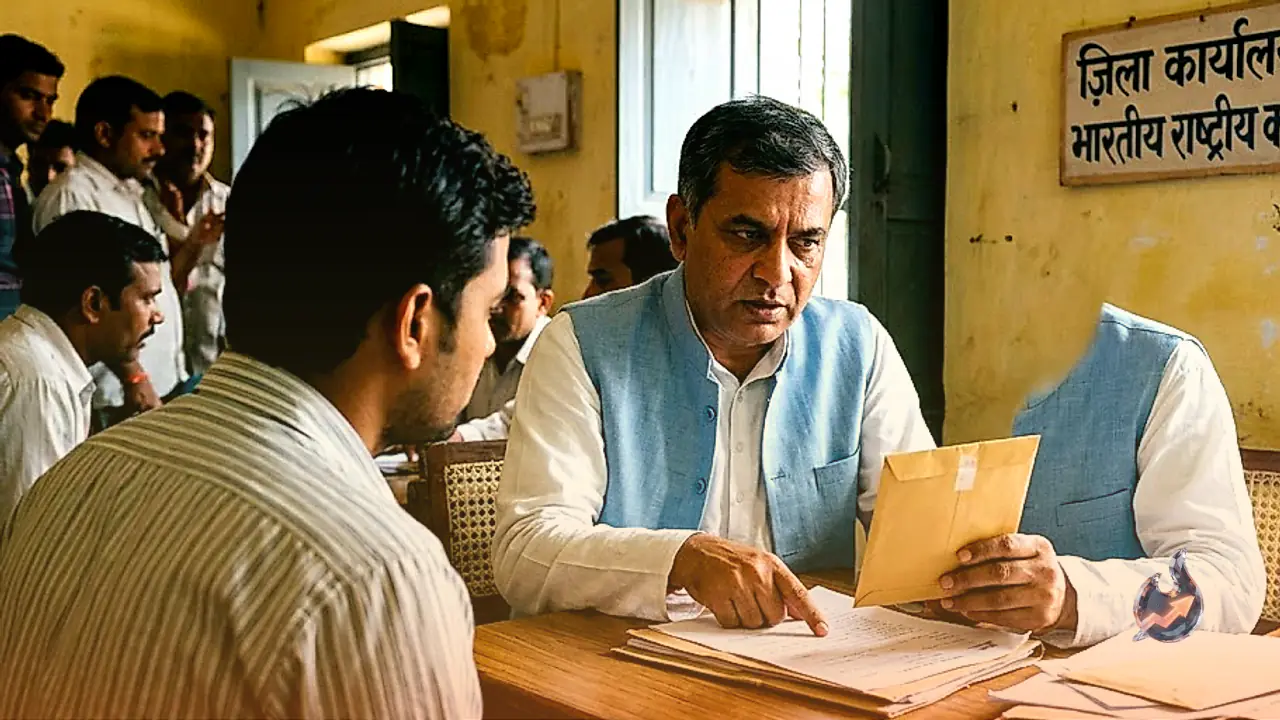

Ahead of the crucial urban body elections in Rajasthan, the Congress party has rolled out a secretive candidate selection strategy designed to neutralize internal rivalries and head off potential rebellions. Breaking away from its long-standing tradition of publishing official lists of nominated candidates, the party leadership has resolved to dispatch official election symbols directly from headquarters to district officials. Under this new operational model, short-listed candidates will be informed individually via confidential phone communications or direct meetings, keeping ticket allocations under wraps until the final moments of the nomination process.
Strategic Realignment: Replacing Public Lists with Direct Symbol Transfers
Ticket distribution in local body elections frequently triggers fierce intra-party disputes, as dozens of local leaders stake claims to individual ward seats. To prevent dissatisfied aspirants from launching independent bids or orchestrating public protests, Rajasthan Congress has abandoned the release of centralized candidate rosters. State Congress General Secretary Swarnim Chaturvedi provided key details regarding this tactical overhaul, confirming that official candidate lists will not be placed in the public domain.
Party strategists recognize that releasing formal lists well in advance gives passed-over contenders ample time to file nomination papers as independent candidates or join rival political camps. By substituting public announcements with direct symbol distribution, Congress aims to maintain strict party discipline and limit the window available for internal sabotage prior to the close of nominations.
District Presidents and Observers Entrusted with Confidential Delivery
The execution of this silent candidate authorization process rests primarily on district unit presidents and designated assembly observers. According to Swarnim Chaturvedi, sealed nomination documents and election symbols dispatched from state headquarters will be handed directly to these authorized district leaders. These officials will maintain strict control over the symbols and act as the sole point of contact for shortlisted contenders.
Rather than holding press briefings or issuing media statements, district presidents and assembly observers will quietly verify and contact individual candidates. The candidate will learn of their selection through personal communication, ensuring that ward-level authorization remains discreet. This decentralized mechanism prevents wide-scale leaks while depriving opposition parties and disgruntled internal factions of advance notice.
Phone Notifications and High-Stakes Nominations Suspense
To further streamline communication, Congress plans to notify select candidates via telephone calls and text messages. Prospective nominees are expected to receive direct confirmation from district leaders or party headquarters in the final hours leading up to the nomination deadline. This approach ensures that candidate identities are disclosed on a strictly need-to-know basis.
Consequently, an intense atmosphere of suspense will prevail across municipal wards right up to the deadline for filing papers. In contested divisions where multiple influential leaders have submitted applications, no aspirant can claim a confirmed ticket until the final hour. By preserving ambiguity, the leadership minimizes the possibility of pre-emptive defections or immediate backlash from those who fail to secure nomination.
Navigating Ward Rivalries: Balancing Winnability Against Factional Revolt
The party faces a formidable challenge in municipal wards where multiple applicants are vying for a single nomination. While seats with a single undisputed applicant present straightforward decisions, highly contested wards require party managers to carefully evaluate winnability while simultaneously containing factional friction. Discontented aspirants in several districts have already indicated their readiness to contest independently if denied official backing.
Congress leadership must therefore strike a delicate balance between choosing candidates with strong local support and appeasing influential leaders who are denied tickets. Managing post-allocation resentment is considered as critical as the candidate selection itself, as any rift at the grassroots level could directly jeopardize the party's electoral prospects across urban local bodies.
Submitting Symbols Directly to Returning Officers at the Final Hour
As the final element of this strategy, Congress plans to hand over official candidate authorization forms (symbols) directly to the designated Returning Officers at the election registration centers. District presidents and assembly observers will submit these credentials in the closing hours of the nomination window. This tactical measure ensures that the party leadership retains ultimate administrative control over candidate substitution until the last permissible minute.
Direct submission to Returning Officers prevents unauthorized individuals from intercepting symbols or submitting conflicting claims. While political analysts note that this strategy offers a robust mechanism on paper to contain party rebellion, its practical success will ultimately depend on how effectively local leaders manage candidate morale once nominations draw to a close.