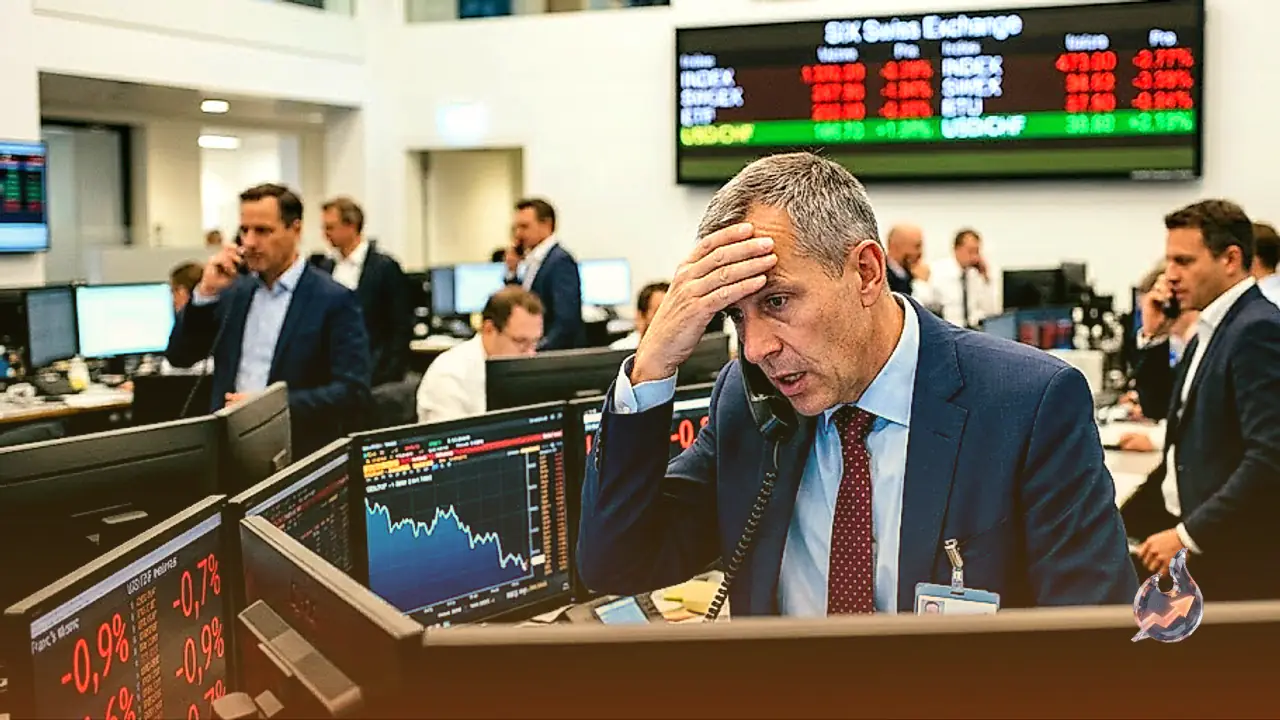

























Recent developments in international bond markets have drawn significant commentary from senior central bank leadership. Isabel Schnabel, a prominent member of the European Central Bank Governing Council, pointed out that strong economic resilience allows businesses to pass higher input expenses on to consumers far more rapidly. Schnabel also highlighted that economic activity might display a stronger sensitivity to the recent surge in global bond yields than previously estimated, an outcome that would effectively curb upward momentum in consumer prices.
According to Schnabel, well-anchored inflation expectations provide the central bank with sufficient breathing room to steer inflation back to its target in a gradual manner. Furthermore, healthy credit creation across the financial system suggests that prevailing financing conditions have not yet crossed into restrictive territory.
The Governance and Mandate of the European Central Bank
Headquartered in Frankfurt, Germany, the European Central Bank serves as the monetary anchor for the entire Eurozone. Its core operational duties include setting benchmark borrowing costs and directing monetary strategy across member states. The primary statutory mission guiding the institution is safeguarding price stability, defined as keeping headline inflation around the 2% threshold.
Adjusting key policy rates serves as the primary mechanism for reaching this objective. Under normal market conditions, an environment of higher borrowing costs tends to strengthen the Euro, whereas lowering benchmark rates typically exerts downward pressure on the currency. The Governing Council convenes eight times annually to review economic developments and determine policy action. These decisions are formulated by the governors of the Eurozone national central banks alongside six permanent executive members, led by ECB President Christine Lagarde.
Mechanics of Quantitative Easing and Quantitative Tightening
During periods of extreme economic stress, the European Central Bank possesses the authority to deploy extraordinary measures, notably Quantitative Easing. Under this mechanism, the central bank generates new electronic money reserves to purchase assets, primarily sovereign debt and corporate bonds, directly from commercial banking institutions. This injection of liquidity expands the monetary base and typically weakens the Euro.
Because it acts as an intervention of last resort, Quantitative Easing is generally reserved for situations where standard interest rate reductions are insufficient to restore price stability. The ECB previously activated this facility during the Great Financial Crisis between 2009 and 2011, later in 2015 when deflationary forces kept inflation persistently depressed, and during the disruptions caused by the covid pandemic.
Conversely, Quantitative Tightening represents the formal unwinding of asset purchase programmes. Initiated once an economic recovery takes hold and inflationary pressures start to pick up, Quantitative Tightening halts fresh asset acquisitions and stops the reinvestment of principal payments from maturing bonds held on the balance sheet. This process typically supports the valuation of the Euro, acting as a bullish catalyst.
Euro Performance and Major Currency Dynamics
Over the course of the month, the Euro registered varying degrees of momentum across global foreign exchange pairs, displaying its strongest performance against the New Zealand Dollar. Currency matrix data reflects these relative shifts across major currency pairings, demonstrating how base and quote relationships adjust over time.
In foreign exchange trading on Wednesday, the EUR/USD pair retreated to its lowest valuation mark since May 2025. The cross dropped to 1.1312, remaining substantially depressed compared to its January peak of 1.2082. This slide has been driven by a confluence of persistent US Dollar demand, broader geopolitical headwinds, and lingering concerns regarding the exposure of European industry to elevated energy costs. Even so, any unexpected rebound in Eurozone inflation metrics could offer the Euro an unanticipated line of support.
Developments in the Asia-Pacific FX Pairs
Elsewhere in Asian trading on Wednesday, the AUD/USD pair hovered near two-month lows around 0.6950. Australian underlying consumer price index data for August landed below market forecasts, dampening expectations for additional rate increases by the Reserve Bank of Australia. In addition, manufacturing PMI prints from China failed to generate positive sentiment for the Australian Dollar, despite a temporary pause in the greenback rally.
At the same time, the USD/JPY cross sustained downward momentum below 157.00. Expectations of a hawkish tilt from the Bank of Japan, combined with market caution regarding potential currency intervention, bolstered the Japanese Yen. These factors successfully counterbalanced soft domestic retail sales and weak industrial output figures, while broader weakness in the US Dollar added downward momentum to the currency pair.
Precious Metals and Digital Asset Movements
Price action across commodity and digital asset desks also experienced shifts on Wednesday. Gold reversed its earlier trajectory, pulling back toward the $4,150 per troy ounce region. The metal failed to sustain its advance beyond the critical $4,200 threshold as the US Dollar recovered part of its intraday drop amid mixed yield movements in US Treasuries.
Digital tokens witnessed subdued trading activity throughout the day. Bitcoin buyers struggled to defend the immediate $83,000 threshold as short-term support. In parallel, Ethereum remained range-bound, maintaining positions below $2,700 resistance while holding above the $2,600 support mark. Meanwhile, Ripple continued to trade near the $1.50 area.