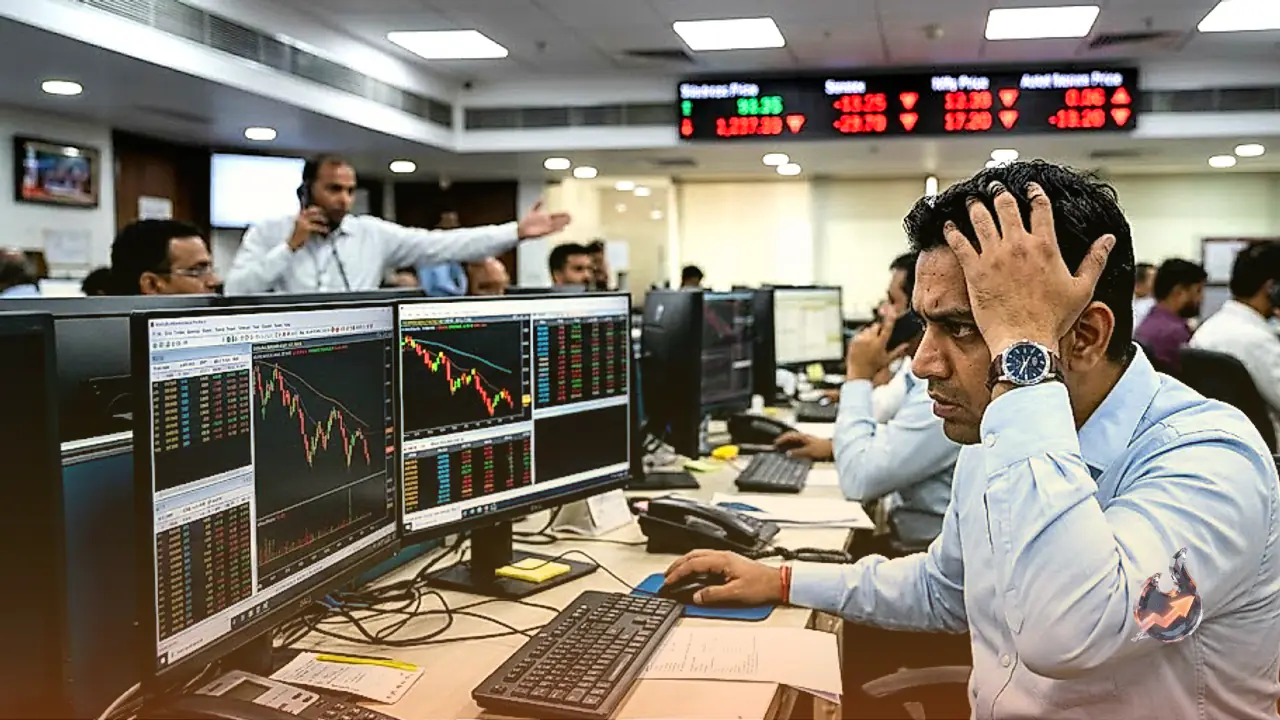

























The global economy is currently navigating a highly precarious phase, as stubbornly persistent inflation forces central banks to completely rewrite their long-term monetary strategies. According to comprehensive analysis from TD Securities, the United States Federal Reserve is expected to keep its benchmark Fed funds rate completely unchanged through the end of 2026. Financial experts judge that while the labor market is finally showing signs of stabilization, inflation remains uncomfortably above the central bank's designated target. Operating under a new management structure, the Federal Reserve has adopted a much blurrier reaction function that relies heavily on incoming data, leaving investors guessing. The latest assessments suggest that if policymakers decide to alter their stance later this year, an aggressive rate hike is statistically far more likely than any form of rate cut.
Inflation Dynamics and Long-Term Projections
The June Consumer Price Index (CPI) report provided policymakers with a brief moment of respite. Data released last week indicated that inflation came in significantly softer than market analysts had anticipated, sending a clear signal that underlying price pressures are not currently running rampant across the economy. This unexpected softness should help alleviate the Federal Reserve's immediate, near-term inflation anxieties. However, rather than signaling an impending rate cut, this data reinforces the broader expectation that monetary policy will remain frozen on hold indefinitely. Market strategists at TD Securities have officially revised their near-term CPI trajectory downwards. According to their updated models, core CPI is projected to end at 2.6 percent year-over-year in the fourth quarter of 2026. Because this figure still sits well above the central bank's strict 2 percent mandate, the case for maintaining elevated borrowing costs remains robust.
A clear lack of consensus is emerging among the top brass at the Federal Reserve, creating a fragmented policy landscape. Federal Reserve Governor Christopher Waller had previously remained open to executing a July rate hike if the recent CPI data had surprised to the upside. However, following the softer inflation report, he is now likely to support holding rates steady. Conversely, Hammack has signaled a sharp dissent, effectively arguing in favor of pushing rates higher to combat sticky prices. Lorie Logan has maintained a strictly hawkish posture, emphasizing the lingering dangers of inflation, while Philip Jefferson has struck a deliberately neutral tone. This divergence in Fedspeak illustrates that future monetary policy paths will be entirely data-dependent, requiring financial markets to closely monitor every upcoming economic release.
Geopolitics and the Currency Markets
The uncertainty surrounding American interest rates is actively spilling over into global foreign exchange markets. On Monday, the British Pound to US Dollar (GBP/USD) trading pair managed to hold steady above the 1.3450 threshold, though it severely struggled to build any meaningful bullish momentum. Currency traders are obsessively assessing the rapid developments in the US-Iran conflict following severe hostilities over the weekend. These geopolitical fears have prompted a massive flight to safety, helping the American Greenback remain highly resilient against its international rivals. Global market attention is now sharply pivoting toward the upcoming UK employment report scheduled for Tuesday. Meanwhile, the Euro to US Dollar (EUR/USD) pair has found itself trading on the back foot for the third consecutive day, perilously approaching the key 1.1400 contention zone. This substantial pullback is being driven by persistent anxiety surrounding the Middle East crisis and the corresponding strength of the US Dollar, with all eyes now fixed on the European Central Bank's impending interest rate decision later this week.
The Gold Market Tug-of-War
Amidst this macroeconomic and geopolitical turbulence, the precious metals sector is experiencing a fascinating tug-of-war. At the beginning of the trading week, Gold prices came under mild downside pressure, hovering just above the crucial psychological mark of $4,000 per troy ounce. Escalating military actions across the Middle East are providing solid fundamental support to the safe-haven metal, as frightened investors seek traditional stores of value. However, this upward momentum is being violently counteracted by the Federal Reserve's hawkish outlook. Expectations of permanently higher US interest rates are bolstering the yield-bearing US Dollar, which automatically makes non-yielding assets like Gold more expensive for international buyers and keeps the commodity under intense market scrutiny.
Ethereum's Performance and Live Technical Data
The cryptocurrency sector is also facing significant crosswinds, highlighted by Ethereum's recent volatile performance. Over the past week, Ethereum showcased relative strength, recording impressive double-digit gains and vastly outperforming major digital assets like Bitcoin, XRP, and Solana. However, as the broader crypto market began a sharp correction on Thursday, underlying metrics suggested that Ethereum's rise remains structurally fragile. According to live market data, Ethereum is currently trading at $1,936, representing a solid 1.72 percent increase from its previous close of $1,904. The asset is seeing robust liquidity, with trading volume registering at 1.22 times the standard 20-day average. Short-term technical indicators look broadly favorable. The 14-day Relative Strength Index (RSI) stands strong at 65, while the MACD registers at 46.21 against a signal line of 32.11, generating a bullish histogram of 14.09.
Despite this short-term bullish bounce, the long-term technical architecture for Ethereum remains dangerous. The asset is currently trapped within a prolonged downtrend, verified by a glaring 'death cross' on the daily charts where the 50-day Exponential Moving Average of $1,822 is severely trailing the 200-day EMA of $2,275. Price action is currently contained inside Bollinger Bands stretching from $1,688 to $1,944, with a midpoint of $1,816. The Stochastic oscillator shows the fast line pushing extreme highs at 97 over a signal line of 83. Navigating around a central pivot point of $1,935, traders are monitoring an Average True Range (ATR) of 66.24. This volatility metric suggests critical operational buffers, establishing immediate support at $1,930 and stern resistance at $1,942 as the market digests the Federal Reserve's long-term rate trajectory.