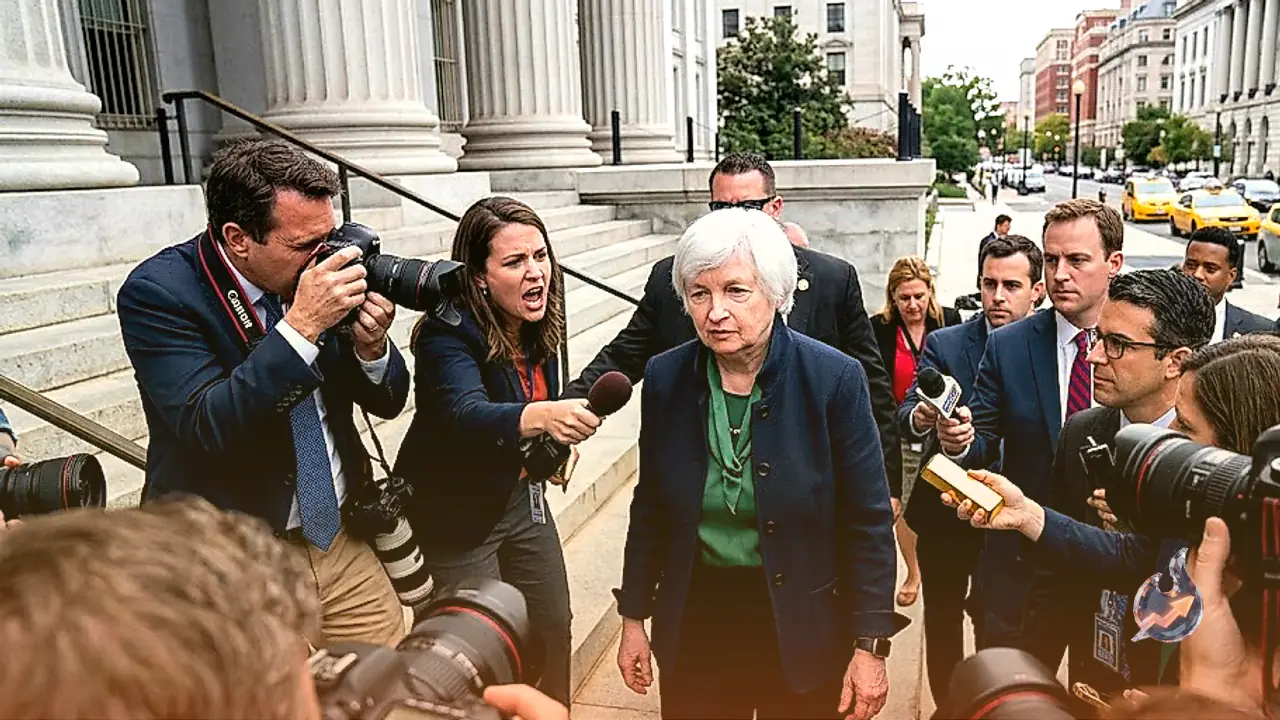

























A notable shift in public confidence and investor sentiment is unfolding in the United Kingdom following the recent political transition. According to the latest dbDIG household survey conducted by Deutsche Bank strategists, Prime Minister Burnham and the Labour Party have experienced a sharp bounce in public perception just one month into leadership. Labour has moved ahead of Reform for the first time in approximately 18 months, emerging as the most popular political party in the country. This domestic sentiment recovery coincides with significant adjustments across international currency, commodity, and fixed-income markets.
Deutsche Bank Survey Highlights Growth Confidence Among Youth and High Earners
The dbDIG survey data compiled by Deutsche Bank indicates that UK households express renewed optimism regarding the new government's ability to drive economic expansion. When asked whether Prime Minister Burnham could deliver stronger UK economic growth than the preceding administration, sentiment turned distinctly positive, registering a net balance of +21%. This metric underscores widespread confidence in the economic path set by the new leadership.
Demographic breakdowns reveal that optimism is particularly concentrated among younger respondents aged 18 to 34. Across income brackets, higher-income households recorded the strongest confidence levels. Households earning above GBP 50k reported a net balance of +37% on economic growth expectations. However, despite optimism regarding macro growth, respondents exhibited greater caution concerning their personal household finances, indicating a measured consumer outlook amidst broader economic transitions.
Sterling Steady as European Currency Pairs Digest PMI Data
The improving domestic narrative in Britain has provided underlying support for Pound Sterling in foreign exchange markets. During Friday's European trading session, the GBP/USD currency pair traded in positive territory around 1.3650. Live market data shows GBP/USD holding at 1.36, representing a daily gain of +0.31%, within a 52-week trading range of 1.30 to 1.38.
The resilience in Sterling comes as upbeat UK PMI metrics offset disappointing domestic Retail Sales statistics. Technical indicators reinforce this stability: the 14-day Relative Strength Index (RSI) stands at 69, reflecting sustained bullish momentum. The MACD line sits at 0.01 against its signal line of 0.00, demonstrating a positive crossover. Exponential Moving Averages also highlight an established uptrend, with the EMA20 at 1.35 and both the EMA50 and EMA200 at 1.34. Key technical levels position 20-day support near 1.33 and resistance near 1.37.
Simultaneously, EUR/USD consolidated its weekly advance near 1.1700 during Friday's European session following mixed PMI releases from Germany and the broader Eurozone. Market participants remain focused on upcoming preliminary August PMI surveys from the United States, as persistent Dollar weakness allows the Euro to maintain its ground.
Gold Trades Near Multi-Month Highs on Rate Expectations
In commodity markets, Gold maintained modest gains near its highest valuation since early June, holding just above the $4,550 per ounce mark heading into Friday's European session. Precious metal prices continue to build on momentum following a technical breakout above the 200-day Simple Moving Average (SMA).
The rally in Gold is further reinforced by broad softness in the US Dollar. Traders scaled back expectations for an immediate interest rate hike by the Federal Reserve after recent US inflation data indicated a moderation in price pressures. The cooling inflation outlook has diminished yields on cash and fixed income, providing a supportive backdrop for non-yielding bullion.
US Treasury Expands Liquidity Support Operations
Adding a major macro impulse to global markets, the US Treasury Department stepped off its standard calendar on Wednesday at 12:32 GMT by announcing a significant expansion of its liquidity support buyback framework. The department revealed plans to at least double the size of buyback operations targeting the 10-year to 20-year and 20-year to 30-year maturity sectors.
Under the revised schedule, the maximum buyback capacity per operation will rise from $2 billion to at least $4 billion. These expanded liquidity operations will take effect on September 9 and continue through November 4. By boosting government bond purchases in longer maturities, the Treasury is enhancing market liquidity, a factor that has contributed to recent pressure on the US Dollar across major trading pairs.