
























Ukrainian President Volodymyr Zelenskyy indicated that Kyiv continues to stand prepared for a bilateral energy ceasefire agreement with Russia, following separate rounds of discussions held with the leaders of the United States and the United Kingdom in New York City. The talks centered heavily on finding pathways to de-escalate hostilities, with civilian infrastructure serving as a primary point of discussion.
Outlining the framework of those high-level engagements, Volodymyr Zelenskyy remarked,
“President Trump, our teams, and I spoke about how to end the war. This is the priority. We are ready.”He candidly added that while he cannot be certain whether Russia is currently prepared to take such a step, the bilateral dialogue actively addressed the concept of an energy ceasefire.
Conditions Centered on Civilian Infrastructure Protection
The Ukrainian leadership confirmed its readiness to enter an energy truce specifically under the condition that Russian armed forces cease targeting Ukrainian energy networks, electrical facilities, heating infrastructure, and public water supplies. Continuous strikes against these vital assets have repeatedly endangered civil stability, especially as colder weather heightens the necessity of uninterrupted power and heating grids. Alongside his willingness to negotiate utility safeguards, Zelenskyy delivered a stern caution on Tuesday, stating that Russia was actively preparing a new massive attack aimed at his country.
Crude Oil Markets Respond as WTI Surges Past 91 Dollars
Geopolitical turbulence and structural considerations in commodity transit coincided with an upward move across international energy benchmarks. West Texas Intermediate crude oil gained 2.25% on the session, trading up to $91.50 per barrel. WTI stands as one of the preeminent global benchmarks, constantly watched by commercial institutions and retail consumers alike to gauge the health and pricing power of global petroleum supplies.
WTI Crude represents one of the three principal petroleum classifications sold in international commerce, alongside Brent and Dubai Crude. Within refining circles, WTI is customarily described as light and sweet due to its comparatively low density and low sulfur levels. These properties make it a premium quality crude that requires relatively simple refining processes to yield transportation fuels. Extracted inside the United States, it moves through distribution networks centered at the Cushing delivery hub, an installation widely recognized as the pipeline crossroads of the world. Because of this strategic domestic and international position, its spot valuation is cited continuously across financial media.
Fundamental Mechanics Influencing Crude Valuations
The pricing trajectory of WTI crude adheres to basic forces of market supply and consumer demand. Vigorous international economic growth drives commercial consumption upward, whereas periods of anemic macroeconomic expansion depress demand. Outside of purely commercial patterns, regional political turmoil, armed conflict, and economic sanctions regularly disrupt petroleum logistics, triggering rapid pricing reactions.
The production discipline maintained by the Organization of the Petroleum Exporting Countries serves as another pillar dictating market rates. Furthermore, because physical petroleum is denominated predominantly in US currency, shifts in the value of the US Dollar exert an inverse pressure on prices. When the greenback weakens, purchasing crude becomes cheaper for holders of other currencies, reinforcing global demand, whereas a strengthening dollar makes identical barrels considerably more expensive to acquire.
Inventory Gauges and OPEC Production Allocations
Physical supply balance is monitored closely through weekly storage metrics issued by the American Petroleum Institute and the Energy Information Administration. Fluctuations in these stockpiles highlight real-time shifts in available volume. A drawdown in storage numbers generally points toward escalating consumption, placing upward momentum under spot valuations. In contrast, inventory accumulation reflects an abundance of crude, which typically drags market pricing downward.
The API publishes its statistical findings every Tuesday, followed by the official EIA release on Wednesday. Historical trends indicate that their reported volumes align closely, falling within a 1% discrepancy margin roughly 75% of the time. Given its status as an official government entity, the EIA report is generally treated as the more authoritative metric by market participants. Beyond weekly storage data, OPEC convenes twice every calendar year to establish production quotas across its 12 member countries. Deciding to curb collective quotas restricts aggregate supply, lifting crude values, while ramping output produces the opposite outcome. The broader OPEC+ alliance incorporates ten supplemental crude-producing partners, most prominently Russia, adding significant weight to global output strategies.
Dollar Strength Pressures Currencies, Treasuries, and Metals
Financial cross-currents extended beyond the oil complex on Wednesday. The Australian Dollar fell by more than 1% against the greenback, driven by a sharp rally in US Treasury yields. Yields on US 5-year and 10-year Treasury notes crossed above the 5% threshold as bond markets factored in sustained monetary tightening by the Federal Reserve. Consequently, the AUD/USD currency pair retreated to 0.7039 after having touched a session peak of 0.7118.
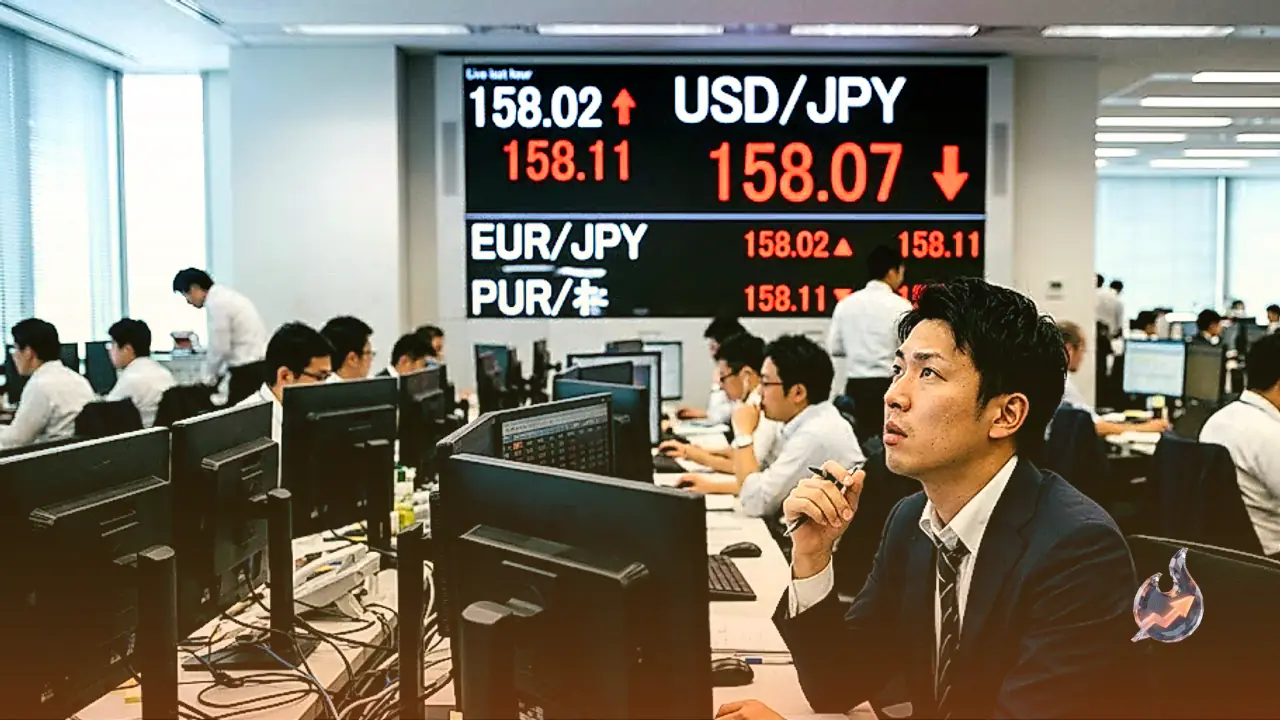
Concurrently, the USD/JPY cross hovered in the mid-157.00 range during Asian trading hours, remaining near two-week highs recorded on the preceding Friday. Although the Bank of Japan advanced interest rates, market participants interpreted the move as dovish, keeping the Japanese Yen under broad selling pressure. The US Dollar maintained its firm footing on hawkish Federal Reserve expectations, providing support to the pair even as market participants remained alert to potential currency intervention from Japanese authorities. Concurrently, broader markets showed muted reaction to the conclusion of indirect talks between the United States and Iran ahead of a planned meeting between Donald Trump and Xi Jinping.
In precious metals, gold reversed consecutive daily gains as substantial downside pressure developed at midweek. The spot price broke below the $4,300 per troy ounce threshold to touch fresh weekly lows, dampened by the resurgent US Dollar and broader strength across American money markets. Cryptocurrencies mirrored this pause in momentum, with Ethereum declining by 3% below $2,700 following recent upside rallies. Open interest measuring outstanding contracts across derivative venues remained steady in ETH terms, having settled since an late-August short squeeze pushed values past $2,000.
Bank of Japan Adjusts Policy Rate in Broadly Expected Step
In a monetary adjustment that concluded weeks of market anticipation, the Bank of Japan lifted its short-term interest rate target from 1.00% to 1.25%. The monetary policy board approved the 25-basis-point increase by a 7-2 vote margin, representing a further deliberate stride toward monetary policy normalization in the world’s fourth-largest economy.