
























Diplomatic rhetoric and market tensions have escalated as the conflict between Tehran and Washington approaches its seventh month. Iranian President Masoud Pezeshkian affirmed that his administration remains prepared to restart negotiations aimed at resolving the extended standoff with the United States, while firmly stating that Iran will not bow to external coercion or threats. Emphasizing national policy, Pezeshkian noted that Tehran holds no ambition to construct an atomic weapon, yet it will not abandon its sovereign right to pursue nuclear technology for economic progress and civilian development. At the same time, the Iranian leader placed direct responsibility on the United States and Israel for fueling wider global instability, accusing both nations of conducting unauthorized military strikes against Iranian civilians and civilian infrastructure.
Crude Oil Prices Climb on Supply Concerns
The geopolitical friction immediately rippled through international commodity desks, lifting energy futures. West Texas Intermediate crude oil advanced 2.25 percent on the session to reach $91.50 per barrel. Financial participants closely track developments across the Middle East, as political confrontation in core production and maritime transit zones frequently introduces premiums driven by the risk of sudden logistical bottlenecks or export disruptions.
Mechanics and Value Drivers of the WTI Oil Benchmark
West Texas Intermediate represents one of the three foundational pricing standards in the global physical petroleum trade, alongside Brent and Dubai Crude. The grade is widely characterized as light and sweet due to its comparatively low density and minimal sulfur concentrations. These chemical properties make it exceptionally efficient to process into high-value refined petroleum products like gasoline and distillates. Extracted within the United States, WTI is aggregated and piped through the commercial storage terminal at Cushing, Oklahoma, an infrastructure nexus widely recognized as the pipeline crossroads of the world. Because of this strategic role, WTI quotations serve as a universal pulse for energy costs across commercial and financial media.
At its core, the valuation of WTI crude reflects the continuous balance between aggregate supply and consumer demand. Sustained global macroeconomic expansion accelerates consumption across manufacturing, freight, and consumer sectors, driving prices upward, whereas sluggish economic growth dampens industrial intake and pulls valuations lower. Beyond baseline demand, geopolitical instability, regional armed conflicts, and governmental trade sanctions regularly disrupt active production and shipping lanes, generating sudden supply shortfalls. The valuation of the US Dollar serves as another decisive mechanism: because international crude oil contracts are denominated primarily in greenbacks, a depreciation in the dollar reduces fuel acquisition costs for overseas buyers using alternative currencies, stimulating demand, while a strengthening dollar increases procurement costs and restricts international purchasing power.
The Influence of Inventory Data and OPEC Allocations
Market analysts monitor weekly statistical inventory releases to measure short-term consumption trends and inventory shifts. Surveillance data provided by the American Petroleum Institute and the Energy Information Administration offers critical insights into fluctuating physical balances. The American Petroleum Institute issues its preliminary statistical bulletin every Tuesday afternoon, followed by the official government figures from the Energy Information Administration the subsequent day. Historically, the two surveys exhibit high consistency, recording volume estimates within 1 percent of each other roughly 75 percent of the time. However, institutional trading desks attribute greater authority to the Energy Information Administration because of its official regulatory standing. A documented drawdown in inventories typically signals robust refinery demand, putting upward pressure on spot valuations, while consecutive inventory builds point to excess supply, cooling wholesale market prices.
On the collective supply side, the Organization of the Petroleum Exporting Countries functions as a cartel of 12 oil-producing states that convenes twice a year to calibrate aggregate production quotas for member jurisdictions. Decisions to trim quotas effectively restrict global availability, lifting market values, whereas supply expansions generally suppress spot prices. Policy coordination expands under the OPEC+ framework, which integrates ten external allied producers, prominent among them being Russia, significantly broadening the cartel's influence over global maritime trade flows.
Currency Fluctuations: Australian Dollar Drops as Dollar Strengthens
Wider macro markets mirrored these geopolitical pressures through sharp realignments across sovereign debt and foreign exchange desks on Wednesday. The Australian Dollar fell by more than 1 percent against the US Dollar as yields on US government securities surged. Benchmark yields on both 5-year and 10-year US Treasury notes crossed the critical 5 percent threshold, fueled by expectations that the Federal Reserve will maintain a stringent monetary posture. Caught under broad dollar demand, the AUD/USD currency pair declined to 0.7039 after previously touching an intraday peak of 0.7118.
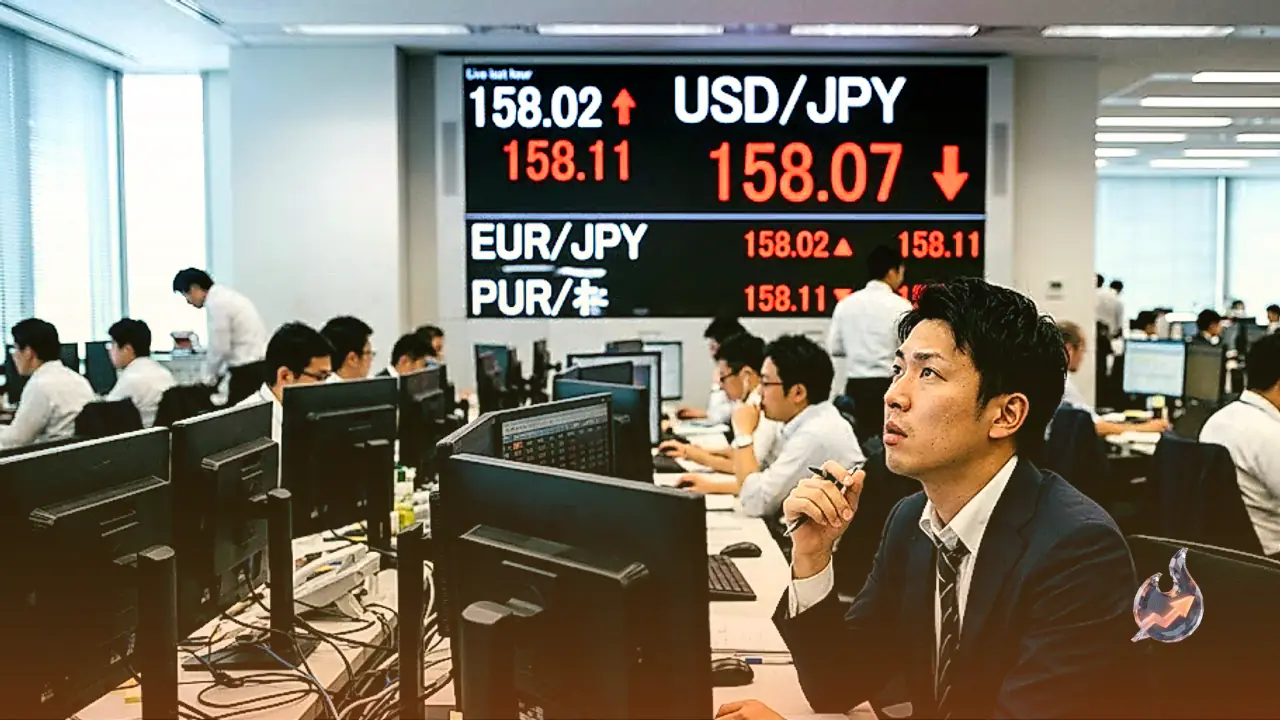
Concurrently, USD/JPY hovered in the mid-157.00 zone throughout Asian trading hours, maintaining levels near the two-week peak recorded on Friday. While the Bank of Japan implemented an interest rate increase, its accompanying dovish signaling continued to weigh on the Japanese Yen. A resilient US Dollar backed by hawkish Federal Reserve expectations provided sustained underlying support for the currency pair, though persistent market apprehension regarding potential foreign exchange market intervention by Japanese authorities capped further upside momentum. Currency desks largely looked past the conclusion of the latest indirect diplomatic discussions between Washington and Tehran as attention turned toward an upcoming bilateral meeting between Donald Trump and Xi Jinping.
Gold Pulls Back Below Key Support Levels
Precious metals faced aggressive liquidations midway through the trading week, ending a short-lived two-day rebound. Strong demand for the US Dollar coupled with advancing yields across US money markets prompted investors to pare non-yielding bullion holdings. Consequently, spot gold retreated below the $4,300 per troy ounce benchmark, establishing fresh weekly lows as capital rotated into yielding cash and fixed-income assets.
Monetary Projections and Lasting Trade Friction
Central bank authorities continue to account for the lingering inflationary drag caused by global logistical disruptions. The Federal Reserve projects keeping its primary benchmark borrowing rate stable through 2027. Elevated ocean freight rates stemming from ongoing hostilities represent an enduring cost challenge: container transport expenses from Asian shipping ports to the United States have climbed to more than four times their levels recorded prior to the outbreak of conflict with Iran in late February. Comprehensive findings from the International Monetary Fund project that the full inflationary pass-through of these heightened logistical expenditures into end-consumer retail prices will reach its highest intensity approximately a year later, during 2027.
Simultaneously adjusting policy, the Bank of Japan resolved to lift its benchmark short-term interest rate target from 1.00 percent to 1.25 percent. The move followed a 7-2 majority ballot among monetary policy board members, representing another incremental phase in normalizing the nation's lending parameters. The outcome aligned with market consensus forecasts that had factored in the adjustment over previous weeks, illustrating the distinct monetary paths global central banks are navigating amid sustained geopolitical and logistical uncertainties.